
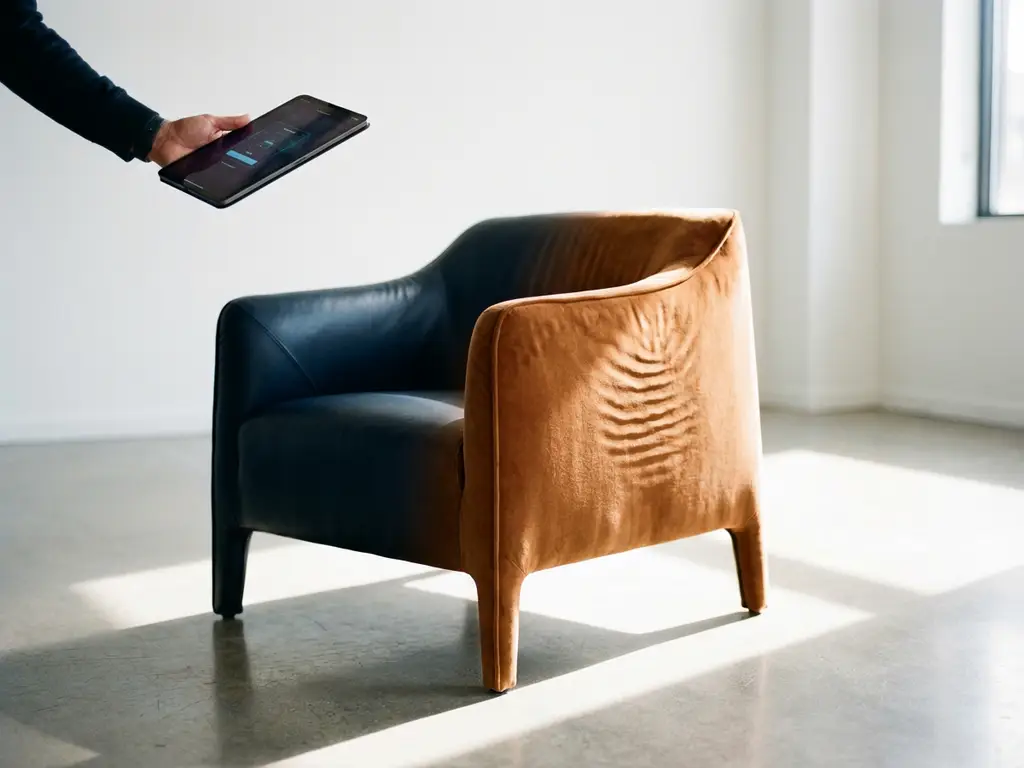
For businesses selling configurable or made-to-order products, traditional photography creates a costly bottleneck. Every new color, material, or variant requires a new photoshoot, physical samples, and weeks of production time. High-quality 3D rendering for custom products eliminates this constraint entirely. By building a single photorealistic digital model with interchangeable components, businesses can offer customers unlimited configuration options with instant visual feedback, no physical samples, no scheduling delays, and no consistency issues across product variants. This technology is redefining how premium brands present customizable products online, in-store, and across every sales channel, and we are proud to be at the forefront of delivering it.
What is 3D product rendering, and how does it work for customization?
3D product rendering is a computer graphics technology that generates photorealistic images of products using digital 3D models and advanced lighting algorithms. For product customization, it works by building detailed 3D models with interchangeable components, materials, and colors that customers can modify instantly through an interactive interface, without any physical samples or reshoots. This is the foundation of high-quality 3D rendering for custom products, and it is what makes modern product configuration truly scalable.
The technology relies on several key components. Digital artists create accurate 3D models of products through custom 3D product modeling, capturing all possible variations and customization options with precision. These models include detailed surface properties, textures, and material behaviors that respond realistically to lighting conditions. When customers interact with a configurator, the rendering engine processes their choices and generates updated images in real time.
The customization process happens through interactive interfaces where users select options such as colors, materials, sizes, or features. Each selection prompts the rendering system to update the visual representation immediately, showing exactly how the customized product will look. This creates an engaging experience where customers can experiment with different combinations and see results instantly, making interactive product visualization one of the most powerful tools available to premium brands today.
Why is 3D rendering better than traditional photography for product customization?
Visual Commerce Solutions
Talk to our team about your project.
3D rendering surpasses traditional photography for product customization because a single 3D model can generate thousands of distinct product configurations, while photography requires manufacturing and photographing each variant individually. This difference in scalability is the core reason businesses with large or complex product ranges move from photography to 3D rendering. Industry experience consistently shows that product pages featuring interactive 3D visualization generate significantly higher engagement than static image pages, with reported uplift figures regularly in the range of 30 to 45%. Return rates for customized products also drop measurably when buyers can preview their exact configuration before purchase. As e-commerce continues to grow and facilitate an ever-larger share of global purchases, investing in high-quality 3D rendering for custom products positions brands ahead of this shift rather than scrambling to catch up.
Unlimited product variations without physical samples
With 3D rendering, every color, material, and configuration option exists as a digital parameter rather than a physical object. A brand offering sofas in 40 fabrics and 6 leg finishes would need 240 separate photoshoots under traditional methods. With a single high-quality 3D model, all 240 combinations, and any future additions, are available immediately. This scalability is simply not achievable with conventional photography workflows.
Lower production costs at scale
Cost efficiency is one of the most significant advantages. Traditional photography requires physical prototypes, professional photography setups, and extensive post-production work for each product variation. With 3D rendering, businesses create one digital model that generates countless variations at no additional production cost per variant. Over time, the savings compound dramatically, particularly for brands that regularly update their product ranges or expand into new markets.
Real-time speed and configuration flexibility
Speed and flexibility offer additional benefits. Photography requires scheduling, setup time, and waiting for physical samples to be produced. 3D rendering produces updated product images instantly when customers make selections. Colors, materials, and configurations change in real time, creating a fully responsive customization experience that keeps buyers engaged and confident throughout the process.
Consistent visual quality across all variants
Visual consistency across all product variations is another distinct advantage of 3D rendering. Every rendered image maintains identical lighting, camera angles, and quality standards. Traditional photography often introduces slight variations between shots, which can create inconsistent product presentations and undermine customer confidence, a risk that premium brands cannot afford to take.
How does real-time 3D visualization enhance the customer experience?
Real-time 3D visualization enhances the customer experience by delivering instant, photorealistic feedback at every step of the customization process. When a customer selects a color, material, or configuration, the rendered image updates immediately, eliminating the uncertainty that typically drives hesitation and product returns in online commerce. This form of interactive product visualization is now a defining expectation among buyers of premium and luxury goods.
Interactive exploration capabilities allow customers to view products from multiple angles, zoom in on details, and examine textures closely. This level of interaction closely replicates the in-store shopping experience, where customers can handle and inspect products before purchasing. The result is measurably higher confidence in online purchasing decisions.
Material and texture representation is highly realistic in modern 3D rendering systems. Customers can see how different fabrics drape and appear, how metal finishes reflect light, or how wood grain looks under various lighting conditions. This fidelity closes the gap between digital representation and physical product, a critical factor for high-end and luxury goods where material quality is central to the buying decision.
Purchase uncertainty is reduced when customers can thoroughly explore their customized products before ordering. They understand exactly what they are purchasing, which leads to higher satisfaction rates and fewer returns. The interactive experience builds confidence in customization choices and supports more decisive purchasing behavior.
How do augmented reality and virtual reality extend 3D product customization?
Augmented reality and virtual reality represent the natural next step beyond on-screen 3D configuration. Both technologies build directly on the same high-quality 3D assets used in a product configurator, extending the value of that initial investment while opening entirely new dimensions of customer engagement. For brands in furniture, automotive, fashion, and luxury goods, AR and VR are rapidly moving from novelty to competitive necessity.
Augmented reality for in-context product visualization
Augmented reality allows customers to use their smartphone or tablet camera to overlay a configured 3D product directly into their real environment. A buyer configuring a sofa can place it in their actual living room, matching the fabric color to their existing decor and confirming the dimensions fit the space, before placing a single order. This capability is particularly powerful for furniture, home decor, and any product where spatial fit and aesthetic compatibility drive the purchase decision. By using AR-ready 3D assets, brands eliminate one of the most common sources of return: the product looks different in the home than it did on screen.
For luxury and high-end brands, AR also carries a strong brand perception benefit. Offering an immersive, technology-forward shopping experience signals innovation and premium quality, reinforcing the brand values that discerning buyers expect. Our platform is built to deliver AR-ready 3D assets as a standard output, meaning brands can activate AR experiences without rebuilding their asset library from scratch.
Virtual reality for immersive product showrooms
Virtual reality takes the experience further by placing buyers inside a fully digital environment where they can explore configured products at full scale. An automotive brand can invite a customer into a virtual showroom to walk around a configured vehicle, inspect interior materials up close, and experience the product in a way that no physical dealership visit can fully replicate for a made-to-order vehicle. A luxury furniture brand can construct a virtual room set dressed entirely with configurable pieces, allowing interior designers and end buyers to explore complete room concepts before committing.
VR is also a powerful tool for trade shows, brand events, and high-value B2B sales presentations, where the ability to demonstrate a full product range without physical samples creates a significant competitive advantage. Our 3D customization platform is designed with this broader ecosystem in mind, ensuring that the assets we build for your configurator are equally suited to AR and VR deployment.
What types of products benefit most from 3D customization rendering?
Products with high configuration complexity, including multiple material choices, color variants, or modular components, benefit most from 3D customization rendering. The technology is particularly effective in industries where visual accuracy directly influences purchasing confidence and where photographing every variant individually would be cost-prohibitive.
Furniture and interior design products benefit greatly because they involve multiple material choices, colors, and configuration options. Customers can visualize how sofas look in different fabrics, how kitchen cabinets appear in various wood finishes, or how lighting fixtures complement their spaces, all without a physical showroom visit.
Automotive products excel with 3D customization, allowing customers to explore paint colors, wheel options, interior materials, and accessory combinations. The complexity of automotive customization makes 3D rendering essential for showing realistic results across thousands of possible configurations.
Fashion and accessories benefit significantly from 3D rendering, particularly for customizable items such as shoes, bags, or jewellery. Customers can experiment with colors, materials, patterns, and personalization options while seeing realistic representations of their choices.
Electronics and technology products use 3D customization for cases, colors, and configuration options. Home goods such as appliances, decorative items, and custom fixtures also benefit from the technology’s ability to show material variations and finish options with precision.
Which industries and brands are leading with 3D product customization?
Across the luxury and high-end market, the brands setting the standard for customer experience are those that have moved beyond static imagery and embraced interactive product visualization at scale. The adoption of 3D configurator services is no longer limited to early adopters. It is now a defining characteristic of brands that take their digital presence as seriously as their physical craftsmanship.
Luxury watchmakers are among the most compelling examples of 3D customization done at the highest level. A watch with multiple case materials, dial configurations, and strap options can represent hundreds of thousands of possible combinations. Photographing every combination is impossible. With a high-quality 3D configurator, buyers can compose their exact timepiece, see every detail rendered with the precision the category demands, and order with complete confidence. The result is reduced reliance on physical samples, faster time-to-market for new references, and a digital buying experience that matches the brand’s premium positioning.
Premium footwear brands have demonstrated how 3D customization transforms the personalization category. Allowing customers to select upper materials, sole colors, lace options, and embroidered details through an interactive product visualization tool creates a sense of ownership before the product even exists. Brands operating in this space report stronger emotional connection to the product, higher average order values, and significantly fewer returns compared to standard e-commerce product pages.
Designer furniture labels use 3D configurator services to solve one of the sector’s oldest challenges: helping customers commit to a significant purchase without seeing the exact piece in their home. By combining photorealistic rendering with AR-ready 3D assets, leading furniture brands now offer buyers the ability to configure a sofa, visualize it in their living room via smartphone, and place an order, all within a single session. The reduction in abandoned configurations and the increase in conversion rates at this price point are substantial.
High-end cosmetics and packaging brands are increasingly using 3D configuration to offer personalized packaging, engraving options, and limited-edition colorways without the cost of producing physical samples for every variation. The ability to render packaging materials, finishes, and print details with photographic accuracy makes 3D rendering indispensable for brands where presentation is inseparable from the product itself. We work with brands in exactly these segments, delivering the photorealistic configurator experiences that luxury buyers expect.
What is the future of 3D product rendering and customization technology?
The technology underpinning 3D product rendering is advancing rapidly, and the brands investing in high-quality configurator infrastructure today are positioning themselves to benefit from each successive wave of innovation. For business decision-makers evaluating a long-term platform investment, understanding where the technology is heading is as important as understanding what it delivers today.
AI-assisted rendering is already reshaping production workflows. Machine learning models are accelerating the generation of photorealistic images, enabling faster iteration across large product catalogs and scalable variation production without proportional increases in cost or time. For brands managing hundreds of SKUs with complex configuration matrices, AI-driven rendering workflows represent a fundamental efficiency gain that compounds over time as the model library grows.
Real-time ray tracing is bringing cinema-quality lighting and reflections into live configurator environments. Advances in GPU processing power mean that the kind of physically accurate light simulation previously reserved for offline rendering is now achievable in real time, directly within the browser or app experience a customer uses to configure their product. This raises the visual quality ceiling for interactive product visualization to a level that was not commercially viable just a few years ago.
Platform convergence is making the initial investment in high-quality 3D rendering for custom products increasingly valuable over time. The 3D assets created for a web configurator are the same assets that power AR experiences, VR showrooms, and increasingly, digital-to-physical production workflows where the 3D model feeds directly into manufacturing systems. A single well-built asset library becomes the foundation for every customer-facing and production-facing application a brand runs. Our platform is built on this evolving technology stack, ensuring that every asset we create for you is ready for wherever the technology takes the industry next.
How do businesses integrate 3D product configurators into their sales process?
A 3D product configurator is an interactive tool that lets customers build and visualize customized products in real time, typically embedded within an e-commerce platform or used by sales teams in direct selling contexts. Businesses integrate configurators across multiple touchpoints to support the full sales journey, from initial online discovery through to final purchase.
E-commerce platform integration
E-commerce integration is the most common starting point. The configurator embeds directly into product pages, allowing customers to customize and visualize products while shopping online. This integration connects with inventory systems and pricing engines to ensure accurate, real-time product and pricing information.
In-store kiosk and display deployment
In-store implementation involves deploying configurators on tablets, kiosks, or large displays, where sales staff can guide customers through customization options. This approach combines the benefits of digital visualization with personal service, creating engaging retail experiences that support higher-value purchasing decisions.
Field sales and trade show tools
Sales team tools include portable configurators on tablets or laptops for trade shows, client meetings, and field sales situations. Sales representatives can demonstrate products, show customization options, and generate quotes instantly using the same visualization platform.
Omnichannel configuration continuity
Omnichannel consistency ensures customers can start customization on one device and continue on another. The system saves configurations across touchpoints, enabling seamless transitions between online browsing, in-store consultations, and final purchase decisions, without losing the customer’s progress or preferences.
Frequently asked questions about 3D product rendering and customization
How long does it take to set up a 3D product configurator?
Project timelines vary depending on the complexity of the product range and the number of configuration options required. Straightforward single-product configurators can move from briefing to go-live relatively quickly, while complex multi-variant catalogs with extensive material libraries naturally require more development time. We work closely with each client to scope the project accurately from the outset, so timelines are clear and realistic before any work begins.
How does 3D rendering integrate with existing e-commerce platforms?
Our 3D configurator services are designed to integrate with the major e-commerce platforms and custom-built storefronts. We handle the technical integration as part of the project, connecting the configurator to your existing product data, pricing logic, and order management systems. The goal is a seamless experience for both your customers and your internal teams, with no disruption to your existing workflows.
What is the difference between 3D modeling and 3D rendering?
3D modeling is the process of building the digital object itself, defining its geometry, structure, and the properties of its surfaces and materials. 3D rendering is the subsequent process of generating a photorealistic image from that model by simulating how light interacts with the surfaces. In a product configurator, both happen in sequence: the model defines what the product looks like in every configuration, and the rendering engine produces the visual output the customer sees in real time.
Is 3D product rendering cost-effective for premium brands?
For premium brands with complex or configurable product ranges, high-quality 3D rendering for custom products is consistently more cost-effective than traditional photography over the medium and long term. The investment in a single high-quality 3D model eliminates recurring photography costs for every variant, every season update, and every new market adaptation. Unlimited visual variations are generated from one asset, at no additional production cost per image. For brands where visual quality is non-negotiable, this combination of cost efficiency and output quality makes 3D rendering the clear choice.
Can 3D configurators support augmented reality experiences?
Yes, and this is one of the most compelling reasons to invest in a professionally built 3D configurator rather than a basic visualization tool. When 3D assets are created to the right technical standard, they serve as AR-ready 3D assets that can be deployed directly into augmented reality experiences without rebuilding the asset library. Our platform produces assets that are compatible with AR deployment from the outset, meaning the configurator you launch today is already prepared for the AR experiences your customers will expect tomorrow.
How 3Dimerce helps with product customization
We specialize in creating sophisticated 3D configurator services built for the luxury, design, and high-end market, where visual quality, brand consistency, and performance are non-negotiable. Our platform delivers photorealistic visualizations with blazing-fast rendering across all devices, ensuring smooth customization experiences whether customers shop online or in premium retail environments.
Our comprehensive solution includes:
- High-quality 3D product modelling with unlimited customization options
- Real-time rendering technology that updates instantly as customers make selections
- Seamless integration with existing e-commerce platforms and retail systems
- Omnichannel deployment supporting web, mobile, in-store, and AR-ready 3D assets
- Configure-Price-Quote (CPQ) functionality that streamlines the sales process from configuration to order
Choosing between a generalist agency, a freelance 3D artist, and a specialist platform is one of the most consequential decisions a premium brand makes when investing in product configuration. Freelancers and generalist agencies may offer lower entry costs, but they typically lack the deep product configuration logic, real-time rendering performance, and luxury-grade visual quality that high-end brands require. Off-the-shelf 3D tools demand significant internal expertise and ongoing maintenance, placing the burden on your team rather than a dedicated partner. We combine the technical depth of a purpose-built platform with the tailored service of a specialist who understands the luxury market, delivering custom 3D product modeling and 3D configurator services built specifically for high-end product customization at scale.
Our track record in the luxury and high-end market speaks for itself. We have delivered sophisticated 3D configurator solutions across a growing portfolio of projects spanning premium furniture, fashion, automotive, and luxury goods, helping brands eliminate costly photography workflows and launch customizable product experiences that match the expectations of discerning buyers. Our clients consistently report measurable reductions in product return rates and significant increases in buyer confidence following the deployment of our high-quality 3D rendering for custom products.
We focus exclusively on the luxury and high-end market, delivering stunning visual quality that matches premium brand positioning. Our platform scales effortlessly across large product ranges while maintaining consistent performance and visual excellence. Learn more about our expertise in developing cutting-edge 3D visualization solutions for design-led brands.
Ready to transform your product customization experience? Contact our team to discuss how our 3D configurator platform can enhance your sales process and customer engagement.