
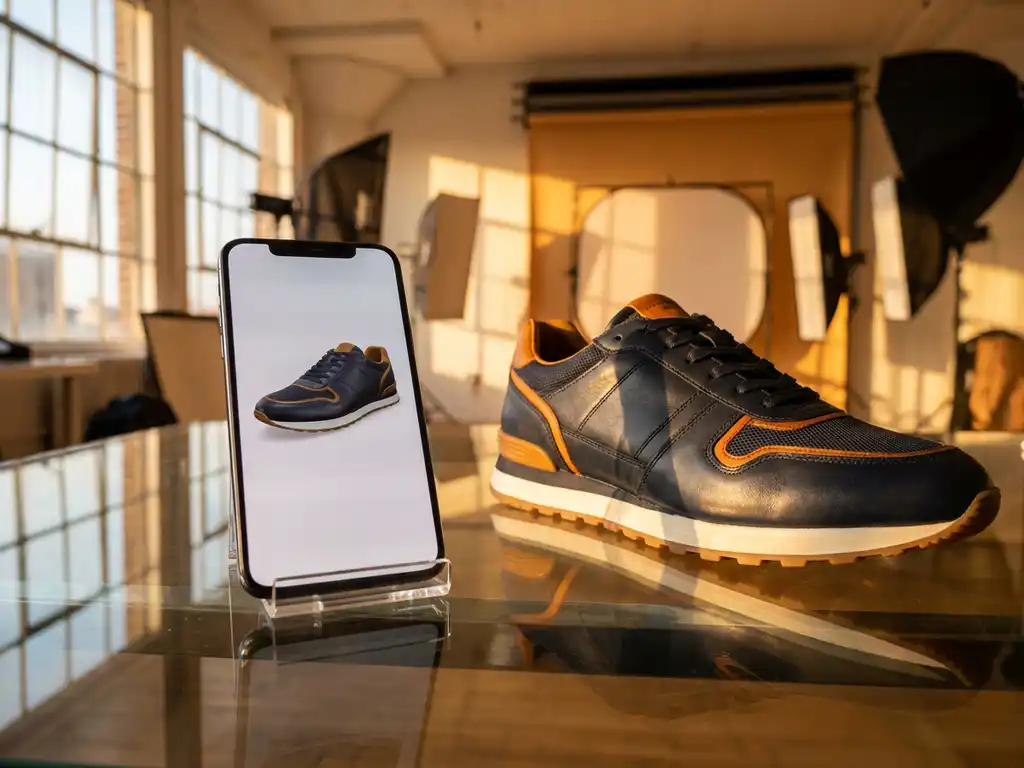
3D product rendering significantly influences purchase decisions by creating immersive, interactive experiences that allow customers to visualize products with unprecedented detail and customization options. This technology transforms static product images into dynamic, explorable assets that build confidence and reduce uncertainty in the buying process. Research consistently shows that customers who interact with 3D product visualizations are more likely to complete purchases and report higher satisfaction with their buying decisions.
Why are flat product images costing you potential sales?
Traditional product photography creates a fundamental disconnect between what customers see online and what they expect to receive. When shoppers encounter static images, they struggle to understand product dimensions, textures, and how items will look in their specific environment. This uncertainty translates directly into abandoned carts, increased return rates, and lost sales opportunities. For design-led and luxury brands, flat photography fails to communicate the craftsmanship and premium quality that justify higher price points. The solution lies in adopting 3D visualization that allows customers to explore products from every angle, zoom into details, and see realistic materials and finishes that build genuine confidence in their purchase decision.
How is limited product customization holding back your conversion rates?
Modern consumers expect personalization, yet most online shopping experiences force them to choose from a handful of pre-photographed variants. When customers cannot visualize their specific configuration choices, they hesitate to commit to purchases, especially for high-value items like furniture or luxury goods. This limitation becomes particularly costly for brands offering multiple colors, materials, or configuration options, where photographing every combination becomes prohibitively expensive. Interactive 3D configurators solve this challenge by generating real-time visualizations of any product combination, allowing customers to see exactly what they’re buying before they buy it. This immediate visual feedback dramatically reduces purchase anxiety and increases conversion rates.
Visual Commerce Solutions
Talk to our team about your project.
What is 3D product rendering and how does it work?
3D product rendering is the process of creating photorealistic digital images and interactive experiences from three-dimensional computer models. The technology begins with detailed 3D modeling, where products are digitally recreated with precise measurements, materials, and textures. Advanced rendering engines then simulate realistic lighting, shadows, and reflections to produce images that are often indistinguishable from traditional photography.
The process involves several key steps: first, 3D artists create accurate digital models based on product specifications and CAD files. Next, they apply realistic materials and textures that capture the authentic look and feel of surfaces like wood grain, fabric weaves, or metal finishes. Finally, sophisticated lighting algorithms calculate how light interacts with these materials to produce stunning visual output that brings products to life on screen.
How does 3D visualization impact customer buying behavior?
3D visualization fundamentally changes how customers interact with products online by reducing the psychological barriers to purchase. When shoppers can rotate, zoom, and examine products in detail, they develop a stronger emotional connection and greater confidence in their buying decisions. Studies indicate that interactive 3D experiences can increase engagement time by up to 300% compared to static images.
The technology particularly influences purchase behavior by addressing the “touch and feel” gap that exists in online shopping. Customers can examine product details, understand scale and proportions, and visualize how items will look in their space. This enhanced understanding leads to more informed purchase decisions, reduced buyer’s remorse, and significantly lower return rates. For complex or customizable products, 3D visualization becomes essential for helping customers navigate choices and feel confident about their final selection.
What’s the difference between 3D rendering and traditional product photography?
Traditional product photography captures existing physical products under controlled lighting conditions, while 3D rendering creates photorealistic images from digital models without requiring physical prototypes. This fundamental difference offers several advantages: 3D rendering allows for unlimited variations and configurations without additional photoshoot costs, provides consistent lighting and quality across all images, and enables interactive features impossible with static photography.
From a practical standpoint, traditional photography requires physical samples, studio time, and professional equipment for each product variant. Changes or updates mean new photoshoots and associated costs. 3D rendering, however, allows for instant modifications, unlimited viewing angles, and the ability to showcase products that don’t yet exist physically. The technology also enables features like real-time customization, augmented reality integration, and seamless updates as products evolve. Check out our use cases to see how leading brands leverage these advantages.
How do interactive 3D configurators influence purchase decisions?
Interactive 3D configurators transform passive browsing into active engagement, allowing customers to build and visualize their ideal product in real time. This hands-on approach creates a sense of ownership before purchase, as customers invest time and mental energy in creating their perfect configuration. The psychological impact is powerful: when people participate in designing their product, they become emotionally invested in the outcome.
These configurators also eliminate uncertainty about product combinations and compatibility. Customers can experiment with different colors, materials, and features while seeing immediate visual feedback. This transparency builds trust and reduces the risk perception associated with customized purchases. Advanced configurators also integrate pricing information, showing how different choices affect cost in real time, which helps customers make informed decisions within their budget constraints.
What industries benefit most from 3D product rendering for sales?
Industries with complex, customizable, or high-value products see the greatest impact from 3D product rendering. Furniture and interior design lead this space, where customers need to visualize how pieces will look in their homes and coordinate with existing decor. Automotive, jewelry, and luxury goods also benefit significantly, as these purchases involve substantial investment and emotional consideration.
Manufacturing industries with extensive product catalogs find 3D rendering particularly valuable for streamlining sales processes and reducing dependency on physical samples. Architecture and construction use the technology for client presentations and design approval processes. Fashion and footwear brands leverage 3D rendering for rapid prototyping and seasonal collections. Any industry where product visualization directly impacts purchase confidence can benefit from implementing comprehensive 3D visualization solutions.
How 3Dimerce helps with 3D product rendering
We specialize in creating stunning, blazing-fast 3D product configurators that transform how luxury and design-led brands present their products. Our comprehensive visual product experience platform combines cutting-edge 3D rendering technology with seamless integration capabilities, delivering photorealistic visualizations that match the premium positioning of high-end brands.
Our solution offers:
- High-quality 3D product configurators with unlimited customization options
- Seamless integration with existing e-commerce platforms and in-store systems
- Real-time rendering that maintains stunning visual quality at lightning speed
- A scalable SaaS platform that grows with your product range
- Expert support from our team with over 20 years of experience in virtual art and design
Ready to revolutionize your product visualization and boost conversion rates? Contact us today to discover how our 3D rendering solutions can transform your customers’ buying experience and drive measurable sales growth.
Frequently Asked Questions
How long does it take to implement 3D product rendering for an existing e-commerce store?
Implementation typically takes 2-4 weeks depending on your product catalog size and customization requirements. The process includes 3D model creation, platform integration, and testing phases. Most businesses can start seeing results within the first month, with full optimization achieved by month two.
What's the typical ROI timeline for investing in 3D product visualization?
Most businesses see initial conversion rate improvements within 30-60 days of implementation, with full ROI typically achieved within 6-12 months. The investment pays for itself through increased conversion rates, reduced return rates, and decreased need for traditional product photography shoots.
Do 3D configurators slow down website loading times?
Modern 3D rendering technology is optimized for web performance and typically loads faster than high-resolution image galleries. Advanced compression and streaming techniques ensure smooth performance across devices, often improving page speed compared to multiple static product images.
Can 3D product rendering work effectively on mobile devices?
Yes, responsive 3D configurators are designed to work seamlessly across all devices, including smartphones and tablets. Touch-optimized controls make mobile interaction intuitive, and progressive loading ensures smooth performance even on slower mobile connections.
What happens if I need to update product specifications or add new variants?
3D models can be easily updated without additional photoshoots or studio time. Changes to colors, materials, dimensions, or new product variants can typically be implemented within 24-48 hours, providing much more flexibility than traditional photography workflows.
How do customers react to 3D product configurators compared to traditional product images?
Customer feedback consistently shows higher engagement and satisfaction with 3D configurators. Users spend 2-3 times longer exploring products, report feeling more confident about purchases, and express appreciation for the ability to see exactly what they’re buying before committing.
What technical requirements do I need to integrate 3D rendering into my existing platform?
Most 3D rendering solutions integrate seamlessly with popular e-commerce platforms like Shopify, WooCommerce, and Magento through APIs or plugins. Basic integration requires minimal technical knowledge, while advanced customizations may need developer support for optimal implementation.