
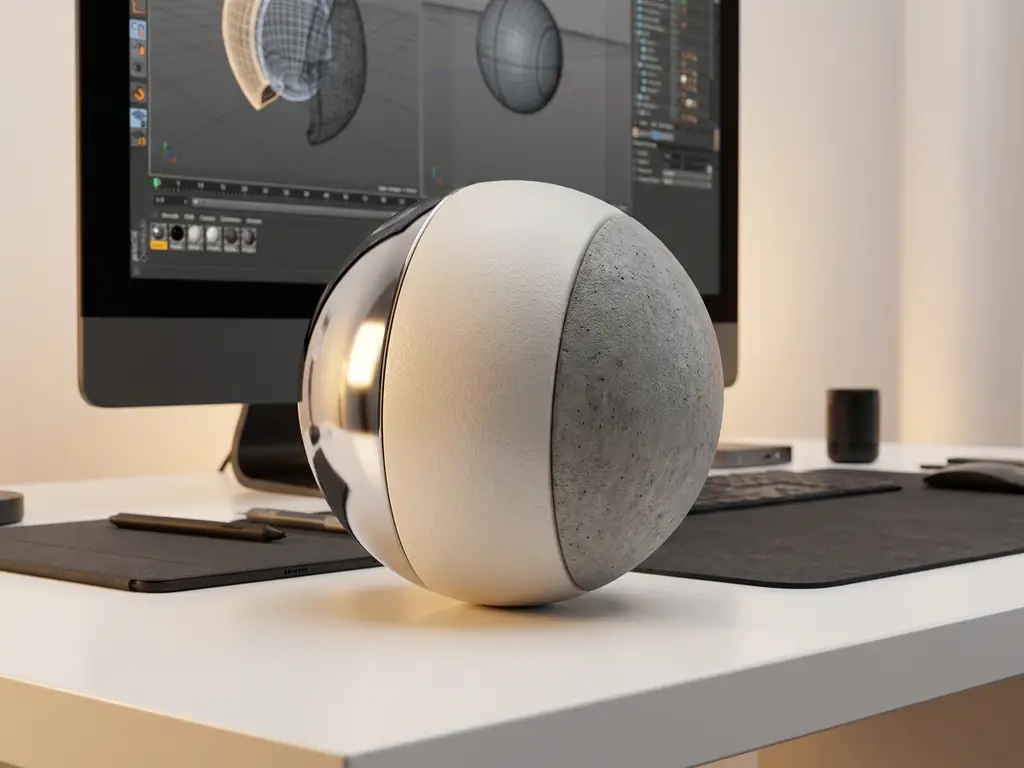
Photorealistic rendering refers to computer graphics techniques that create images so realistic they are virtually indistinguishable from photographs. This technology combines advanced algorithms, sophisticated lighting models, and precise material simulation to produce highly accurate visual results. Photorealistic rendering has become a competitive necessity for modern businesses across e-commerce, architecture, and entertainment, enabling them to showcase their offerings with unprecedented visual fidelity. Understanding the techniques behind photorealistic rendering is the first step toward leveraging its full potential.
What is photorealistic rendering and why does it matter?
Photorealistic rendering is a computer graphics process that simulates how light interacts with surfaces, materials, and environments to produce images that closely mimic real-world photography. Unlike basic 3D modeling, photorealistic rendering incorporates complex physics calculations that account for light behavior, surface properties, and environmental factors, resulting in images that are difficult to distinguish from photographs. The technique relies on algorithms such as ray tracing and path tracing, and on material systems built around Physically Based Rendering (PBR) principles.
The importance of photorealistic rendering extends across multiple industries. For product manufacturers and retailers, it eliminates the need for expensive photography sessions while providing unlimited flexibility for showcasing product variations. Architects use it to help clients visualize spaces before construction begins. In the entertainment industry, it brings fictional worlds to life with high levels of realism.
Modern photorealistic rendering enables businesses to create compelling visual experiences that engage customers more effectively than traditional photography. The technology allows for real-time adjustments, infinite customization options, and consistent quality across all product variants.
Which industries benefit most from photorealistic rendering techniques?
Photorealistic rendering delivers measurable value across a wide range of sectors. Three industries in particular have embraced it as a core part of their visual strategy, each relying on specific techniques to solve distinct business challenges.
E-commerce and product visualization
For e-commerce businesses, photorealistic rendering solves one of the most persistent challenges in online retail: helping customers feel confident about a product they cannot physically examine. By applying Physically Based Rendering (PBR) materials to a single 3D model, a furniture retailer can render the same sofa in 20 fabric options and 6 frame finishes without a single reshoot, compressing time-to-market dramatically. This approach also eliminates the inconsistency that plagues traditional photography, where lighting conditions vary between sessions and product variants look subtly different across the catalog. We deliver this capability for high-end e-commerce brands, ensuring every variant is presented with the same stunning visual quality.
Architectural visualization and interior design
Architects and interior designers use photorealistic rendering to help clients emotionally connect with a space before a single wall is built, eliminating uncertainty at the most expensive stage of a project. Global illumination and HDR (High Dynamic Range) environment maps recreate the precise quality of natural light at different times of day, making unbuilt spaces feel genuinely inhabitable rather than diagrammatic. Material libraries allow clients to compare flooring, wall finishes, and furniture configurations in context, accelerating decision-making and reducing costly late-stage changes. We apply these techniques to architectural visualization projects that demand the highest standard of visual fidelity.
CGI and entertainment
In CGI and entertainment production, photorealistic rendering techniques have reached a level where characters and environments are routinely indistinguishable from live-action footage. Path tracing produces the volumetric lighting, color bleeding, and subsurface scattering (SSS) that give skin, hair, and organic materials their lifelike depth and warmth. These techniques require significant computational resources but deliver results that justify the investment at the scale of feature film and high-end game production. We bring the same level of rendering sophistication to product and brand visualization, giving luxury clients access to entertainment-grade visual quality.
Photorealistic rendering in product development and prototyping
Manufacturers and product teams increasingly use photorealistic rendering to evaluate design concepts, materials, and color variants before committing to physical prototypes. A furniture manufacturer can render the same chair in 12 upholstery options and 4 wood finishes in a single afternoon, gathering stakeholder feedback before a single physical sample is produced. This replaces weeks of sample production with hours of rendering, compressing development cycles and reducing material waste. We deliver this capability for clients in the design and luxury segment, combining blazing-fast rendering performance with the tailored quality their brands demand.
What are the main rendering algorithms used for photorealism?
Several core algorithms form the foundation of photorealistic rendering in computer graphics, each simulating a different aspect of real-world light behavior. The right choice depends on the scene’s complexity, the materials involved, and whether the output is static or interactive.
- Ray tracing traces the path of light rays from the camera through each pixel in the image, calculating how light bounces off surfaces and interacts with materials. Ray tracing accurately simulates reflections, refractions, and shadows, and is widely considered the gold standard for photorealistic 3D rendering output.
- Path tracing extends ray tracing by following multiple light paths and averaging the results. This technique excels at capturing subtle lighting effects like global illumination, where surfaces are lit by light bouncing off other surfaces rather than direct light sources.
- Radiosity focuses specifically on diffuse lighting interactions between surfaces. This algorithm calculates how light energy transfers between surfaces in an environment, producing realistic ambient lighting effects.
- Hybrid rendering combines multiple algorithms to balance quality with performance, for example using ray tracing for reflections and shadows while applying faster techniques to other lighting calculations.
Choosing the right algorithm depends on the specific requirements of each scene. The following scenarios illustrate which approach delivers the best results:
- For products with complex reflective surfaces: Ray tracing delivers the most accurate results, faithfully reproducing mirror-like finishes, polished metals, and glass.
- For scenes requiring realistic ambient lighting and color bleeding: Path tracing with global illumination is the preferred choice, capturing the subtle interplay of light across multiple surfaces.
- For architectural interiors with many diffuse surfaces: Radiosity efficiently calculates realistic light transfer, producing the warm, even illumination characteristic of well-lit interior spaces.
- For real-time product configurators: Hybrid rendering balances quality and performance, making interactive visualization possible without sacrificing visual fidelity.
In practice, professional rendering platforms like 3Dimerce combine these approaches intelligently, selecting the optimal algorithm for each element of the scene to maximize both visual quality and rendering speed.
What software and tools are used for photorealistic rendering?
Photorealistic rendering software falls into three broad categories: offline path tracers, real-time engines, and dedicated product rendering platforms, each suited to different production contexts and quality requirements.
Offline path tracers such as V-Ray, Corona, and Arnold use physically accurate path tracing to simulate light transport with the highest possible fidelity. These tools are the industry standard for product and architectural visualization, where render time is measured in minutes or hours per frame and absolute visual accuracy is the priority. Real-time engines such as Unreal Engine use a combination of rasterization and hardware-accelerated ray-traced effects to deliver interactive frame rates, making them the preferred choice for real-time configurators, virtual showrooms, and immersive experiences where speed matters as much as quality. Dedicated product rendering platforms occupy a middle ground, combining the visual quality of offline rendering with optimized pipelines designed specifically for e-commerce and product visualization workflows.
We operate our own high-performance rendering platform purpose-built for luxury and high-end product visualization. It combines the quality of offline rendering with the speed and scalability that modern businesses require, delivering stunning results without the production overhead of traditional rendering pipelines.
What is the step-by-step process for creating a photorealistic render?
Creating a photorealistic render follows a structured six-stage pipeline where each stage builds on the last. Decisions made early in the process, particularly around geometry quality and material definition, have a direct impact on the quality of the final image.
- Scene and geometry setup. The process begins with building or importing accurate 3D geometry. Every surface that will be visible in the final render must be modeled with sufficient detail, since gaps or inaccuracies in the geometry will become apparent once lighting is applied. Clean, well-organized geometry also reduces render times and simplifies later stages of the workflow.
- Material and texture assignment using PBR principles. Once the geometry is in place, each surface receives a physically based material that defines how it interacts with light. PBR (Physically Based Rendering) workflows use standardized parameters including metallic behavior, roughness, and reflectance to ensure materials behave consistently across different lighting conditions. Texture maps add surface detail, from wood grain and fabric weave to fingerprints and micro-scratches, that give objects their real-world character.
- Lighting configuration with global illumination and HDR. Lighting is configured using a combination of HDR (High Dynamic Range) environment maps for ambient illumination and carefully placed area lights for directional emphasis. Global illumination is enabled to ensure light bounces realistically between surfaces, eliminating the flat, artificial look that betrays basic 3D renders. The goal at this stage is to match the quality and mood of real-world studio or environmental lighting.
- Camera placement and composition. Camera placement is where the render transitions from a technical exercise to a visual communication decision. Thinking like a photographer at this stage is essential: choosing angles that flatter the product, applying a shallow depth of field to isolate the subject against a softly blurred background, and using rule-of-thirds composition to create images that feel naturally balanced. A low perspective can make a product feel monumental; a top-down angle can emphasize surface detail and pattern.
- Rendering and denoising. With the scene fully configured, the renderer calculates the final image by simulating light transport across all surfaces. Physically accurate rendering methods introduce noise at lower sample counts, so AI-powered denoisers are applied after rendering to reconstruct a clean, publication-quality image from the raw output. Modern denoisers intelligently distinguish between noise and meaningful image detail, preserving sharpness without introducing artifacts.
- Post-processing and color grading. The final stage refines the rendered image to achieve production-ready quality. Tone mapping converts the HDR output into a displayable format while preserving detail in highlights and shadows. Color grading fine-tunes the image to match specific aesthetic goals or brand references, ensuring consistent color representation across display devices and viewing conditions.
We handle this entire workflow on behalf of our clients, from geometry preparation through to final delivery, so they can focus on their business while we focus on producing visuals that are indistinguishable from studio photography.
How do lighting techniques create realistic 3D scenes?
Lighting is the single most influential factor in photorealistic rendering. The choice of lighting technique determines whether a 3D scene reads as artificial or genuinely believable. Professional rendering relies on four primary lighting approaches, each addressing a different aspect of real-world light behavior.
- Global illumination (GI) simulates how light bounces throughout an environment, ensuring surfaces receive light not only from direct sources but also from light reflected off surrounding surfaces. This mimics real-world lighting conditions and eliminates the flat, artificial look common in basic 3D renders.
- High Dynamic Range (HDR) lighting uses HDR images as environment maps to provide realistic lighting and reflections for 3D objects. HDR captures the full range of light intensities found in real environments, ensuring objects integrate naturally into their surroundings.
- Area lights and soft shadows replace harsh point lights with light sources that have physical dimensions. This creates natural-looking soft shadows and gradual light falloff that closely match how real-world light sources behave.
- Subsurface scattering (SSS) simulates how light penetrates translucent materials, such as skin, wax, or marble, before exiting at a different point. Without SSS, these materials appear flat or plastic; with it, they gain the depth and warmth of their real-world counterparts.
What materials and texturing methods make renders look real?
Realistic materials and textures transform basic 3D geometry into convincing representations of real-world objects. Modern photorealistic rendering uses four principal techniques to achieve material authenticity.
- Physically Based Rendering (PBR) materials follow real-world physics principles to determine how surfaces interact with light. PBR workflows use standardized parameters, including metallic behavior, roughness, and reflectance, ensuring materials behave consistently across different lighting conditions.
- Procedural texturing generates surface details mathematically rather than relying solely on painted textures. This approach produces infinite detail at any viewing distance while maintaining realistic surface variation, including wood grain, fabric weaves, stone patterns, and similar effects.
- Displacement mapping modifies surface geometry based on texture data, creating true three-dimensional surface detail. The result is realistic bumps, scratches, and surface irregularities that catch light naturally rather than appearing as a flat texture overlay.
- Layered material systems combine multiple surface properties to simulate complex, real-world materials. A car paint material, for example, might layer base color, metallic flakes, clear coat reflections, and surface imperfections, each contributing to a photorealistic final result.
Together, these texturing methods give artists precise control over how every surface interacts with light, and represent the key techniques for photorealistic rendering in digital art and product visualization.
How do advanced post-processing techniques enhance photorealism?
Post-processing is the final stage of the photorealistic rendering pipeline, refining raw rendered images to achieve production-ready quality. Four techniques are most commonly applied.
- Denoising algorithms remove the grain and noise inherent in physically accurate rendering methods. Modern AI-powered denoisers distinguish between noise and meaningful image detail, producing clean results without sacrificing sharpness or accuracy.
- Tone mapping converts high dynamic range (HDR) rendered images into displayable formats while preserving realistic lighting relationships, retaining detail in bright highlights and dark shadows without flattening the image.
- Color grading and correction fine-tune the final image to match specific aesthetic goals or real-world reference photography. These adjustments ensure consistent color representation across different viewing conditions and display devices.
- Depth of field and motion blur simulate the optical properties of real cameras, including natural focus falloff and movement blur, giving renders the photographic quality that makes them feel genuinely captured rather than computed.
How do you think like a photographer to achieve photorealistic results?
The most technically accurate render can still fall flat if it ignores the visual principles that make photography compelling. Approaching a render with a photographer’s mindset is what separates professional-grade output from competent but uninspiring CGI. Four principles are most critical.
- Camera angle and composition. The angle from which a product is presented shapes how it is perceived. Hero angles shot slightly below eye level make objects feel substantial and desirable, while rule-of-thirds framing creates a sense of natural balance that draws the viewer’s eye to the subject. A deliberate choice of perspective communicates intent and elevates the product beyond a simple documentation image.
- Depth of field. Applying a deliberately shallow depth of field isolates the subject against a softly blurred background, directing attention and creating the kind of intimate, studio-quality feel that customers associate with premium brands. The degree of blur can be adjusted to match the product scale, from a tight macro focus on jewelry to a gentler falloff for larger furniture pieces.
- Imperfections and micro-detail. One of the most reliable ways to distinguish professional-grade renders from amateur CGI is the deliberate addition of micro-detail: subtle surface scratches, rounded edges instead of perfectly sharp corners, slight material variation, and environmental dust. These imperfections signal authenticity to the viewer’s eye, because real objects are never perfectly uniform, and their absence is what makes basic renders feel synthetic.
- Lighting as storytelling. Light direction, color temperature, and shadow quality all communicate an emotional tone before the viewer consciously registers them. Warm, directional light evokes craft and warmth; cool, diffuse light reads as clinical precision. Planning the lighting setup before rendering, with a clear idea of the emotional response it should produce, is what transforms a technically correct image into a persuasive one.
At 3Dimerce, our artists apply these photographic principles to every render we produce, ensuring that the final output is emotionally compelling and indistinguishable from studio photography.
What are the latest trends and innovations in photorealistic rendering?
Photorealistic rendering is evolving rapidly, driven by advances in GPU hardware, machine learning, and real-time rendering engines. Three developments in particular are reshaping what is possible for businesses investing in visual technology.
Real-time ray tracing and GPU acceleration
Hardware-accelerated ray tracing, available in current-generation GPUs, has reduced render times for complex scenes from hours to minutes, making high-quality visualization accessible for real-time configurators and interactive applications. This shift means that the visual quality previously reserved for offline production pipelines can now be delivered at interactive frame rates, opening new possibilities for virtual showrooms, live product demonstrations, and browser-based configurators. The boundary between offline and real-time rendering quality continues to narrow as GPU performance improves with each hardware generation.
AI-powered rendering and denoising
Machine learning models trained on large datasets of rendered images can now reconstruct clean, publication-quality output from a fraction of the ray samples previously required, dramatically accelerating path tracing workflows. AI denoisers have become a standard part of professional rendering pipelines, enabling studios to deliver high-quality results faster without sacrificing accuracy. Beyond denoising, AI is beginning to influence material generation, lighting optimization, and scene composition, pointing toward a future where significant parts of the rendering workflow are substantially automated.
Photorealistic rendering in AR and VR
Real-time photorealistic rendering techniques are now embedded in augmented reality (AR) and virtual reality (VR) engines, allowing customers to place photorealistic product renders in their own environment via a smartphone camera. This capability transforms the purchasing experience for categories like furniture, lighting, and home accessories, where spatial context is a critical factor in the buying decision. As AR hardware matures and rendering performance improves, the gap between a rendered product image and a physically present object will continue to close.
We integrate these innovations into our platform to deliver blazing-fast, future-ready visualization solutions that keep our clients ahead of the curve.
How 3Dimerce helps with photorealistic rendering
When a customer can examine every material, finish, and detail of your product in photorealistic quality, there is no room for doubt. And doubt is what kills conversions. Photorealistic visualization removes the uncertainty that causes hesitation at the point of purchase, replacing it with the kind of confident, informed decision that reduces return rates, increases average order value, and builds the long-term customer trust that premium brands depend on.
By replacing physical photography and sample production with photorealistic renders, our clients compress their go-to-market timelines and reallocate budget toward growth. A product that previously required weeks of photography scheduling, sample shipping, and post-production can be visualized in every variant within days. The cost savings compound as the catalog grows: each additional variant costs a fraction of what a traditional reshoot would require, while the quality remains perfectly consistent across every image. Higher conversion rates for configurable products and a measurable reduction in photography costs are the outcomes our clients consistently experience.
We specialize in creating stunning photorealistic product visualizations tailored for design-led, luxury, and high-end brands. Our advanced rendering platform combines cutting-edge algorithms with deep artistic expertise to deliver visual quality that matches, and reinforces, your premium positioning. For businesses where visual excellence is non-negotiable, we are the partner of choice.
Our comprehensive solutions include:
- Real-time photorealistic configurators that showcase every product variant with stunning visual fidelity
- Blazing-fast rendering performance that maintains quality across all devices and platforms
- Seamless integration with your existing e-commerce and sales environments
- Scalable visual content production that grows with your product range without proportional cost increases
Transform your product visualization strategy with photorealistic rendering that drives engagement and conversions. Contact us today to discover how our technology can elevate your visual product experience.
Visual Commerce Solutions
Talk to our team about your project.
Frequently Asked Questions
How much does it typically cost to implement photorealistic rendering for my product catalog?
Implementation costs vary significantly based on your product complexity, catalog size, and performance requirements. While initial setup may require investment in 3D modeling and rendering infrastructure, the long-term savings from eliminating photography sessions often offset these costs within 6-12 months. Many businesses find that photorealistic rendering becomes more cost-effective than traditional photography once they have more than 50-100 product variants to showcase.
What's the typical timeline for converting my existing product photography to photorealistic renders?
The conversion timeline depends on your catalog size and complexity, but most projects follow a phased approach. Simple products can be converted within 2-4 weeks, while complex products with multiple materials and configurations may take 6-8 weeks. The key is starting with your highest-impact products and scaling gradually, allowing you to see ROI improvements while the full catalog is being developed.
Can photorealistic rendering handle products with complex materials like fabrics, liquids, or transparent elements?
Modern photorealistic rendering excels at complex materials through advanced techniques like subsurface scattering for fabrics, caustics simulation for liquids, and accurate refraction for glass or transparent plastics. These materials actually showcase the technology’s strengths better than simple surfaces, as the physics-based approach naturally handles their complex light interactions that are difficult to capture consistently in traditional photography.
How do I ensure my photorealistic renders maintain brand consistency across different products and campaigns?
Brand consistency is achieved through standardized lighting setups, color profiles, and material libraries that define your visual style. Establishing master templates for lighting environments and camera angles ensures uniformity, while centralized asset management systems maintain consistent material properties across all renders. This systematic approach actually provides better brand consistency than traditional photography, where lighting conditions can vary between shoots.
What are the most common mistakes businesses make when transitioning to photorealistic rendering?
The biggest mistakes include rushing the 3D modeling phase without proper quality control, underestimating the importance of accurate material definition, and not establishing clear style guidelines upfront. Many businesses also make the error of trying to replicate every detail from existing photography instead of optimizing for the strengths of rendering technology. Success comes from treating this as a strategic visual upgrade rather than a direct photography replacement.
Do I need specialized hardware or can photorealistic rendering work with standard business computers?
While high-end workstations accelerate rendering times, modern cloud-based rendering solutions and optimized algorithms make photorealistic rendering accessible on standard business hardware. Real-time configurators and web-based applications are designed to run smoothly on typical customer devices. For production workflows, cloud rendering services can provide enterprise-level performance without requiring significant hardware investments.
How can I measure the ROI impact of implementing photorealistic rendering for my products?
Track key metrics including conversion rates, time spent on product pages, cart abandonment rates, and customer engagement with product configurators. Many businesses see 15-30% improvements in conversion rates and significant reductions in product return rates due to better customer understanding of products. Additionally, measure cost savings from reduced photography needs, faster time-to-market for new products, and increased sales of premium or customizable product variants.