
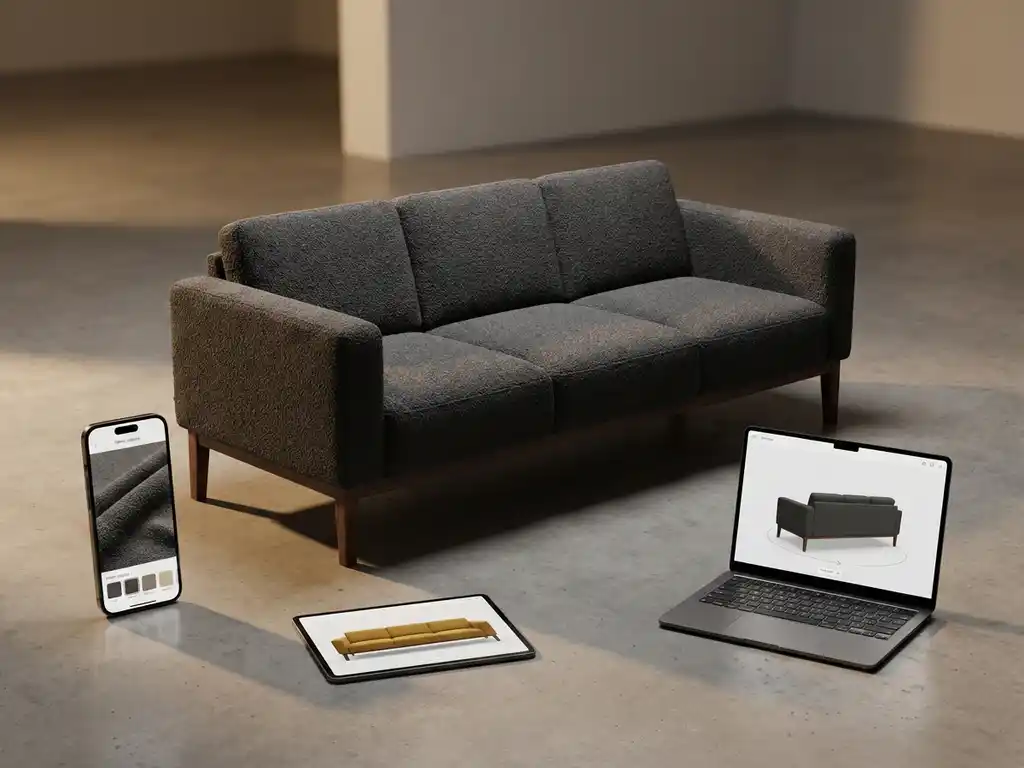
3D product rendering creates photorealistic digital images and interactive experiences that maintain consistent visual quality across all customer touchpoints. This technology enables brands to deliver unified product experiences whether customers shop online, visit physical stores, or browse mobile apps. It addresses the critical challenge of maintaining visual consistency while reducing costs and increasing flexibility in omnichannel retail strategies.
What is 3D product rendering, and how does it fit into omnichannel strategies?
3D product rendering is a digital technology that creates photorealistic images and interactive models from three-dimensional product data. Unlike traditional photography, it generates consistent, high-quality visuals that can be adapted to any channel or format requirement.
In omnichannel strategies, 3D rendering serves as the foundation for unified visual experiences. The same digital product model can generate images for your website, create interactive displays for retail stores, produce marketing materials, and power mobile applications. This consistency ensures customers receive identical visual information regardless of where they encounter your products.
The technology integrates seamlessly with various platforms and systems. Whether you need high-resolution images for print catalogues, interactive configurators for e-commerce sites, or dynamic displays for in-store kiosks, 3D rendering adapts to each requirement while maintaining brand consistency and visual quality standards.
Why do traditional product photography methods fail in omnichannel environments?
Traditional photography creates significant bottlenecks in omnichannel retail due to cost scalability issues, time constraints, and format limitations. Each product variant requires a separate photoshoot, making it financially impractical to showcase extensive customisation options across multiple channels.
Cost becomes prohibitive when dealing with configurable products. A furniture piece with ten colour options and five fabric choices would require fifty separate photoshoots to show every combination. Multiply this across seasonal collections and different marketing formats, and photography costs spiral beyond reasonable budgets.
Time constraints further complicate omnichannel execution. Traditional photoshoots require scheduling, setup, lighting adjustments, and post-production work. This timeline conflicts with the rapid pace of omnichannel retail, where visual content must be ready simultaneously across all platforms.
Format limitations present additional challenges. A photograph optimised for web display may not work effectively in print materials or mobile applications. Different channels require various aspect ratios, resolutions, and styling approaches that traditional photography cannot accommodate without multiple expensive shoots.
How does 3D rendering ensure visual consistency across all sales channels?
3D rendering maintains visual consistency by using standardised digital assets that generate identical product representations across all channels. The same three-dimensional model produces images with consistent lighting, angles, colours, and styling regardless of output format or platform requirements.
Brand identity remains intact because every visual element is controlled digitally. Colour accuracy, material textures, and product proportions stay consistent whether displayed on e-commerce websites, mobile apps, in-store screens, or printed catalogues. This eliminates the variations that occur with traditional photography across different shoots and lighting conditions.
Quality standards are maintained automatically through digital workflows. Once established, the rendering parameters ensure every image meets the same technical specifications. This consistency builds customer confidence as they recognise and trust the visual quality associated with your brand across all touchpoints.
The technology adapts output formats while preserving visual integrity. Whether generating square images for social media, landscape formats for websites, or high-resolution files for print materials, the core visual representation remains consistent. This flexibility supports comprehensive visual solutions across diverse channel requirements.
What are the key benefits of using 3D product visualisation for omnichannel retail?
Cost reduction represents the most immediate benefit of 3D product visualisation. Eliminating repeated photoshoots for product variants significantly reduces ongoing marketing expenses while enabling unlimited visual content generation from existing digital assets.
Time-to-market acceleration allows brands to launch products simultaneously across all channels. Digital rendering produces the required visuals within days rather than weeks, supporting coordinated omnichannel campaigns and rapid response to market opportunities.
The key advantages include:
- Unlimited product variants without additional photography costs
- Consistent brand presentation across all customer touchpoints
- Enhanced customer engagement through interactive experiences
- Improved conversion rates through superior product visualisation
- Streamlined inventory management with digital product libraries
- Faster adaptation to seasonal trends and market changes
Enhanced customer engagement emerges from interactive capabilities that traditional photography cannot provide. Customers can rotate products, change configurations, and explore details in ways that static images simply cannot support, creating more compelling shopping experiences across all channels.
How do interactive 3D product configurators enhance the customer journey?
Interactive 3D product configurators allow customers to personalise products in real time while visualising exactly how their choices will appear. This capability transforms the shopping experience from passive browsing to active engagement, increasing customer confidence and purchase intent.
Real-time visualisation eliminates uncertainty about customisation choices. Customers see immediate visual feedback when selecting different colours, materials, or configurations. This transparency reduces hesitation and returns while building trust in the purchasing decision.
The consistent experience across channels means customers can begin configuring products on mobile devices, continue on desktop computers, and complete purchases in physical stores. This seamless transition supports modern shopping behaviours, where customers move fluidly between different touchpoints during their journey.
Configuration data integration streamlines the entire sales process. When customers complete their product customisation, the specifications automatically flow through to manufacturing, inventory, and fulfilment systems. This integration reduces errors and ensures customers receive exactly what they visualised and ordered.
Practical examples include furniture customers selecting wood finishes and fabric colours, automotive buyers choosing paint colours and interior options, or fashion customers personalising accessories and sizing. Each interaction builds engagement while providing valuable data about customer preferences and behaviour patterns.
How 3dimerce helps with omnichannel product visualisation
Our visual product experience platform provides comprehensive omnichannel solutions that transform how brands present products across all customer touchpoints. We specialise in creating high-quality 3D product configurators that maintain stunning visual consistency whether displayed online, in-store, or through mobile applications.
Key features of our platform include:
- Seamless integration with existing e-commerce and retail systems
- Real-time product configuration with photorealistic rendering
- Automated visual content generation for all channels
- Interactive experiences that work across all devices
- Scalable solutions that grow with your product range
- Professional support throughout implementation and beyond
Our SaaS solution eliminates the complexity of managing multiple visual content workflows while ensuring blazing-fast performance across all platforms. The technology integrates through headless architecture, allowing flexible implementation that works with your existing technology stack. Learn more about our company and how we’ve become industry leaders in 3D product visualisation.
Ready to transform your omnichannel product visualisation strategy? Explore our successful implementations or contact our team to discuss how we can enhance your customer experience across all channels.