
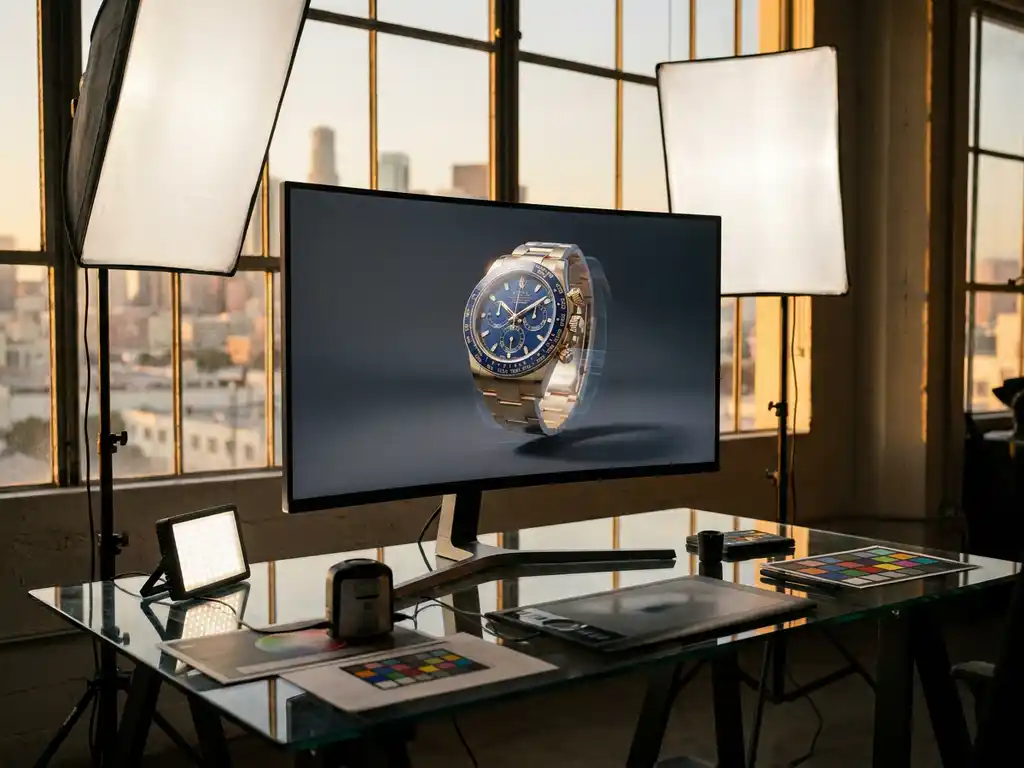
The cost of rendering varies significantly depending on your project requirements, with prices ranging from $50 for basic freelance work to $10,000+ for enterprise-level product visualization campaigns. Understanding these pricing factors helps you make informed decisions about your visual content strategy and budget allocation.
Why are low-quality renders costing you more sales than you realize?
Poor rendering quality directly impacts your conversion rates and brand perception in ways that many businesses underestimate. When customers encounter pixelated textures, unrealistic lighting, or awkward product angles, they question the quality of your actual products. Research consistently shows that 67% of online shoppers consider high-quality product images more important than product information or customer reviews when making purchase decisions.
The hidden cost compounds when customers abandon their carts due to visual uncertainty, leading to higher customer acquisition costs as you need more traffic to achieve the same sales volume. Professional rendering services, particularly those using advanced engines like Octane Render, deliver photorealistic results that build confidence and drive conversions, ultimately providing better ROI than budget alternatives.
How is choosing the cheapest rendering option limiting your market reach?
Budget rendering solutions often lack the technical capabilities needed for omnichannel marketing, restricting your ability to scale across different platforms and touchpoints. These limitations become apparent when you need consistent visuals for web, mobile, print catalogs, and in-store displays, forcing you to recreate assets multiple times or accept inconsistent brand presentation.
Professional rendering platforms offer scalable solutions that generate multiple formats, resolutions, and configurations from a single 3D model. This flexibility enables you to expand into new markets, launch product variants quickly, and maintain visual consistency across all customer touchpoints without proportional increases in production costs.
Visual Commerce Solutions
Talk to our team about your project.
What factors determine rendering prices?
Several key factors influence rendering costs, with project complexity being the primary driver. The number of products, level of detail required, and technical specifications significantly impact pricing. Simple product renders with basic materials and lighting typically cost less than complex configurators featuring multiple variants, advanced materials, and interactive elements.
Technical requirements also affect pricing, including render resolution, animation needs, and integration complexity. Projects requiring Octane Render or similar high-end engines command premium pricing due to their superior photorealistic output and computational demands. Timeline constraints, revision rounds, and ongoing maintenance requirements further influence the final cost structure.
Geographic location and service provider expertise create additional pricing variations. European providers often charge premium rates for specialized industries like luxury furniture and high-end manufacturing, reflecting their deep domain knowledge and proven track records in these sectors.
How much does product rendering typically cost?
Product rendering costs vary across different service tiers and project scopes. Freelance designers typically charge $50-500 per image for basic product visualization, while specialized agencies range from $500-2,000 per image for professional-grade work. Enterprise solutions can reach $10,000-50,000+ for comprehensive configurator platforms with multiple products and advanced functionality.
For ongoing projects, many providers offer subscription models or volume discounts. Simple product shots might cost $100-300 each, while complex configurators with multiple materials and lighting scenarios can range from $1,000-5,000 per product setup. Animation and interactive features add 50-200% to base pricing, depending on complexity and duration requirements.
Industry-specific requirements also influence pricing. Luxury brands and high-end manufacturers typically invest more in premium rendering services to maintain their market positioning, with budgets reflecting the critical role of visual quality in their sales process.
What’s the difference between freelance and professional rendering services?
Freelance rendering services offer cost-effective solutions for simple projects but often lack the infrastructure needed for complex, scalable implementations. Individual freelancers typically excel at one-off product images but may struggle with large product catalogs, consistent quality control, or technical integrations required for e-commerce platforms.
Professional rendering companies provide comprehensive solutions including project management, quality assurance, technical support, and ongoing maintenance. They offer standardized workflows, backup systems, and team redundancy that ensure project continuity. These services typically include advanced features like real-time configuration, API integrations, and cross-platform compatibility.
The choice between freelance and professional services depends on your project scope, timeline, and long-term strategic needs. While freelancers work well for limited campaigns, professional services better support businesses requiring scalable, enterprise-grade solutions with consistent output quality and reliable delivery timelines.
How does rendering pricing compare to traditional photography?
Traditional photography costs accumulate quickly when considering all associated expenses. Professional product photography typically ranges from $25-150 per image, but this doesn’t include studio rental, equipment, lighting setup, model fees, and post-production editing. Complex product configurations requiring multiple shots can easily reach $500-1,000 per variant.
3D rendering offers significant cost advantages for products with multiple configurations or variants. Once the initial 3D model is created, generating different colors, materials, or configurations costs a fraction of reshooting each variant. This scalability becomes particularly valuable for furniture, automotive, or customizable products where traditional photography would require extensive studio time for each option.
Long-term considerations favor rendering for most businesses. Photography requires new shoots for product updates, seasonal campaigns, or marketing refreshes, while 3D models can be easily modified and re-rendered. The break-even point typically occurs around 10-15 product variants, after which rendering becomes increasingly cost-effective compared to traditional photography.
What should you budget for a product visualization project?
Budget planning for product visualization should account for both initial setup costs and ongoing operational expenses. Small businesses typically allocate $2,000-10,000 for basic product visualization needs, while mid-sized companies often budget $10,000-50,000 for comprehensive solutions including multiple products and basic configuration capabilities.
Enterprise-level implementations requiring advanced features like real-time configuration, omnichannel integration, and extensive product catalogs typically require $50,000-200,000+ investments. These projects often include custom development, training, and ongoing support services that justify the higher investment through improved sales performance and operational efficiency.
Consider budgeting for annual maintenance, updates, and potential expansion when planning your visualization project. Many successful implementations start with pilot projects to demonstrate ROI before scaling to full product catalogs, allowing for phased budget allocation and risk management.
How we help with professional product rendering
We specialize in creating stunning, photorealistic product visualizations that elevate your brand and drive conversions. Our advanced 3D configurators deliver blazing-fast performance while maintaining the highest visual quality standards, ensuring your products look their absolute best across all channels.
Our comprehensive approach includes:
- Custom 3D modeling and configuration development tailored to your specific products
- Seamless integration with existing e-commerce platforms and sales systems
- Scalable solutions that grow with your product range without proportional cost increases
- Ongoing support and maintenance to ensure optimal performance
- Proven expertise in luxury and high-end markets where visual quality is paramount
Ready to transform your product visualization strategy? Contact us today to discuss your specific requirements and discover how our advanced rendering solutions can enhance your customer experience while reducing long-term visualization costs. Explore our successful case studies to see how other brands have achieved remarkable results with our platform.
Frequently Asked Questions
How long does it typically take to complete a product rendering project?
Project timelines vary based on complexity and scope. Simple product renders typically take 1-2 weeks, while comprehensive configurators with multiple products can require 6-12 weeks. Complex enterprise implementations may take 3-6 months including testing and integration. Rush projects are possible but often incur 25-50% premium pricing.
What file formats and technical specifications should I provide to get started?
Ideally, provide CAD files (STEP, IGES, or native formats), high-resolution reference photos, material specifications, and brand guidelines. If CAD files aren’t available, detailed photos from multiple angles and dimension specifications work as alternatives. Most professional services can work with various input formats and will guide you through the requirements during initial consultation.
Can rendering services handle products with complex materials like fabric, leather, or transparent elements?
Yes, professional rendering services excel at complex materials using advanced shader technologies and physically-based rendering engines. Fabric textures, leather grain, glass transparency, and metallic finishes can all be accurately reproduced. However, these materials may increase project complexity and cost by 20-40% compared to simple plastic or wood surfaces.
What happens if I need to make changes to my products after the initial rendering is complete?
Most professional services include 2-3 revision rounds in their base pricing. Minor changes like color adjustments or material swaps are typically quick and inexpensive. Major structural changes may require additional modeling work and cost 10-30% of the original project fee. Having a clear change management process upfront helps avoid unexpected costs.
How do I measure ROI from investing in professional product rendering?
Track key metrics including conversion rate improvements, reduced return rates, time-to-market for new products, and cost savings from eliminating photography shoots. Most businesses see 15-30% conversion rate improvements and 60-80% reduction in variant photography costs. Calculate the break-even point by comparing rendering investment against traditional photography costs for your product range.
Is it possible to start with a small pilot project before committing to a full product catalog?
Absolutely, and it’s highly recommended. Start with 3-5 key products to test the process, quality, and impact on your sales metrics. Pilot projects typically cost $2,000-8,000 and provide valuable insights for scaling decisions. Most professional services offer pilot-friendly pricing and can structure agreements that credit pilot costs toward larger implementations.
What ongoing costs should I expect after the initial rendering project is completed?
Plan for annual maintenance fees of 10-20% of the initial project cost, covering software updates, hosting, and minor adjustments. New product additions typically cost 60-80% less than the initial setup since workflows and standards are established. Budget for periodic refreshes every 2-3 years to maintain contemporary visual standards and incorporate new rendering technologies.