
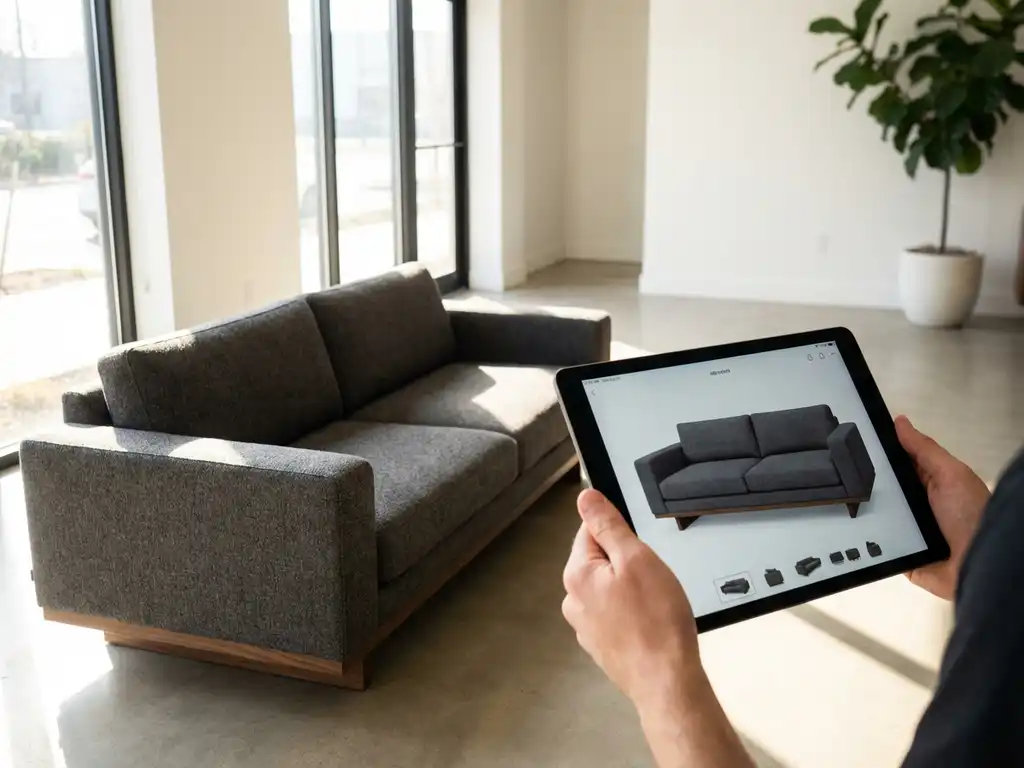
3D product rendering can significantly reduce return rates by bridging the gap between customer expectations and reality. When shoppers can visualize products accurately through interactive 3D models, they make more informed purchasing decisions. This technology addresses the primary cause of returns: the disconnect between what customers expect and what they receive, leading to higher satisfaction and fewer disappointed buyers.
What causes high return rates in e-commerce, and how does visualization play a role?
Product returns in e-commerce stem primarily from mismatched expectations, with customers returning items that don’t match the mental image they formed while shopping online. Poor product visualization creates uncertainty about size, colour, texture, and functionality, leading shoppers to make assumptions that often prove incorrect upon delivery.
The psychology of online purchasing relies heavily on visual information to compensate for the inability to physically examine products. When customers encounter static images from limited angles, they fill knowledge gaps with assumptions. This mental gap-filling process frequently results in disappointment when the actual product differs from what they imagined.
Traditional product photography struggles to convey crucial details such as scale, material textures, and functional aspects. Customers often return items because they appear larger or smaller than expected, colours look different under home lighting, or materials feel different from what they anticipated. The lack of interactive exploration means shoppers cannot satisfy their natural curiosity about product details before purchasing.
How does 3D product rendering improve customer purchase confidence?
3D product rendering builds purchase confidence by allowing customers to examine products from every angle and interact with customizable features. This comprehensive visual exploration satisfies the natural desire to thoroughly inspect items before buying, reducing uncertainty and increasing satisfaction with purchase decisions.
Interactive 3D models enable customers to rotate, zoom, and manipulate products virtually, providing the closest digital equivalent to a physical examination. This hands-on exploration allows shoppers to understand proportions, examine details, and visualize how products will look in their environment. The psychological impact of this detailed interaction creates a sense of familiarity and ownership before purchase.
Realistic rendering technology accurately represents materials, textures, and finishes, helping customers understand exactly what they’re purchasing. When shoppers can see how light reflects off surfaces, observe fabric weaves, or examine wood-grain patterns, they develop realistic expectations about the physical product. This visual accuracy translates directly into reduced surprise and disappointment upon delivery.
The ability to customize and preview variations in real time further enhances confidence. Customers can experiment with different colours, materials, or configurations while immediately seeing the results. This interactive decision-making process ensures buyers are completely satisfied with their choices before completing purchases.
Visual Commerce Solutions
Talk to our team about your project.
What specific features of 3D configurators help reduce sizing and fit issues?
Advanced 3D configurators address sizing concerns through accurate scale representation and contextual visualization. Features such as room placement tools, size-comparison objects, and dimensional overlays help customers understand true product proportions and ensure a proper fit for their intended space or use.
Scale visualization tools allow customers to place products in virtual environments or compare them against familiar objects. When shopping for furniture, customers can see how a sofa fits into a room layout or compare a table’s height with standard references. These contextual comparisons eliminate guesswork about whether items will suit their specific needs.
Material and texture accuracy prevents returns related to quality expectations. High-resolution rendering shows fabric weaves, leather grain, wood textures, and metal finishes as they actually appear. Customers can zoom in to examine surface details, understanding exactly what materials they’re purchasing and how they’ll look in different lighting conditions.
Interactive measurement tools provide precise dimensional information while maintaining visual context. Rather than relying on abstract numbers, customers can see measurements overlaid on 3D models, making size information more meaningful and actionable. This visual approach to sizing reduces misunderstandings about product dimensions.
Which industries see the biggest impact from 3D rendering on return rates?
Furniture and home décor industries experience the most dramatic reductions in return rates from 3D rendering because these products involve complex decisions about size, style, and spatial fit. Customers need to visualize how items will look in their homes and whether the dimensions suit their spaces.
Fashion and apparel benefit significantly from 3D visualization, particularly for fit-sensitive items such as shoes, clothing, and accessories. Interactive models help customers understand how items will look and fit, reducing returns related to size, style, and appearance expectations. Virtual try-on capabilities address the primary challenge of buying clothing online.
Electronics and technology products see reduced returns when customers can explore features and understand functionality through interactive 3D models. Complex products with multiple components or configuration options benefit from visualization that helps customers understand what they’re purchasing and how different elements work together.
Luxury and custom products experience substantial improvements in return rates because buyers need confidence in expensive or personalized purchases. 3D visualization allows customers to thoroughly examine high-value items and customize options before committing to significant investments.
How does 3Dimerce help reduce return rates through advanced product visualization?
3Dimerce’s comprehensive 3D product configurator platform specifically addresses return-rate challenges through photorealistic rendering, interactive customization, and omnichannel consistency. Our experienced team at 3Dimerce develops advanced visualization solutions that bridge the gap between customer expectations and product reality, ensuring shoppers know exactly what they’re purchasing.
Our platform delivers return-reducing benefits through:
- Photorealistic rendering that accurately represents materials, textures, and finishes
- Interactive 360-degree product exploration from every angle
- Real-time customization with instant visual feedback
- Accurate scale representation and contextual placement tools
- Consistent product visualization across all sales channels
- Integration with existing e-commerce platforms and retail environments
The platform’s sophisticated rendering engine produces stunning visuals that load extremely fast, ensuring customers can thoroughly explore products without technical barriers. This combination of visual quality and performance creates the ideal environment for confident purchase decisions.
Ready to reduce your return rates through advanced 3D product visualization? Contact our team to discover how our tailored solutions can transform your customer experience and improve your bottom line through fewer returns and higher customer satisfaction.