
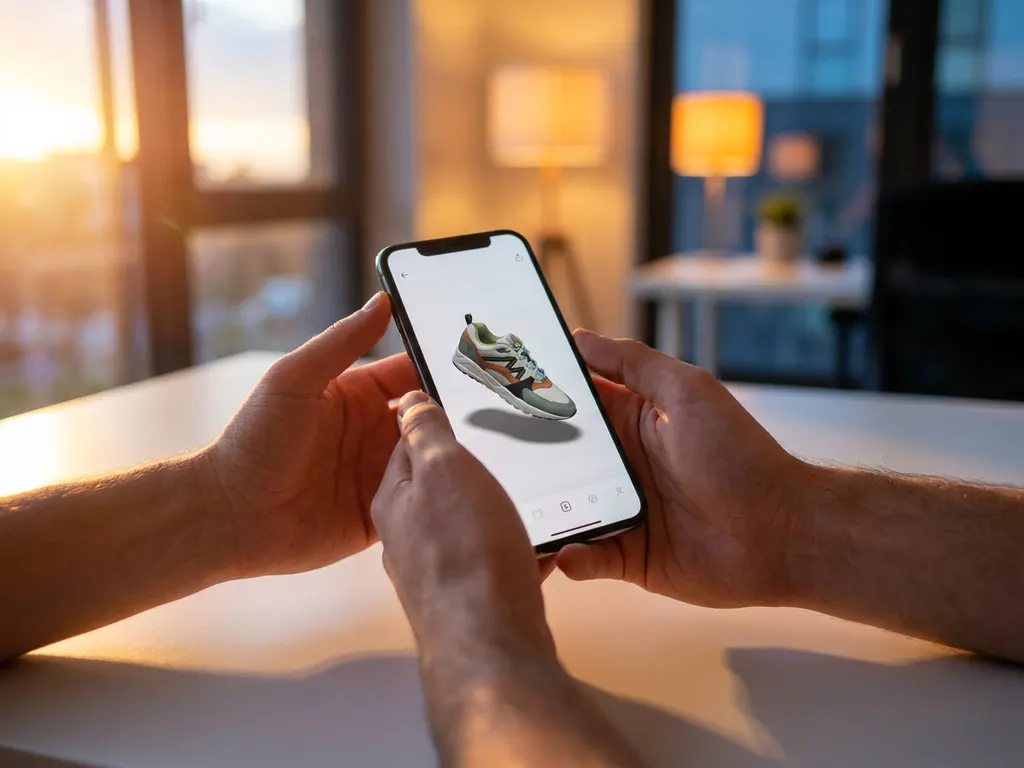
3D product animation is a digital visualization technique that creates moving, interactive representations of products using three-dimensional computer graphics. Unlike static images or traditional video, 3D product animations allow viewers to see products from every angle, explore features in detail, and interact with customizable elements in real-time. This technology transforms how businesses showcase their products, offering customers an immersive experience that bridges the gap between online shopping and physical interaction.
2D vs. 3D Product Animation: What’s the Difference?
2D animation uses flat, vector-based graphics to create motion along a single plane. It is well suited to brand storytelling, explainer videos, and illustrative content where a stylized, graphic look is the goal. The production process relies on tools like Adobe Illustrator and After Effects, and the output is typically a fixed video file with no interactive capability. Viewing angles are limited to whatever the animator draws — there is no geometry to rotate or inspect.
3D product animation, by contrast, builds a fully volumetric digital model of the actual product. Customers can explore it from every angle, configure materials and colors in real-time, and interact with features as if holding the product in their hands. The production pipeline uses CGI engines and rendering software to produce photorealistic output that matches physical reality. For premium, design-led brands where product detail and material quality are central to the purchase decision, 3D animation is unambiguously the superior choice.
| Aspect | 2D Animation | 3D Animation |
|---|---|---|
| Visual dimensionality | Flat, graphic | Volumetric, photorealistic |
| Production tools | Vector & motion graphics software | CGI modeling & rendering engines |
| Output flexibility | Fixed angles only | Full 360° exploration |
| Interactivity | None | Real-time configurators |
| Best fit | Brand storytelling, explainer videos | Product detail pages, e-commerce configurators |
Why Businesses Are Moving Beyond Traditional Product Photography
The Hidden Cost of Static Product Images
Traditional product photography captures only a single moment and perspective, leaving customers uncertain about dimensions, functionality, and how products look from different angles. This uncertainty creates friction in the buying process, leading to higher bounce rates and abandoned carts. When customers cannot fully visualize a product, they hesitate to purchase — especially for higher-value items where confidence matters most.
The limitation is structural: a static image cannot show how a premium sofa looks from the side, how a piece of electronics opens, or how a vehicle’s interior is configured. Dynamic visual experiences that let customers explore products thoroughly address this gap directly, building the confidence needed to convert browsers into buyers.
The Customization Problem Traditional Photography Can’t Solve
Many businesses offer customizable products but struggle to show all possible variations effectively. Creating separate photos for every color, material, or configuration option becomes prohibitively expensive and time-consuming. This forces companies to show only a few variations, missing opportunities to capture customers interested in specific combinations.
3D product animation was developed precisely to solve this problem. Interactive 3D visualization displays real-time customization from a single digital model, allowing businesses to showcase their full product range — every color, finish, and configuration — while reducing photography costs and accelerating time-to-market for new variants.
How does 3D product animation work?
3D product animation is built in several distinct technical stages, starting with a precise digital model and ending with an interactive or animated experience delivered through a web browser, mobile app, or in-store display.
The workflow follows this sequence:
- 3D model construction: Artists build the product’s geometry with accurate measurements and proportions using specialized 3D software.
- Material and texture application: Surfaces are assigned materials that replicate real-world properties — fabric weave, metal reflectivity, wood grain, and similar qualities.
- Lighting setup: Advanced rendering engines calculate how light interacts with each material, producing photorealistic visuals that match physical conditions.
- Animation and interaction programming: Movement paths, camera angles, and interactive triggers are defined — either following a predetermined sequence or responding to user input in real-time.
- Platform integration: The finished animation is connected to the e-commerce system, enabling automatic updates when product specifications change.
Modern 3D animation platforms can integrate directly with e-commerce systems, ensuring that animations always reflect current product offerings without requiring manual updates each time a specification changes.
The Technology Behind Professional 3D Product Animation
Professional 3D product animation relies on a layered production stack, where each tool category plays a distinct role. Modeling software such as Cinema 4D and Blender constructs the product’s geometry — every curve, edge, and surface detail. Material and texture tools like Adobe Substance apply physically accurate surface properties, from brushed aluminum to woven fabric. Rendering engines such as Unreal Engine and V-Ray then calculate how light interacts with every surface, producing the photorealistic output that premium brands demand. Finally, web delivery formats like glTF and WebGL ensure the finished animation plays natively in any modern browser, at full quality, without plugins or downloads.
Professional studios — including us — go beyond simply using these industry-standard tools. We combine them with proprietary optimization pipelines that ensure every animation is both visually stunning and blazing fast on any device, from a high-resolution desktop monitor to a mid-range smartphone. This is the difference between a technically functional animation and one that genuinely reflects the premium positioning of a design-led brand. When visual quality is a competitive differentiator, the production technology and the expertise behind it are not interchangeable.
Can You Create 3D Product Animations Yourself, or Should You Outsource?
Free and accessible tools do exist. Blender is a capable open-source modeling and rendering application, and a range of SaaS configurator platforms offer entry-level 3D visualization options. However, producing professional-quality 3D product animation requires deep expertise across modeling, texturing, lighting, and rendering — disciplines that each take years to develop independently. For brands where visual quality directly influences purchase decisions, DIY output rarely meets the standard that customers expect from a premium product experience.
Working with a specialized studio like us means access to a complete production pipeline, proprietary rendering technology, and deep e-commerce integration expertise — delivering results in weeks rather than months, at a quality level that reflects the brand’s positioning from day one. When you outsource 3D product animation to a team that works exclusively in this space, you are not paying for software access; you are investing in the accumulated craft, process efficiency, and technical infrastructure that makes the difference between an animation that looks good and one that converts. For design-led brands, that distinction is everything.
What are the main types of 3D product animations?
3D product animation covers several distinct formats, each suited to different marketing and sales objectives. The right type depends on product complexity, the level of customer interaction required, and the channel where the animation will be deployed.
- Exploded view animations disassemble products to reveal internal components and assembly processes — well suited to technical products, furniture, or anything where construction quality is a selling point.
- 360-degree rotation animations allow viewers to examine a product from every angle, simulating the experience of holding an item in their hands.
- Interactive configurator animations let customers modify colors, materials, and features in real-time, with instant visual feedback. These are particularly valuable for customizable products such as furniture, vehicles, and electronics.
- Lifestyle animations place products in realistic environments, showing how they fit into a customer’s daily life or workspace.
- Feature demonstration animations highlight specific product capabilities through movement and interaction, making complex functionality easy to understand.
- Comparison animations display multiple product variants side-by-side, helping customers make informed decisions between options.
Quick Comparison: Which 3D Animation Type Is Right for You?
| Animation Type | Best For | Key Benefit | Ideal Industries |
|---|---|---|---|
| Exploded View | Technical products, furniture assembly | Reveals internal components and build quality | Electronics, furniture, machinery |
| 360° Rotation | Any product where form matters | Full-angle inspection, no blind spots | Cosmetics, footwear, consumer goods |
| Interactive Configurator | Customizable or configurable products | Real-time personalization, instant visual feedback | Furniture, automotive, electronics |
| Lifestyle Animation | Aspirational or context-dependent products | Shows product in real-world setting | Interiors, fashion, luxury goods |
| Feature Demonstration | Products with complex or hidden functionality | Makes technical features easy to understand | Electronics, appliances, automotive |
| Comparison Animation | Multi-variant product ranges | Side-by-side clarity for faster decisions | Any category with multiple SKUs |
Not sure which format fits your product range? Contact us and we will recommend the right animation type for your specific goals.
Industry Applications: Where 3D Product Animation Delivers the Most Impact
While 3D product animation adds value across virtually every product category, certain industries see an outsized return — typically those where product complexity, customization depth, or material quality are central to the purchase decision. The following sectors represent the strongest fit for the kind of premium, design-led 3D product visualization we specialize in.
Furniture & Interior Design
Interactive configurator animations are the most impactful format for furniture brands. Customers shopping for sofas, dining tables, or modular shelving systems need to visualize fabric options, wood finishes, and dimensional variations before committing to a purchase — something a showroom visit or a static product image cannot fully replicate online. By allowing customers to configure their exact combination and see it rendered photorealistically in seconds, 3D product visualization removes the single biggest barrier to online furniture conversion: uncertainty about how it will actually look. The result is stronger purchase confidence and a measurable reduction in return rates driven by unmet expectations.
Consumer Electronics
Exploded view animations and feature demonstration animations are particularly powerful for electronics brands, where internal engineering and build quality are genuine selling points. Showing how components fit together, how a hinge mechanism operates, or how a cooling system is structured communicates a level of product confidence that no lifestyle photograph can match. For premium electronics — where customers are making considered, high-value decisions — this depth of visual communication directly supports conversion and positions the brand as technically authoritative.
Automotive & Mobility
360-degree rotation and interactive configurator animations are the standard for automotive and mobility brands, and for good reason. Buyers configuring a vehicle — choosing exterior color, interior trim, wheel design, and optional features — need to see their exact specification rendered accurately before they commit. A 3D product configurator makes this possible at scale, without the cost of photographing every possible combination. The same technology applies equally to high-end bicycles, electric scooters, and premium mobility products where design is a primary purchase driver.
Cosmetics & Luxury Goods
For cosmetics, fragrance, and luxury goods brands, 360-degree rotation animations combined with close-up material rendering are the most effective format. Packaging design, surface texture, and material finish are core components of the brand experience — and they are precisely the qualities that flat photography fails to convey at full fidelity. A photorealistic 3D product animation communicates the weight, sheen, and craftsmanship of a luxury item in a way that elevates the online shopping experience to match the brand’s positioning in the physical world.
Why do businesses use 3D product animations instead of traditional videos?
3D product animation differs from traditional video in three fundamental ways: it scales without reshooting, it allows real-time customer interaction, and it maintains perfect visual consistency across an entire product range.
Cost efficiency is a primary driver. Creating separate video productions for every product configuration is prohibitively expensive. With 3D animation, businesses generate unlimited variations from a single digital model, dramatically reducing the cost per variant. When products change, 3D animations are updated digitally — no reshoots required. This agility is essential for businesses with frequently updated product lines or seasonal variations.
Quality consistency also favors 3D animation. Traditional video quality depends on lighting conditions, camera equipment, and filming environments, which leads to visual inconsistencies across a product range. 3D animations maintain identical quality regardless of how many products or variants need to be showcased. Additionally, the same 3D assets deploy seamlessly across all digital channels — websites, mobile apps, and virtual showrooms — ensuring brand consistency at every customer touchpoint.
How Does 3D Product Animation Compare to AR and VR?
3D product animation is the foundational technology that powers both augmented reality (AR) and virtual reality (VR) experiences — the same 3D models created for product animations can be deployed directly into AR apps or VR showrooms without rebuilding from scratch. The key practical difference is accessibility: standard 3D product animations are browser-native and work on any device immediately, while AR requires a smartphone camera overlay and VR requires a dedicated headset, both of which introduce friction for the average online shopper. For most e-commerce brands, 3D product animation is the highest-ROI starting point because it works everywhere, right now, with no hardware barrier. Our platform is built to be forward-compatible — the 3D models we create today are structured to support AR and VR deployment as those channels scale, meaning your investment grows in value as the technology matures.
How much does 3D product animation cost?
3D product animation costs vary based on model complexity, the number of materials and variants, animation sophistication, and integration requirements. A basic 360-degree rotation costs considerably less than a fully interactive configurator with dozens of customization options.
The cost structure has two phases. Initial investment covers 3D model creation, material development, and platform integration. After that, the cost of adding new product variants remains minimal compared to traditional photography or video — because new variants are generated from the existing model rather than produced from scratch.
Many businesses find that 3D animation recovers its initial investment through reduced photography costs, faster time-to-market, and improved conversion rates. When evaluating total cost of ownership, factor in ongoing updates, maintenance, and the compounding value of consistent customer engagement across an expanding product range.
What Do You Need to Get Started with 3D Product Animation?
Starting a 3D product animation project is straightforward, but having the right inputs ready from the beginning helps the production process move efficiently and keeps timelines on track. Here is what to prepare:
- Existing 3D model files or CAD data (if available): Providing existing geometry files accelerates the modeling phase significantly. If you do not have these, that is perfectly fine — we build from scratch.
- Reference images and physical product samples: High-quality reference photography and, where possible, a physical sample allow us to match materials, proportions, and surface details with precision.
- A list of required animation types and product variants: Knowing upfront which animation formats you need (360° rotation, exploded view, interactive configurator) and how many variants or configurations to cover allows us to scope the project accurately.
- Target platforms: Specify where the animations will be deployed — web, mobile, in-store displays, or all three — as this influences the technical delivery format and optimization approach.
- Project timeline and launch deadline: A clear deadline allows us to structure the production workflow and ensure delivery aligns with your marketing or product launch schedule.
- Brand and visual guidelines: Color standards, lighting preferences, and any existing visual identity references ensure the final output is consistent with your brand positioning.
If you do not yet have 3D files or CAD data, there is no barrier to getting started. Our full-service 3D product animation workflow covers everything from custom 3D model creation and texturing through to final animation and e-commerce platform integration — so you can launch a world-class product visualization experience regardless of your current technical resources. Get in touch and we will walk you through exactly what your project needs.
What makes 3D product animation effective for sales and marketing?
3D product animation builds customer confidence by giving buyers a thorough, self-directed view of a product before purchase. Customers who can explore a product from every angle, inspect materials up close, and configure options in real-time develop stronger purchase intent and experience less post-purchase regret. This translates directly into higher conversion rates and fewer returns.
The interactive nature of 3D animations increases time spent on product pages, creating more opportunities to communicate value and address concerns before a customer leaves. Premium and design-led brands benefit especially from 3D animation’s ability to convey craftsmanship and material quality — details that static images consistently fail to communicate.
3D animations also deliver consistent brand experiences across all touchpoints. Whether customers encounter products online, in-store, or through a sales presentation, they receive the same high-quality visual experience — reinforcing brand positioning and building trust throughout the full customer journey.
Measurable Business Impact: The ROI of 3D Product Animation
The business case for 3D product animation is grounded in measurable outcomes across the full purchase funnel. Industry experience consistently points to the following performance improvements when businesses transition from static imagery to interactive 3D product visualization:
- Conversion rate uplift: Businesses implementing 3D product animation commonly report meaningful increases in conversion rates compared to static product imagery, driven by the increased purchase confidence that comes from thorough product exploration.
- Page engagement time: Interactive 3D experiences significantly extend the time customers spend on product pages, creating more opportunity to communicate value and reduce pre-purchase uncertainty.
- Return rate reduction: When customers can fully inspect a product before purchase — materials, dimensions, configuration — the gap between expectation and reality closes, leading to a significant reduction in returns driven by unmet expectations.
- Faster time-to-market for new variants: New product configurations are generated from the existing digital model rather than re-photographed, compressing the launch cycle from weeks to days.
- Photography cost reduction per additional variant: Once the core 3D model is built, each additional color, material, or configuration variant costs a fraction of what a traditional photography session would require.
These results are driven by a single underlying mechanism: increased customer confidence. When shoppers can interact with a product — rotating it, configuring it, inspecting it at close range — they arrive at the purchase decision with far greater certainty. That certainty reduces hesitation, reduces returns, and increases the likelihood of repeat purchase. It is why 3D product animation consistently delivers a strong return on investment for brands that demand more from their product visualization.
How 3Dimerce helps with 3D product animation
We specialize in creating stunning, blazing-fast 3D product animations for design-led and premium brands. Our visual product experience platform combines cutting-edge CGI technology with seamless integration capabilities, delivering photorealistic animations that showcase products with exceptional quality and detail.
Our comprehensive approach includes:
- Custom 3D model development with precise attention to materials, textures, and lighting
- Interactive product configurators that let customers customize and visualize products in real-time
- Seamless integration with existing e-commerce platforms and sales systems
- Scalable solutions that grow with your product range without proportional cost increases
- Omnichannel deployment across web, mobile, and in-store environments
With over 20 years of experience in virtual art and design, we understand how to create 3D animations that not only look exceptional but also drive measurable business results. Our tailored solutions are designed specifically for design-led brands that demand the highest quality visual experiences. Ready to transform your product visualization? Contact us to discover how our 3D product animation platform can enhance your sales and marketing efforts.
Visual Commerce Solutions
Talk to our team about your project.
Frequently Asked Questions
How long does it typically take to create a 3D product animation from start to finish?
The timeline varies depending on product complexity, but most basic 3D product animations take 2-4 weeks from initial concept to final delivery. Complex products with multiple materials or interactive features may require 4-8 weeks. However, once the initial 3D model is created, additional variations or animations can be produced much faster, often within days rather than weeks.
What is typically included in a professional 3D product animation service?
A professional 3D product animation service covers the full production scope from initial model to final delivery. Here is what clients can typically expect to receive:
- Custom 3D model creation: Full geometry construction with accurate materials and textures built from your product specifications or reference assets.
- Photorealistic lighting and rendering setup: Studio-quality lighting environments calibrated to present your product at its best.
- Animation sequence programming: Rotation paths, exploded view sequences, feature highlight movements, and any other defined animation behaviors.
- Interactive configurator development: Real-time color, material, and feature switching — where applicable to the project scope.
- Quality assurance and revision rounds: Structured review stages to ensure the output meets brand standards before final delivery.
- Export in web-optimized formats: Delivery in glTF, WebGL, or other platform-appropriate formats for fast, browser-native playback.
- E-commerce platform integration support: Technical assistance connecting the animation to your existing product pages and commerce systems.
- Ongoing update capability: The ability to modify materials, add variants, or update specifications as your product range evolves — without rebuilding from scratch.
Our packages are tailored to the specific needs of premium brands, and we provide a detailed scope of work before any project begins — so you know exactly what you are getting and can plan accordingly.
Can 3D product animations work effectively on mobile devices and tablets?
Yes, modern 3D product animations are optimized for mobile performance using advanced compression techniques and adaptive rendering. The animations automatically adjust quality based on device capabilities, ensuring smooth performance on smartphones and tablets. Touch-friendly controls like pinch-to-zoom and swipe gestures make mobile interaction intuitive and engaging for customers.
What file formats and technical requirements do I need to consider for implementation?
Most 3D product animations use web-friendly formats like WebGL, glTF, or proprietary viewers that work across all modern browsers without plugins. The animations typically require minimal bandwidth (2-5MB for most products) and integrate easily with existing e-commerce platforms through embed codes or APIs. No special technical expertise is needed on your end for basic implementation.
How do I measure the ROI and effectiveness of 3D product animations?
Key metrics include increased time on product pages, higher conversion rates, reduced return rates, and improved customer engagement scores. Industry experience shows that businesses implementing 3D product animation commonly report meaningful lifts in conversion rates and significantly longer page engagement times compared to static imagery. Track these metrics against your previous static image performance, and consider A/B testing animated vs. traditional product pages for direct comparison.
What happens when I need to update product specifications or launch new variants?
Unlike traditional photography, 3D animations can be updated digitally without reshooting. Simple changes like colors or materials can be modified within hours, while more complex updates like new features or components typically take 1-3 days. This flexibility allows you to launch new product variants quickly and keep all visual content synchronized with your current inventory.
Do 3D product animations affect website loading speed and SEO performance?
When properly optimized, 3D animations load progressively and don’t significantly impact page speed. Modern 3D platforms use lazy loading and compression techniques to ensure fast initial page loads. For SEO, 3D animations can improve rankings indirectly through increased engagement metrics, longer session durations, and reduced bounce rates — signals that search engines associate with high-quality content.
Can I use the same 3D models for other marketing materials like print catalogs or trade shows?
Yes. 3D models are versatile assets that can generate high-resolution static images for print materials, create video content for social media, and power interactive displays at trade shows or retail locations. This multi-use capability maximizes your investment by providing consistent visual assets across all marketing channels from a single 3D model creation.