
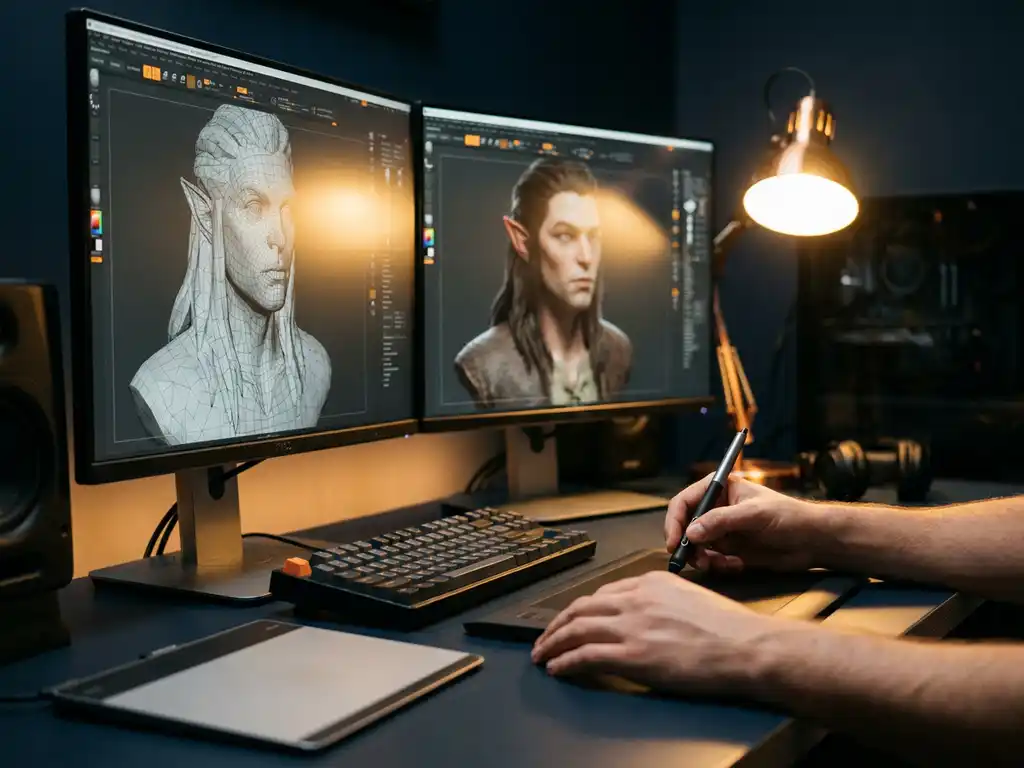
3D animation is the process of creating moving images in a three-dimensional digital environment using computer graphics software. Unlike traditional 2D animation, which works with flat images on a two-dimensional plane, 3D animation involves creating objects, characters, and scenes with depth, width, and height that can be viewed from multiple angles and manipulated in virtual space.
Why are outdated visualization methods costing you competitive advantage?
Many businesses still rely on static product images and traditional photography to showcase their offerings, but this approach creates significant blind spots in today’s digital marketplace. Customers increasingly expect interactive, immersive experiences that let them explore products from every angle, customize features in real-time, and visualize exactly what they’re purchasing before committing. When your product presentation feels flat and limited compared to competitors offering dynamic 3D experiences, you’re not just missing sales opportunities — you’re training customers to look elsewhere for the engaging, modern shopping experience they’ve come to expect.
What does poor product visualization signal about your brand positioning?
Static product images and limited customization options send an unintended message about your brand’s innovation and attention to detail. In premium markets where design quality and craftsmanship matter most, customers judge your products not just by their physical attributes but by how professionally and thoroughly you present them. When competitors offer sophisticated 3D configurators that showcase every material option, finish, and customization possibility, your traditional product photos can make even the highest-quality offerings appear outdated or less premium than they actually are.
Visual Commerce Solutions
Talk to our team about your project.
What is 3D animation and how is it different from 2D?
3D animation creates the illusion of movement using three-dimensional computer-generated objects that exist in virtual space with realistic depth, lighting, and physics. The fundamental difference lies in dimensionality: 2D animation works with flat drawings or images that move across a two-dimensional plane, like traditional cartoons or hand-drawn animations. In contrast, 3D animation builds complete virtual environments where objects have volume, can be rotated to show all sides, and interact with lighting and shadows just like real-world objects.
The technical approach also differs significantly. 2D animators create frame-by-frame drawings or manipulate flat graphics, while 3D animators build digital models, apply textures and materials, set up virtual lighting, and then animate these elements through 3D space. This dimensional depth allows for camera movements, realistic physics simulations, and complex lighting effects that would be impossible or extremely time-consuming to achieve in traditional 2D animation.
How does the 3D animation process actually work?
The 3D animation process follows a structured pipeline that transforms ideas into moving digital reality. It begins with pre-production planning, where artists create concept art, storyboards, and technical specifications for the project. This planning phase establishes the visual style, timing, and technical requirements before any actual 3D work begins.
The production phase starts with modeling, where artists create the basic 3D geometry of objects, characters, or environments using specialized software. These digital models are then enhanced through texturing and material application, which gives surfaces their color, reflectivity, roughness, and other visual properties. Lighting artists then set up virtual light sources to create mood, depth, and realism.
Animation comes next, where artists define how objects move through 3D space over time using keyframes and interpolation. Finally, rendering transforms all these elements into the final images or video sequences, with powerful computers calculating how light interacts with every surface to produce photorealistic results.
What software do professionals use for 3D animation?
Professional 3D animation relies on several industry-standard software packages, each with specific strengths. Autodesk Maya remains the gold standard for character animation and complex rigging, particularly in film and television production. Its robust animation tools and flexible scripting capabilities make it ideal for creating sophisticated character movements and facial expressions.
Blender has gained significant traction as a free, open-source alternative that offers a complete 3D production pipeline. Despite being free, Blender provides professional-grade modeling, animation, and rendering capabilities that rival expensive commercial software. Cinema 4D excels in motion graphics and product visualization, offering an intuitive interface and powerful procedural animation tools.
For specialized applications, different tools serve specific needs. Houdini dominates in procedural modeling and complex simulations, while 3ds Max remains popular for architectural visualization and game development. The choice often depends on project requirements, team expertise, and integration with existing workflows.
How long does it take to create 3D animation?
3D animation timelines vary dramatically based on project complexity, quality requirements, and team size. A simple product rotation animation might take just a few days, while a full-length animated film requires years of production with hundreds of artists. For typical commercial projects, a 30-second product animation with moderate complexity usually takes 2-4 weeks from concept to final delivery.
The timeline breaks down across different production phases. Modeling and texturing might consume 20-30% of the schedule, while animation and rendering often take 40-50% of the total time. Rendering, in particular, can be time-intensive as computers must calculate millions of light interactions for each frame. A single frame of high-quality 3D animation might take several hours to render, meaning a 30-second animation at 24 frames per second requires rendering 720 individual images.
Project scope significantly impacts duration. Simple geometric objects animate faster than complex organic characters. Realistic lighting and materials increase rendering time exponentially. Multiple revisions and client feedback cycles can extend timelines, making clear project specifications and efficient approval processes crucial for staying on schedule.
What are the main applications of 3D animation today?
3D animation has revolutionized numerous industries beyond traditional entertainment. In product visualization and e-commerce, businesses use 3D animation to create interactive product configurators that let customers customize and view products from every angle. This application proves particularly valuable for furniture, automotive, and luxury goods where customers need to understand complex design options before purchasing.
Architecture and real estate leverage 3D animation for virtual walkthroughs and property visualization, allowing potential buyers to explore spaces before construction is complete. Medical and scientific fields use 3D animation to visualize complex processes, from molecular interactions to surgical procedures, making abstract concepts tangible and understandable.
Marketing and advertising increasingly rely on 3D animation for product launches and brand storytelling. The technology enables impossible camera angles, perfect lighting conditions, and seamless product demonstrations that would be costly or impossible to achieve with traditional photography. Real-world applications continue expanding as businesses discover new ways to engage customers through immersive visual experiences.
How 3Dimerce helps with 3D animation and product visualization
We specialize in transforming static product presentations into dynamic, interactive experiences through our advanced 3D animation and visualization platform. Our solution addresses the specific challenges facing premium brands and manufacturers who need to showcase complex, configurable products with the quality and sophistication their customers expect.
Our comprehensive approach includes:
- High-quality 3D product modeling with photorealistic materials and textures
- Interactive product configurators that animate seamlessly between customization options
- Blazing-fast rendering that delivers stunning visuals without compromising performance
- Seamless integration with existing e-commerce platforms and in-store sales environments
- Scalable visual product configuration solutions that grow with your product range
With over 20 years of experience serving European brands in furniture, interior design, and luxury goods, we understand the unique requirements of design-led businesses. Our platform eliminates the cost and complexity of traditional photography while delivering the premium visual quality that maintains your brand positioning across all channels.
Ready to transform your product visualization strategy with professional 3D animation? Contact our team to discover how our tailored solutions can enhance your customer experience and streamline your sales process.
Frequently Asked Questions
How much does professional 3D product animation typically cost?
Costs vary significantly based on product complexity and animation requirements. Simple product rotations start around $2,000-5,000, while complex configurators with multiple materials and interactive features can range from $15,000-50,000. The investment often pays for itself quickly through increased conversion rates and reduced photography costs, especially for products with many variations.
Can 3D animation work for products that don't exist yet or are still in development?
Absolutely. 3D animation is ideal for prototyping and pre-launch marketing since it only requires CAD files or technical drawings. This allows you to create marketing materials, gather customer feedback, and even take pre-orders before manufacturing begins, significantly reducing time-to-market and development risks.
What file formats do I need to provide to get started with 3D product animation?
Most 3D animation projects work best with CAD files (.step, .iges, .dwg), but high-quality photos from multiple angles can also work. Technical drawings, material specifications, and brand guidelines help ensure accuracy. If you only have physical products, professional 3D scanning can capture the geometry needed for animation.
How do I integrate 3D animations into my existing website or e-commerce platform?
Modern 3D animations typically integrate through web-based viewers that work across all devices and browsers without requiring downloads or plugins. Most platforms offer APIs and embed codes that work with popular e-commerce systems like Shopify, WooCommerce, and Magento, often requiring just a few lines of code to implement.
Will 3D animations slow down my website or affect mobile performance?
Well-optimized 3D animations actually load faster than multiple high-resolution product photos. Modern compression techniques and progressive loading ensure smooth performance across devices. Most professional 3D platforms automatically optimize content for different screen sizes and connection speeds, maintaining quality while preserving fast load times.
What's the difference between 360° product photography and true 3D animation?
360° photography captures real photos from multiple angles but limits customization options and requires reshooting for any product changes. True 3D animation creates digital models that can show unlimited configurations, materials, and angles while allowing real-time customization. This makes 3D animation more cost-effective for products with multiple variants or frequent updates.
How do customers typically respond to interactive 3D product experiences?
Studies consistently show that interactive 3D experiences increase engagement time by 2-3x and conversion rates by 40-80% compared to static images. Customers report higher confidence in purchases and reduced return rates because they better understand products before buying. The technology particularly excels with complex or customizable products where traditional photos fall short.
Related Articles
- Can customers use 3D renders to place products in their own home?
- Is 3D product rendering scalable for large product catalogs?
- What is the best time to start using 3D product rendering?
- What is the implementation timeline for 3D product rendering?
- How does 3D product rendering support omnichannel strategies?