
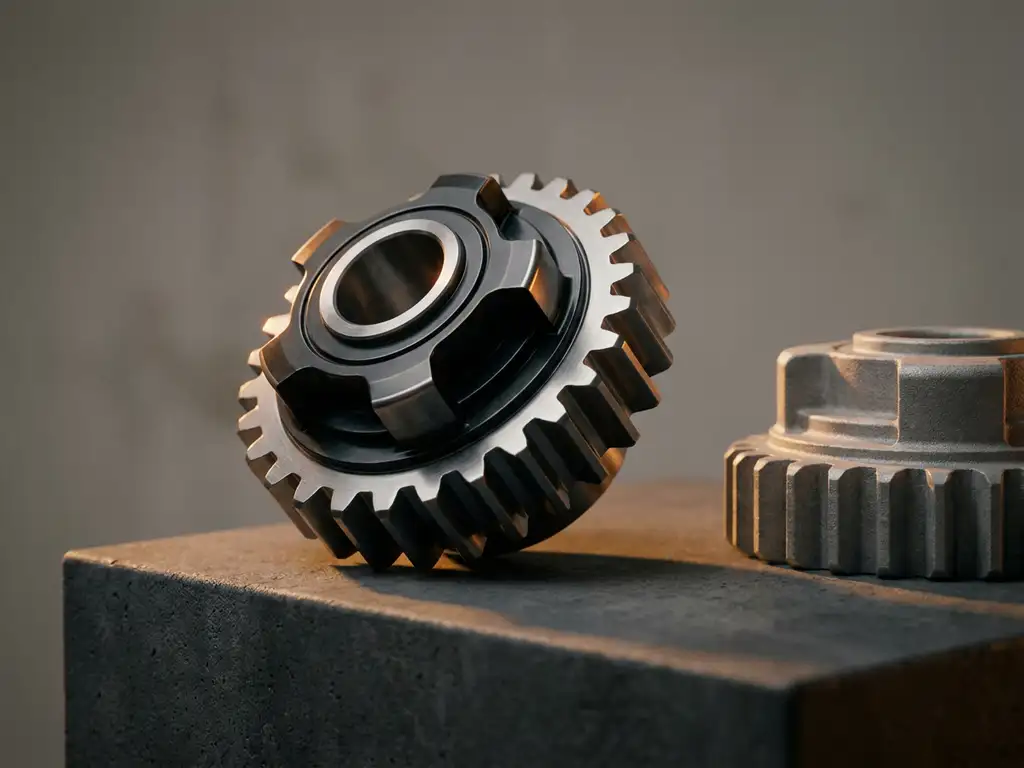
Octane Render is a GPU-accelerated rendering engine that creates photorealistic 3D visuals for product configurators, offering manufacturers fast, high-quality rendering capabilities for complex product visualizations. While it provides excellent visual output and real-time rendering performance, manufacturers should carefully evaluate whether its technical complexity and resource requirements align with their specific product configuration needs.
Why is slow rendering speed killing your product configuration conversions?
When customers wait more than 3 seconds for product configurations to load, you lose nearly 40% of potential buyers before they even see your product options. Slow rendering creates frustration, breaks the shopping flow, and sends customers straight to competitors who offer instant visual feedback. This delay is particularly costly for high-end manufacturers, where customers expect premium experiences that match premium pricing.
The solution lies in choosing rendering technology that prioritizes speed without sacrificing quality. GPU-accelerated rendering engines can deliver complex product visualizations in real time, keeping customers engaged and moving through your configuration process smoothly.
What does poor visual quality signal about your brand positioning?
Grainy textures, unrealistic lighting, and pixelated product images immediately communicate that your brand cuts corners on quality. For luxury and design-led manufacturers, subpar visuals directly contradict your premium positioning and erode customer confidence in your actual products. When your digital presence fails to match your physical product quality, you’re essentially training customers to expect less from your brand.
Investing in photorealistic rendering technology ensures your digital product presentations reinforce rather than undermine your brand values. High-quality visuals create trust, justify premium pricing, and demonstrate the attention to detail customers expect from premium manufacturers.
Visual Commerce Solutions
Talk to our team about your project.
What is Octane Render and how does it work for product configurators?
Octane Render is a GPU-based rendering engine developed by OTOY that specializes in creating photorealistic 3D imagery using path tracing technology. Unlike traditional CPU-based renderers, Octane Render leverages the parallel processing power of graphics cards to accelerate rendering times significantly while maintaining high visual quality.
For product configurators, Octane Render processes 3D models and applies realistic materials, lighting, and environmental effects to create compelling product visualizations. The engine supports real-time rendering capabilities, allowing customers to see configuration changes instantly as they customize colors, materials, sizes, and other product options. This immediate visual feedback enhances the user experience and helps customers make confident purchasing decisions.
The technology works by breaking down complex lighting calculations across hundreds or thousands of GPU cores simultaneously, dramatically reducing the time needed to generate photorealistic images compared to traditional rendering methods.
What are the main advantages of using Octane Render for manufacturing?
Octane Render offers several compelling benefits for manufacturers implementing product configurators. The most significant advantage is rendering speed, with GPU acceleration delivering real-time or near real-time results that keep customers engaged during the configuration process.
Visual quality represents another major strength. Octane Render excels at creating photorealistic materials, accurate lighting, and detailed surface textures that showcase products in their best light. This quality level is particularly valuable for manufacturers of premium goods, where visual presentation directly impacts purchasing decisions.
The engine also provides excellent material flexibility, supporting complex material properties like subsurface scattering, metallic finishes, and fabric textures that are common in furniture, automotive, and luxury goods manufacturing. Additionally, Octane Render integrates well with popular 3D modeling software, making it accessible to design teams already familiar with industry-standard tools.
Cost efficiency emerges as another benefit, as GPU-based rendering typically requires less expensive hardware than high-end CPU rendering farms while delivering superior performance for many applications.
What are the limitations of Octane Render for product configurators?
Despite its strengths, Octane Render presents several challenges for manufacturing applications. Technical complexity tops the list, as implementing and maintaining Octane Render requires specialized expertise in 3D graphics, shader programming, and GPU optimization that many manufacturers lack internally.
Hardware dependencies create another limitation. Octane Render requires powerful graphics cards to perform optimally, and performance varies significantly across different GPU models. This hardware requirement can increase infrastructure costs and create compatibility issues with existing systems.
Integration challenges often arise when connecting Octane Render to existing business systems like ERP, CRM, or e-commerce platforms. The rendering engine wasn’t specifically designed for product configuration workflows, requiring custom development work to bridge functionality gaps.
Scalability concerns also emerge for manufacturers with large product catalogs or high traffic volumes. While Octane Render performs well for individual rendering tasks, managing thousands of product variations across multiple user sessions can strain system resources and require careful architecture planning.
How does Octane Render compare to other rendering solutions for manufacturers?
When compared to specialized product configuration platforms, Octane Render offers superior raw rendering quality but requires significantly more technical implementation effort. Purpose-built configuration solutions often provide better integration with business systems, user-friendly management interfaces, and built-in features like pricing calculations and inventory management.
Against other rendering engines like V-Ray or Arnold, Octane Render generally provides faster GPU-accelerated performance but may lack some advanced features needed for complex product visualization scenarios. The choice often depends on specific technical requirements and available expertise.
Cloud-based rendering services offer an interesting alternative, providing Octane Render’s quality without local hardware requirements. However, this approach introduces latency concerns and ongoing operational costs that may not suit real-time configuration applications.
For manufacturers prioritizing ease of implementation and business system integration, specialized product configuration solutions often provide better overall value despite potentially lower raw rendering performance.
Should your manufacturing company invest in Octane Render for product configuration?
The decision to invest in Octane Render depends heavily on your technical resources, budget, and specific requirements. Companies with strong internal 3D graphics expertise and custom development capabilities may find Octane Render worthwhile, especially if visual quality is paramount and they have the resources to handle complex integration work.
However, most manufacturers benefit more from purpose-built product configuration platforms that offer comparable visual quality with significantly easier implementation and better business system integration. These solutions typically provide faster time-to-market, lower total cost of ownership, and more predictable outcomes.
Consider Octane Render if you have unique rendering requirements that standard solutions cannot meet, substantial technical expertise available, and the budget for custom development work. For most manufacturing applications, exploring proven configuration solutions will likely provide better business outcomes with less risk and complexity.
How 3Dimerce helps with product configuration rendering
We provide manufacturers with a comprehensive visual product configuration platform that delivers photorealistic rendering without the complexity of implementing standalone rendering engines like Octane Render. Our solution combines advanced 3D visualization technology with seamless business system integration, offering the visual quality you need with the reliability your business demands.
Key advantages of our approach include:
- Real-time photorealistic rendering optimized for product configuration workflows
- Seamless integration with existing e-commerce, ERP, and CRM systems
- User-friendly management interface requiring no specialized 3D graphics expertise
- Scalable cloud infrastructure that handles high traffic volumes automatically
- Comprehensive support and implementation services
Ready to explore how professional product configuration can transform your customer experience? Contact our team to discuss your specific requirements and see our platform in action.
Frequently Asked Questions
What GPU requirements do I need to run Octane Render effectively for product configuration?
Octane Render requires a dedicated NVIDIA GPU with CUDA support for optimal performance. For basic product configuration, an RTX 3060 or better is recommended, while high-volume applications benefit from RTX 4080 or professional-grade cards. RAM requirements typically start at 8GB VRAM, with 12GB+ preferred for complex product models with multiple material variations.
How long does it typically take to implement Octane Render for a product configurator?
Implementation timelines vary significantly based on complexity, but expect 3-6 months for a basic setup with existing 3D models. This includes GPU infrastructure setup, 3D model optimization, material library creation, and integration with your e-commerce platform. Companies without in-house 3D expertise often require 6-12 months and external development resources.
Can Octane Render handle real-time configuration changes for complex products like furniture or vehicles?
Yes, but performance depends heavily on model complexity and GPU power. Simple material and color changes render in real-time, while complex geometry modifications (like furniture dimensions) may take 2-5 seconds. For optimal user experience, pre-render common configurations and use Octane for final detail adjustments rather than complete model rebuilding.
What are the ongoing maintenance costs for an Octane Render-based configurator?
Beyond the initial Octane Render license ($400-600 annually per GPU), expect costs for GPU hardware upgrades every 2-3 years, specialized developer time for updates and troubleshooting, and potential cloud hosting fees if using remote rendering. Total annual maintenance often ranges from $10,000-50,000 depending on system complexity and traffic volume.
How do I convert my existing product CAD files for use with Octane Render?
CAD files typically require conversion through 3D modeling software like Blender, Maya, or Cinema 4D that support Octane Render plugins. The process involves mesh optimization, UV mapping for textures, material assignment, and performance testing. Plan for 2-8 hours of work per product model, depending on complexity and desired quality level.
What happens if my Octane Render system crashes during peak customer traffic?
System crashes can severely impact customer experience since Octane Render typically runs on dedicated hardware without automatic failover. Implement backup rendering servers, monitor GPU temperatures and memory usage, and consider hybrid approaches where critical configurations fall back to pre-rendered images. Cloud-based rendering services can provide additional redundancy but introduce latency concerns.
Is Octane Render suitable for mobile product configurators?
Octane Render itself cannot run on mobile devices due to GPU requirements, so mobile configurations must use server-side rendering with image streaming to devices. This approach works but introduces latency and bandwidth concerns. For mobile-first experiences, consider pre-rendering common configurations or using lighter rendering solutions optimized for mobile delivery.