
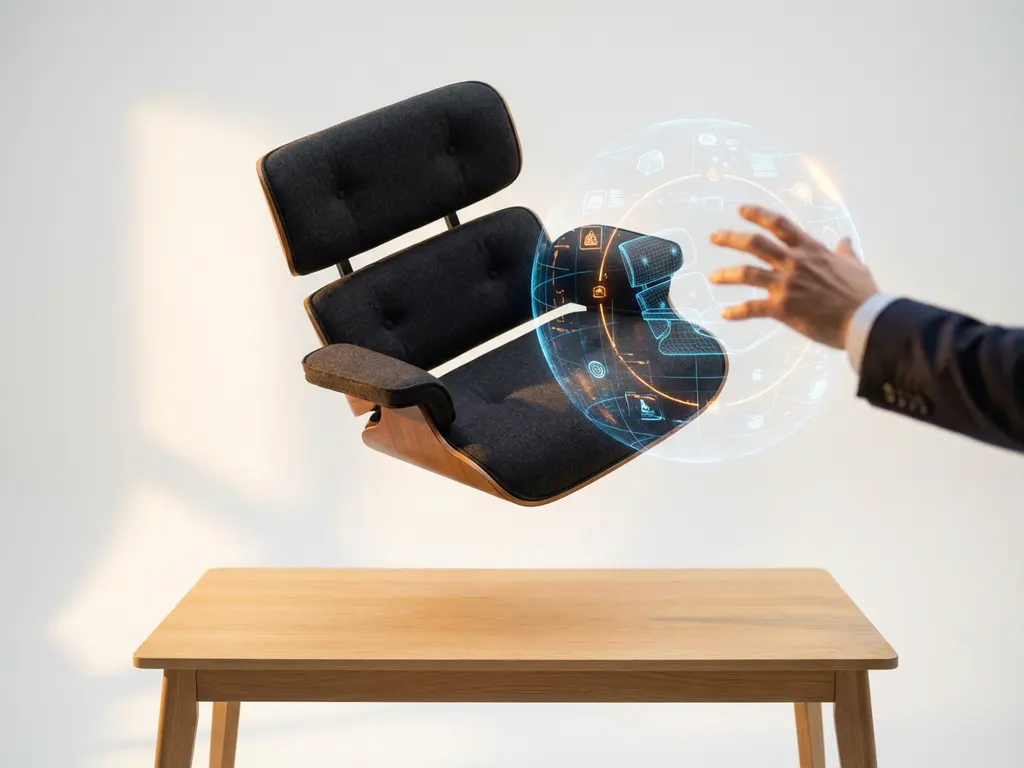
Consumer expectations for online product discovery have fundamentally shifted. Shoppers now expect to explore, configure, and interact with products digitally before making a purchase decision — and brands that still rely on static photography or CGI renders are increasingly at a disadvantage. For premium and high-end brands, interactive 3D product experiences are no longer a differentiator: they are the new standard.
Interactive 3D product experiences transform static product images into dynamic, engaging environments where customers can manipulate, customise, and explore products in real time. This technology goes beyond traditional photography by allowing users to rotate, zoom, configure options, and visualise products from every angle. Interactive rendering creates immersive digital experiences that mirror physical product interaction, helping customers make confident purchasing decisions while reducing return rates and increasing engagement.
What makes 3D product rendering truly interactive?
Interactive 3D product rendering is interactive when it combines real-time manipulation with instant visual feedback on user input — distinguishing it from static images, 360° photography, and pre-rendered video. Customers can rotate products 360 degrees, zoom in on specific details, change colours and materials, and configure different product options while seeing changes reflected immediately on screen.
The core components that create truly interactive experiences include real-time rendering engines that process changes instantly, intuitive user interface controls for seamless navigation, and comprehensive product databases that store all possible configurations. Advanced lighting systems simulate realistic shadows and reflections that adjust dynamically as users interact with the product.
User engagement elements such as hotspots, annotations, and guided tours enhance the interactive experience by providing contextual information and highlighting key product features. These elements work together to create immersive digital environments that replicate — and often exceed — the experience of examining physical products in a showroom.
How does interactive 3D rendering improve customer experience?
Interactive 3D rendering improves customer experience by giving shoppers a comprehensive, self-directed understanding of a product before purchase. Customers can examine products from every angle, test different configurations, and visualise how items will look in their specific context — leading to more informed purchasing decisions, reduced buyer’s remorse, and measurably lower return rates.
The psychological impact of interactive visualisation is significant. When customers actively engage with products through manipulation and customisation, they develop a stronger emotional connection and sense of ownership. This increased engagement time translates into higher conversion rates and greater customer satisfaction.
The commercial impact of interactive 3D product experiences is well-documented across industries. Brands deploying interactive 3D visualization consistently report meaningful reductions in return rates — industry research indicates that giving customers a comprehensive pre-purchase view of a product can reduce returns by 20–40% compared to static imagery. Conversion rate uplifts of 2x–4x versus standard product photography have been observed across furniture, fashion, and electronics categories, while time-on-page metrics for interactive product pages significantly outperform their static counterparts. These are not marginal gains: for high-consideration purchases in the premium segment, they represent a fundamental shift in how effectively a brand converts online interest into confident purchase decisions.
Interactive experiences also reduce purchase uncertainty by answering visual questions that static images cannot address. Customers can see how different materials catch the light, how colours work together, and how proportions align with their needs. This comprehensive understanding builds trust and confidence in the purchasing process — which is particularly valuable for high-consideration purchases in the premium and luxury segments.
Visual Commerce Solutions
Talk to our team about your project.
Which industries benefit most from interactive 3D product experiences?
Interactive 3D product rendering delivers the greatest value in industries where customers need to visualise options, configurations, or materials before committing to a purchase — and where physical inventory or showrooms are impractical at scale. The sectors that benefit most include furniture, automotive, fashion, jewellery, electronics, and complex manufacturing.
Furniture and interior design
The furniture and interior design industries gain tremendous value from interactive 3D rendering because customers need to visualise how pieces will look in their spaces. Interactive configurators allow customers to explore different fabrics, finishes, and arrangements without requiring physical showrooms or extensive inventory.
Consider a premium sofa brand that offers a fabric-and-leg-finish configurator: a customer selects their preferred upholstery, adjusts the leg finish, and then places the configured piece into a room visualisation — all within a single product page session. The result is a dramatic reduction in the number of showroom visits required to close a sale, and a measurable drop in return rates for configured items, because customers arrive at their decision with complete visual confidence. This is the kind of 3D product experience that converts browsers into buyers.
Automotive
Automotive manufacturers leverage interactive rendering for vehicle customisation, allowing customers to explore paint colours, interior options, and accessories in photorealistic detail. This technology enables virtual showrooms that provide comprehensive product experiences without the need for physical vehicle inventory.
A virtual showroom eliminates the need to stock every colour and trim combination on a physical forecourt. Instead, a customer can configure their exact specification — exterior finish, interior material, wheel design — and experience the result in photorealistic detail before placing an order. This not only reduces inventory overhead for the manufacturer but also shortens the sales cycle by giving customers the confidence to commit to a bespoke configuration without needing to see it in person.
How luxury brands use interactive 3D product experiences to elevate brand perception
For luxury and premium brands, interactive 3D product experiences serve a purpose that goes far beyond convenience: they are a strategic tool for communicating craftsmanship, exclusivity, and material quality in ways that flat photography simply cannot achieve. A high-end watch brand, for example, can allow customers to examine the guilloche dial texture, the brushed-and-polished case finishing, and the interplay of light across sapphire crystal — details that define the value of the piece but are invisible in a standard product image. Interactive 3D visualization makes the invisible visible, and in doing so, it justifies the premium.
For online luxury shoppers who cannot visit a flagship boutique, interactive 3D recreates the tactile discovery moment that defines the physical retail experience. The ability to slowly rotate a piece of fine jewellery, observe how light moves across a hand-set stone, or examine the stitching on a bespoke leather good digitally replicates the attentive, unhurried examination that luxury customers expect. This digital equivalent of the boutique experience is not a compromise — when executed at the highest level of visual fidelity, it is a genuine extension of the brand world.
Premium brands also use interactive 3D configurators to offer personalisation at scale — monogramming, material selection, colour combinations — without the overhead of physical samples or bespoke photography for every variant. A bespoke furniture house can present hundreds of fabric-and-finish combinations with perfect visual accuracy; a fine jewellery brand can offer engraving previews in real time. We work specifically with brands in the design, luxury, and high-end segment to deliver this level of interactive 3D product experience, combining uncompromising visual quality with the performance that premium brand positioning demands.
Fashion, jewellery, and electronics
Fashion and jewellery brands use interactive 3D rendering to showcase products with realistic textures and lighting effects. Electronics manufacturers benefit by allowing customers to explore product features, connections, and configurations through interactive demonstrations that highlight functionality and design details.
For fashion and jewellery in particular, virtual try-on — enabled by extending the same 3D assets into an AR experience — takes the interactive 3D product display a step further. A customer can preview how a ring looks on their hand or how a watch sits on their wrist before purchasing, directly addressing one of the most significant drivers of return rates in these categories.
Complex and configurable manufacturing
Manufacturing companies with complex or highly customisable products find particular value in interactive visualisation because it simplifies the presentation of multiple options and configurations that would be impossible to photograph comprehensively.
A manufacturer offering industrial equipment with dozens of modular configurations, for instance, can present every combination through a single interactive 3D product display — eliminating the need for an extensive physical demonstration catalogue and enabling sales teams to configure and present solutions in real time during client meetings.
Should you upgrade from CGI renders to interactive 3D experiences?
Many brands have already invested significantly in high-quality CGI renders — and they deliver real value. But as interactive 3D becomes the baseline expectation for premium product presentation, the question of whether to upgrade CGI renders to interactive 3D experiences is increasingly a strategic one rather than a purely technical debate. The answer depends on understanding what each approach can and cannot do.
- Production flexibility: A static CGI render is fixed at the moment of production. Every new colour, material, or configuration variant requires a new render — which means additional time and cost for every update. A single interactive 3D asset, by contrast, covers unlimited configurations from one production run. The asset adapts; the CGI does not.
- Time-to-market: Interactive 3D assets can be built from CAD data and deployed before a physical product exists. This enables pre-launch campaigns, sales enablement, and customer pre-orders based on a digital-first product experience — a capability that static CGI cannot replicate at the same speed or scale.
- Cost over time: The initial investment in interactive 3D is typically higher than a single CGI render. However, the marginal cost per additional variant is dramatically lower at scale. For brands managing large or frequently updated product ranges, the economics shift decisively in favour of interactive 3D within the first product cycle.
- Customer engagement: Static CGI delivers a fixed view chosen by the photographer or art director. Interactive 3D lets the customer choose — rotating, zooming, and configuring in real time according to their own priorities. This active engagement drives stronger purchase intent and measurably higher conversion rates.
- Multi-channel reuse: A high-quality interactive 3D asset is not a website element — it is a strategic marketing asset. The same asset can power your product pages, generate rendered frames for digital advertising, feed email campaign visuals, equip sales teams with tablet-based configurators, and appear in trade show displays. CGI renders, once produced, are static files. Interactive 3D assets are living infrastructure.
For brands already working with quality CGI, the transition to interactive 3D is a natural evolution rather than a wholesale replacement. We work with brands at every stage of this journey — from first-time interactive 3D implementation to migrating existing CGI asset libraries into fully interactive, multi-channel experiences. If you are evaluating whether to upgrade your CGI renders to interactive 3D experiences, we are the specialist partner to make that transition seamless.
How do you implement interactive 3D rendering for your products?
Implementing interactive 3D product rendering involves four sequential stages: 3D model creation, technology selection, workflow setup, and phased deployment. Each stage has distinct requirements that affect the quality, performance, and maintainability of the final experience.
- 3D model creation: Models are built from existing product designs or CAD files and optimised for real-time rendering without sacrificing visual accuracy. All product variants, materials, and configuration options must be captured at this stage.
- Technology selection: Choosing the right rendering engine requires balancing visual quality with performance across devices. Key factors include loading times, browser compatibility, and mobile responsiveness, as well as integration compatibility with your existing e-commerce platform and content management system.
- Workflow setup: Establishing clear processes for updating product configurations, managing asset libraries, and maintaining visual consistency across a product range is essential before deployment. Testing across multiple devices and user scenarios should be completed at this stage.
- Phased deployment: Rolling out interactive experiences to key product categories first — rather than the entire catalogue — allows teams to collect user feedback and monitor performance before scaling.
How to maximise ROI by deploying 3D assets across every marketing channel
A single high-quality interactive 3D asset is not a website element — it is a strategic marketing asset that can power your entire customer journey. Brands that treat their interactive 3D investment as a one-channel solution are leaving significant value on the table. The same asset that drives conversions on your product page can generate creative for your campaigns, equip your sales team, and represent your brand at every customer touchpoint.
The following deployment contexts illustrate how interactive 3D visualization tools unlock multi-channel value from a single asset base:
- Interactive product pages: The primary e-commerce application — allowing customers to configure, rotate, and explore products in real time before purchasing.
- Email campaigns: Lightweight 3D viewers or animated renders derived from the same asset bring product launch emails to life and drive click-through to the full interactive product experience.
- Digital advertising: Rendered frames and animations extracted from the 3D asset provide a consistent, high-quality visual identity across social and display advertising — without additional photography or CGI production.
- Sales enablement: Field sales representatives equipped with tablet-based interactive configurators can build and present bespoke configurations in real time during client meetings, closing deals without physical samples.
- Virtual and physical trade shows: The same 3D assets can be deployed in large-format interactive displays or kiosk configurators, delivering a consistent brand experience whether the event is digital or in-person.
- Post-sale and customer service: 3D models serve as the foundation for assembly guides, product training materials, and support documentation — reducing support overhead and improving the post-purchase experience.
Our platform is built to make this kind of multi-channel deployment seamless. Whether you are deploying an interactive 3D product display across a flagship e-commerce site or equipping a global sales team with configurator tools, we provide the infrastructure and expertise to ensure every touchpoint delivers the same standard of visual excellence.
What challenges should you expect with interactive 3D rendering?
The most common challenges in interactive 3D rendering are technical performance, cross-device compatibility, content creation complexity, and ongoing resource requirements. Understanding these challenges before implementation helps teams plan realistic timelines and budgets.
Performance and loading times are the primary technical challenge. Interactive rendering requires sophisticated technology infrastructure, and loading times can degrade the user experience — particularly on mobile devices or slower internet connections. Careful optimisation of 3D models and rendering pipelines is required to maintain acceptable performance.
Device compatibility is a persistent concern because different browsers, operating systems, and hardware configurations may display interactive content differently. Ensuring consistent experiences across all platforms requires extensive testing and, potentially, multiple rendering approaches.
Content creation and maintenance workflows are more complex for 3D assets than for traditional photography. Updates to product lines require 3D model modifications, which can be time-consuming and require specialised skills or external resources.
Resource requirements include both technical infrastructure for hosting and delivering interactive content and skilled personnel for creating and maintaining 3D assets. Budget planning should account for initial setup costs, ongoing maintenance, and potential scaling requirements as a product range grows.
Mitigation strategies include partnering with experienced 3D rendering specialists, implementing progressive loading techniques, and establishing clear workflows for content creation and updates.
It is worth noting that many of these challenges were significantly more acute in earlier generations of 3D web technology. Advances in WebGL rendering, adaptive streaming, and progressive asset loading have dramatically reduced loading times and compatibility issues — making interactive rendering fast and accessible across devices, including mid-range smartphones. The performance gap between interactive 3D and static imagery has narrowed to the point where, with the right implementation, it is effectively imperceptible to the end user. With the right partner, these technical hurdles are managed entirely behind the scenes. Our platform is engineered specifically to deliver blazing-fast, device-agnostic interactive experiences — so your team focuses on your products and your brand, not on infrastructure.
How 3Dimerce delivers premium interactive 3D product experiences
We help premium brands transform the entire customer journey — from first discovery to confident purchase — with interactive 3D product experiences that are as fast as they are visually stunning. Our SaaS platform is built specifically for the design, luxury, and high-end market, combining uncompromising visual quality with the performance and flexibility that ambitious brands demand. Every interactive product visualization we deliver is engineered to reflect the standard of excellence that premium brands require and their customers expect.
Key benefits of our platform include:
- Discovery and Engagement
- Intuitive configurator tools that place the customer in control of their product exploration
- Blazing-fast performance across all devices with optimised rendering technology
- Stunning visual fidelity that communicates craftsmanship, material quality, and brand identity
- Implementation and Integration
- Seamless integration with existing e-commerce platforms and sales environments
- Professional 3D asset creation and management services that require no technical expertise from your team
- Comprehensive support for both online and in-store interactive experiences
- Scale and Support
- A scalable solution that grows with your product range without added complexity
- Multi-channel asset deployment across web, advertising, sales, and events
- 20+ years of experience in virtual product visualisation, exclusively serving design, luxury, and premium brands
Ready to transform your product presentation with interactive 3D rendering? Contact us today to discuss how our platform can enhance your customer experience and drive sales growth.
Beyond the screen: augmented reality and the future of interactive 3D product experiences
The interactive 3D assets created for your product configurator are not limited to the browser. The same high-fidelity models that power your product pages can be extended directly into augmented reality experiences — allowing customers to place a sofa in their living room via smartphone camera, preview how a piece of fine jewellery looks on their hand, or visualise an automotive finish on their own vehicle before visiting a dealership. This AR extension of the 3D interactive product addresses one of the most persistent drivers of return rates in home, fashion, and beauty categories: the uncertainty of how a product will look in a real-world context. When customers can answer that question for themselves, they purchase with confidence.
Beyond AR, interactive 3D serves as the data foundation for virtual twin experiences — a single digital master asset that feeds every customer-facing and internal touchpoint simultaneously. Rather than maintaining separate asset libraries for your website, your sales team, your advertising agency, and your after-sales documentation, a virtual twin approach means one authoritative 3D asset that is always current, always consistent, and always deployable across every channel. This is the architecture that defines the most sophisticated interactive 3D product experience platforms available today.
Our platform is designed with this evolution in mind. Brands that invest in interactive 3D with us today are not purchasing a website feature — they are building a strategic asset base that grows in value as AR, immersive commerce, and virtual twin experiences become mainstream expectations rather than emerging innovations. The 3D interactive product infrastructure you establish now will underpin your digital product strategy for years to come, and we are the partner best positioned to ensure it scales with you.