
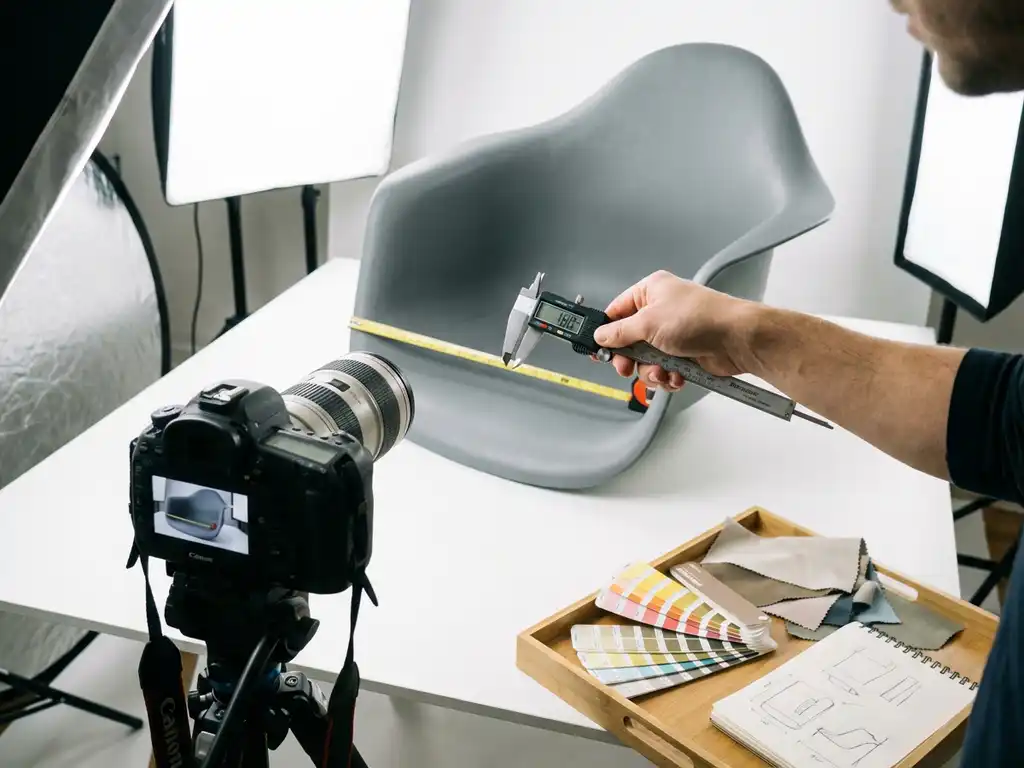
Preparing products for 3D product rendering requires careful planning, detailed documentation, and precise asset collection. The process involves gathering technical specifications, reference materials, and product information to create photorealistic digital representations. Proper preparation ensures accurate rendering results, reduces revision cycles, and delivers high-quality visual assets for e-commerce, configurators, and marketing applications.
What does product preparation for 3D rendering actually involve?
Product preparation for 3D rendering encompasses the complete process of collecting, organizing, and optimizing all necessary information and assets before creating digital models. This includes initial product analysis, gathering technical documentation, compiling material specifications, and collecting reference imagery to ensure an accurate digital representation.
The preparation process begins with comprehensive product analysis, during which every component, material, and design detail is documented. This stage involves photographing the product from multiple angles, measuring dimensions precisely, and identifying all materials and finishes. Technical drawings, CAD files, and manufacturing specifications are collected to provide the foundation for accurate 3D modeling.
Quality preparation directly impacts rendering outcomes. Insufficient preparation leads to multiple revision rounds, increased costs, and potential inaccuracies in the final digital assets. Thorough preparation ensures the rendering team has everything needed to create photorealistic results that match the physical product exactly.
What technical specifications do you need before starting 3D product rendering?
Essential technical specifications include precise product dimensions, material properties, color values, texture details, and comprehensive reference imagery. These specifications form the foundation for accurate 3D modeling and ensure the digital representation matches the physical product’s appearance and proportions exactly.
Visual Commerce Solutions
Talk to our team about your project.
Dimensional requirements include overall measurements, component spacing, thickness specifications, and any variable dimensions for configurable products. CAD files, technical drawings, or detailed measurement sheets provide the geometric foundation for 3D modeling. Every curve, angle, and proportion must be documented to achieve accuracy.
Material specifications require detailed information about surface properties, including texture patterns, reflectivity levels, transparency values, and surface roughness. Color information should include Pantone codes, RAL numbers, or other standardized color references. High-resolution texture samples and material swatches help ensure accurate material representation in the final renders.
Reference imagery should cover all product angles, detail shots of textures and finishes, and examples of the product in use. Multiple lighting conditions help you understand how materials behave under different illumination scenarios, which is crucial for creating realistic rendering environments.
How do you optimize product assets for different rendering applications?
Asset optimization involves adjusting polygon counts, texture resolutions, and file formats based on the intended application. E-commerce applications require different optimization than interactive configurators or high-resolution marketing materials. Each use case demands specific technical parameters to balance quality with performance requirements.
For e-commerce applications, models need moderate polygon counts that maintain visual quality while loading quickly on websites. Texture resolutions should be optimized for web display, typically ranging from 1024×1024 to 2048×2048 pixels, depending on product complexity and viewing requirements.
Interactive product configurators require a careful balance between visual fidelity and real-time performance. Models must be optimized for smooth rotation and configuration changes while maintaining enough detail to support customer decision-making. Multiple levels of detail may be necessary for different viewing distances.
High-resolution marketing materials demand maximum-quality assets with detailed textures and complex geometry. These applications prioritize visual impact over file size or loading speed, allowing for more detailed models and higher-resolution textures that showcase product quality effectively.
What are the most common mistakes in product preparation for 3D rendering?
Common preparation mistakes include providing insufficient reference materials, missing critical technical details, poor asset organization, and inadequate color documentation. These errors lead to inaccurate renders, extended revision cycles, increased project costs, and delays in final asset delivery.
Inadequate reference materials are the most frequent preparation error. Providing only a few product photos or omitting detail shots forces the rendering team to make assumptions about the product’s appearance. This often results in inaccuracies that require corrections after the initial render is complete.
Missing technical specifications create modeling challenges and can lead to accuracy issues. Incomplete dimension information, vague material descriptions, or missing component details prevent precise digital recreation. Color information without standardized references leads to color-matching problems in the final renders.
Poor asset organization wastes time and creates confusion during the rendering process. Unlabeled files, mixed product versions, or scattered reference materials slow down production and increase the likelihood of using incorrect information. Establishing clear file-naming conventions and organized folder structures prevents these issues.
How do you ensure color accuracy in 3D product rendering?
Color accuracy requires standardized color references, proper lighting documentation, calibrated viewing conditions, and systematic color profiling throughout the rendering process. This involves using industry-standard color systems, documenting lighting conditions, and establishing consistent viewing environments for color validation.
Standardized color documentation forms the foundation of accurate color reproduction. Using Pantone, RAL, or other industry-standard color systems provides precise color references that can be matched in the digital environment. Physical color swatches should be photographed under controlled lighting conditions to capture accurate color information.
Lighting considerations significantly impact color appearance in renders. Documenting the intended viewing environment—whether natural daylight, retail lighting, or home environments—helps establish appropriate lighting setups for the rendering process. Different lighting conditions can dramatically alter color perception and material appearance.
Material property documentation includes surface characteristics that affect color appearance, such as gloss levels, texture patterns, and transparency values. These properties influence how colors appear under different lighting conditions and viewing angles, making accurate documentation essential for realistic color reproduction.
How 3Dimerce helps with product preparation for 3D rendering
We streamline the product preparation process through structured workflows, comprehensive guidance, and quality assurance measures that ensure optimal rendering results. Our experience with premium brands and configurable products has refined our preparation methodology to minimize revisions and maximize accuracy.
Our preparation support includes:
- Detailed preparation checklists covering all technical requirements and asset specifications
- Automated asset validation systems that identify missing information before rendering begins
- Expert consultation on complex products or unique material requirements
- Quality assurance protocols ensuring color accuracy and dimensional precision
- Optimized workflows for different applications, from e-commerce to interactive configurators
Ready to streamline your product preparation process and achieve exceptional 3D rendering results? Contact our team to discuss your specific requirements and discover how our preparation expertise can enhance your product visualization projects.