
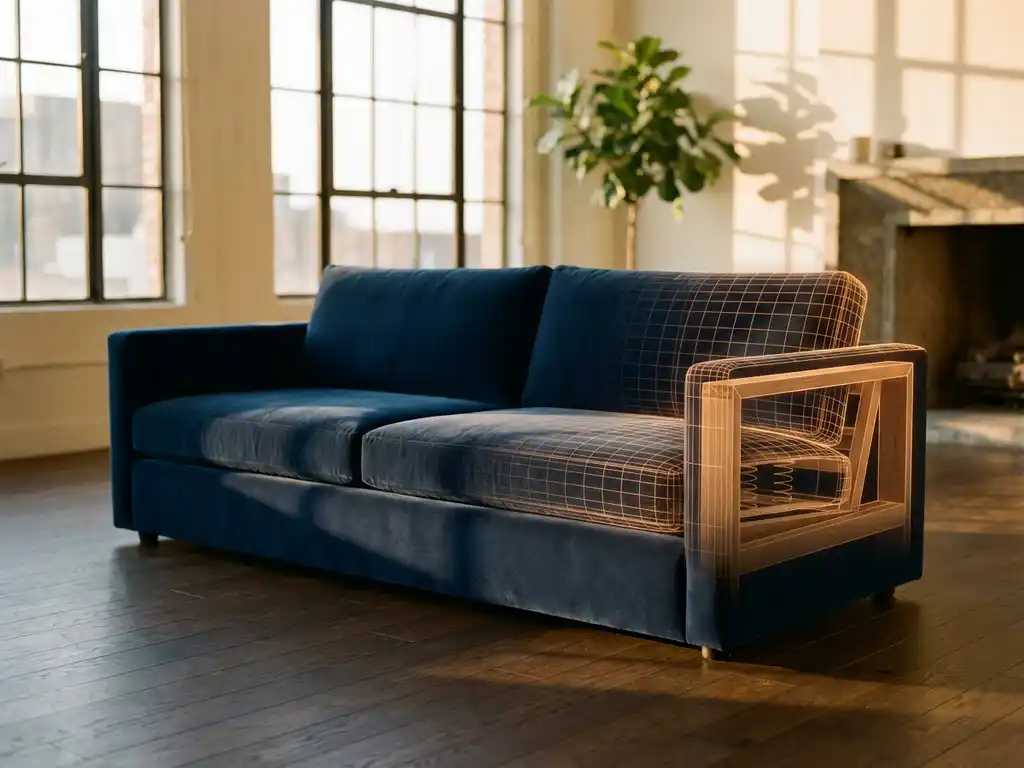
3D product rendering is transforming how furniture and interior brands showcase their products by creating photorealistic digital images from computer models rather than relying on traditional photography. This technology reduces costs, enables unlimited product variations, and creates interactive customer experiences that drive sales. Modern furniture brands use 3D rendering for everything from product catalogues to virtual showrooms and customisation tools.
What is 3D product rendering, and why does it matter for furniture brands?
3D product rendering is the process of creating photorealistic images from three-dimensional computer models using specialised software. For furniture brands, this technology can replace traditional photography by generating stunning visuals that showcase products with perfect lighting, textures, and environments.
The shift from photography to digital visualisation addresses critical challenges facing modern furniture manufacturers. Traditional photoshoots require physical products, extensive logistics, and significant time investment for each variation or configuration. With hundreds of potential fabric combinations, finishes, and customisation options, photographing every possibility becomes impractical and expensive.
3D rendering eliminates these constraints by creating a digital foundation that can generate unlimited variations instantly. Furniture brands can showcase products in different colours, materials, and room settings without manufacturing samples or coordinating complex photoshoots. This flexibility is essential for brands offering customisable products or frequent seasonal updates.
The technology also ensures visual consistency across all channels. Whether customers browse online, visit showrooms, or review printed catalogues, they see identical product representations that maintain brand standards and reduce confusion during the purchasing process.
How does 3D rendering reduce costs compared to traditional product photography?
3D rendering typically costs 60–80% less than traditional photography when calculated across a product’s entire lifecycle. While the initial setup requires investment in 3D modelling, the long-term savings become substantial as brands generate unlimited variations without additional photoshoot expenses.
Traditional furniture photography involves multiple cost layers that compound quickly. Professional photographers, studio rental, lighting equipment, styling, and post-production editing create significant per-shoot expenses. When multiplied across different angles, room settings, and product configurations, costs escalate rapidly.
Sample production is another major expense eliminated by 3D rendering. Furniture manufacturers traditionally create physical prototypes for photography, requiring materials, labour, and shipping. These samples often serve no purpose beyond the photoshoot, making them purely marketing expenses.
The scalability advantage becomes most apparent with customisable furniture lines. A sofa available in 20 fabrics and 5 frame finishes would require 100 different photoshoots using traditional methods. 3D rendering generates all variations from a single digital model, reducing both time and financial investment while maintaining visual quality.
Logistics costs also disappear with digital workflows. There is no need to coordinate photographer schedules, transport heavy furniture, or manage complex shoot schedules around product availability.
What types of customer experiences can 3D product rendering create?
3D rendering enables interactive product customisation, virtual showrooms, and augmented reality experiences that transform how customers explore and purchase furniture. These digital experiences bridge the gap between online browsing and physical product interaction.
Product configurators are the most popular application, allowing customers to modify colours, materials, and components in real time. Shoppers can experiment with different fabric options, wood finishes, or hardware choices while seeing immediate visual feedback. This interactive process increases engagement and confidence in purchase decisions.
Virtual showrooms create immersive environments where customers can explore complete room settings from home. Rather than viewing isolated product images, visitors can walk through digitally rendered spaces that demonstrate how furniture pieces work together. This context helps customers visualise products in their own homes more effectively.
Augmented reality applications take visualisation further by overlaying 3D-rendered furniture onto real room photographs or live camera feeds. Customers can place virtual sofas in their actual living rooms, checking proportions and aesthetics before purchasing.
Omnichannel integration extends these experiences across touchpoints. The same 3D models power online configurators, in-store displays, mobile apps, and printed materials, ensuring consistent experiences regardless of where customers encounter the brand. Sales teams can also use interactive tools to guide customers through complex configuration choices during consultations.
How do you implement 3D product rendering in existing furniture business operations?
Implementation begins with 3D model creation and integration planning and typically takes 8–12 weeks for full deployment across existing business systems. The process requires coordination between design teams, IT departments, and external 3D rendering specialists.
The workflow transformation starts with establishing 3D modelling processes for current product lines. This involves photographing or scanning existing furniture pieces to create accurate digital representations, then building a library of materials, textures, and finish options that match real-world products.
System integration is the most critical technical phase. 3D rendering platforms must connect with existing e-commerce systems, inventory management, and customer relationship management tools. This ensures that product configurations, pricing, and availability remain synchronised across all channels.
Team training requirements vary depending on the scope of implementation. Marketing teams learn to generate and manage rendered images, while sales staff become familiar with interactive configuration tools. Technical teams require training on 3D model updates and system maintenance procedures.
The timeline typically follows this pattern: weeks 1–3 focus on 3D model creation and initial setup; weeks 4–6 cover system integration and testing; weeks 7–9 involve team training and content creation; and weeks 10–12 handle final testing and launch preparation. Many brands choose phased rollouts, starting with key product lines before expanding coverage.
What should furniture brands look for in a 3D rendering solution?
Furniture brands should prioritise photorealistic output quality, seamless integration capabilities, and scalability when evaluating 3D rendering platforms. The solution must handle complex materials like fabric textures and wood grain while maintaining fast loading speeds across devices.
Visual quality remains the primary consideration since rendered images represent products to customers. The platform should accurately reproduce material properties, lighting conditions, and surface details that match physical furniture pieces. Poor-quality renders can damage brand perception and reduce customer confidence.
Integration requirements include compatibility with existing e-commerce platforms, content management systems, and inventory databases. The solution should support headless architecture, allowing 3D experiences to be embedded seamlessly into current websites and applications without requiring complete system overhauls.
Scalability becomes crucial as product lines expand or seasonal collections launch. The platform should handle increasing numbers of 3D models, user traffic, and configuration complexity without performance degradation. Cloud-based solutions typically offer better scalability than on-premises installations.
Support services and industry expertise matter significantly during implementation and ongoing operations. Look for providers with specific furniture industry experience who understand material representation, manufacturing constraints, and retail customer expectations. Comprehensive technical support and training ensure smooth deployment and continued optimisation.
How 3Dimerce helps with 3D product rendering for furniture brands
We specialise in creating premium 3D product configurators specifically designed for furniture and interior design brands that demand exceptional visual quality and seamless customer experiences across all channels.
Our comprehensive platform addresses the key challenges discussed throughout this article:
- Photorealistic rendering quality that captures intricate fabric textures, wood grain, and material properties with stunning accuracy
- Unlimited product variations generated from single 3D models, eliminating expensive photoshoot requirements
- Interactive customer experiences including real-time configurators and virtual showroom environments
- Seamless integration with existing e-commerce platforms and business systems through headless architecture
- Blazing fast performance across all devices, ensuring smooth customer interactions regardless of configuration complexity
- Omnichannel consistency supporting online stores, in-store displays, mobile applications, and printed materials
With over 20 years of experience serving European furniture and interior design brands, our team understands the unique requirements of premium product visualisation. Our SaaS solution scales with your business while maintaining the visual excellence that luxury brands demand.
Ready to transform your product visualisation strategy? Contact our team to discuss how 3D rendering can enhance your furniture brand’s customer experience and reduce operational costs.
Related Articles
- What is the connection between virtual showrooms and 3D product rendering?
- What does 3D product rendering do for businesses?
- How does 3D product rendering compare to CGI imagery?
- Why is 3D product rendering growing fast in the home furnishings industry?
- What is the difference between 3D product rendering and a product configurator?