
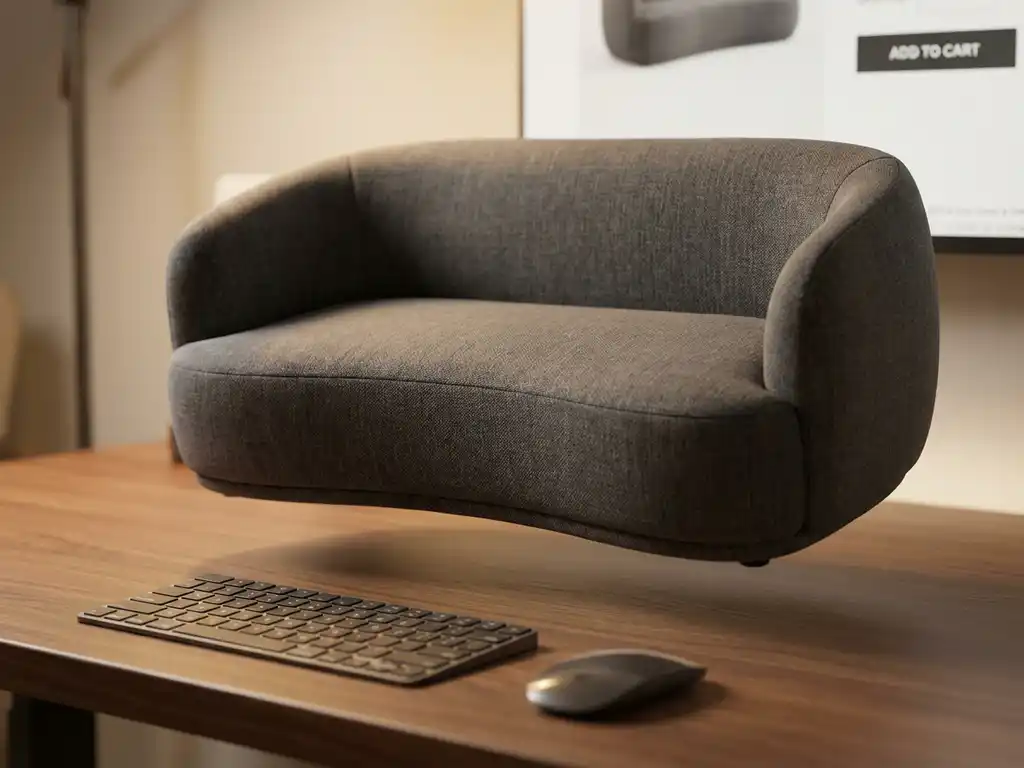
3D product rendering transforms furniture shopping by creating photorealistic digital visualizations that let customers see products from every angle, in different materials and configurations. This technology addresses traditional online shopping challenges such as uncertainty about size, texture, and quality. By providing interactive experiences that mirror in-store browsing, 3D rendering increases purchase confidence and reduces return rates while enabling unprecedented customization options.
What is 3D product rendering, and how does it work for furniture?
3D product rendering is a digital technology that creates photorealistic images and interactive models of furniture using computer graphics. The process involves building detailed 3D models of furniture pieces, applying realistic materials and textures, and rendering them with accurate lighting and shadows to produce images indistinguishable from photographs.
For furniture specifically, this technology captures every detail that matters to customers. The rendering process begins with precise measurements and specifications for each piece. Designers then create digital models that account for wood-grain patterns, fabric textures, metal finishes, and even the way light reflects off different surfaces. Advanced rendering engines simulate real-world lighting conditions, creating shadows and reflections that make virtual furniture appear tangible.
The interactive element allows customers to rotate furniture 360 degrees, zoom in on details such as stitching or hardware, and see how different materials look under various lighting conditions. Customers can switch between fabric options, wood stains, or metal finishes instantly, seeing exactly how their choices affect the final appearance.
Why do customers struggle with buying furniture online?
Traditional online furniture shopping creates significant uncertainty because customers cannot physically examine products before purchasing. The inability to assess true size, texture, and build quality leads to high return rates and customer dissatisfaction. Static photographs often fail to convey how furniture will actually look and feel in real spaces.
Size perception is one of the biggest challenges. Furniture photographs can be misleading, making pieces appear larger or smaller than they are in reality. Without reference points, customers struggle to visualize whether a sofa will fit their living room or whether a dining table suits their space. This uncertainty often prevents purchases or results in costly returns.
Assessing material quality is equally problematic. Static images cannot convey the softness of upholstery, the texture of wood grain, or the sturdiness of construction. Customers worry about receiving furniture that feels cheap or looks different from what they expected. The lack of tactile information creates anxiety around significant purchases.
Customization limitations further complicate decisions. Traditional e-commerce shows limited product variations, often requiring customers to imagine how different fabric or finish options might look. This guesswork leads to hesitation and abandoned purchases, particularly for higher-end furniture where personalization matters most.
Visual Commerce Solutions
Talk to our team about your project.
How does 3D rendering solve the biggest furniture shopping challenges?
3D rendering eliminates guesswork by providing accurate size representation, realistic material visualization, and spatial context. Interactive experiences let customers examine furniture thoroughly, building confidence through detailed exploration that mirrors physical showroom visits.
Size accuracy becomes immediately apparent through 3D visualization. Customers can place virtual furniture in digitally measured rooms, seeing exact proportions and fit. Room context tools show how pieces relate to existing furniture and architectural elements. This spatial awareness prevents sizing mistakes that commonly occur with traditional photography.
Material authenticity reaches new levels through advanced rendering techniques. Customers can see how leather develops natural creases, how wood-grain patterns vary across surfaces, and how fabrics respond to different lighting. Interactive configurators enable real-time material switching, showing exactly how customization choices affect appearance.
The technology addresses quality concerns by revealing construction details typically hidden in static images. Customers can examine joinery, hardware quality, and finishing techniques. This transparency builds trust and justifies premium pricing for well-crafted pieces.
What specific benefits do customers experience with 3D furniture visualization?
Customers experience dramatically increased purchase confidence because 3D visualization provides comprehensive product understanding before buying. This thorough examination reduces uncertainty, leading to more satisfied customers and significantly fewer returns. The interactive nature creates engaging shopping experiences that help customers make informed decisions.
Personalization options expand considerably through real-time configuration capabilities. Customers can experiment with countless combinations of materials, colors, and finishes, seeing immediate results. This customization freedom helps create furniture that perfectly matches individual preferences and existing décor.
The shopping experience becomes more engaging and informative. Customers spend more time exploring products, understanding features, and appreciating quality details. This deeper engagement leads to higher satisfaction with final purchases because expectations align closely with delivered products.
Decision-making accelerates when uncertainty decreases. Rather than researching extensively or visiting multiple showrooms, customers can thoroughly evaluate furniture online. This convenience saves time while providing better product understanding than traditional shopping methods.
How are furniture brands using 3D rendering to transform their sales process?
Furniture brands implement 3D rendering across multiple touchpoints, creating seamless omnichannel experiences that support customers throughout their journey. Virtual showrooms replace expensive physical displays, while in-store configurators help sales teams guide customers through complex decisions. Integration with e-commerce platforms enables smooth transitions from exploration to purchase.
Virtual showrooms showcase entire furniture collections without physical space limitations. Brands can display every available configuration, material option, and size variation digitally. This approach reduces showroom costs while giving customers access to complete product ranges. Real-world implementations demonstrate how brands successfully blend physical and digital experiences.
In-store configurators empower sales teams with powerful visualization tools. Rather than relying on fabric samples and imagination, salespeople can show customers exactly how customization choices will look. This capability increases average order values as customers feel confident exploring premium options and personalization.
E-commerce integration streamlines the path from visualization to purchase. Customers can configure products, see accurate pricing, and complete transactions within the same environment. This seamless experience reduces abandonment rates and increases conversion rates compared to traditional online furniture shopping.
How 3dimerce helps with 3D product visualization for furniture
We specialize in creating high-quality 3D product configurators specifically designed for furniture manufacturers and retailers who demand exceptional visual quality. Our platform addresses the unique challenges of furniture visualization through advanced rendering technology that captures every texture, reflection, and detail that matters to discerning customers.
Our comprehensive solution includes:
- Photorealistic rendering that showcases premium furniture quality through stunning visuals delivered at blazing speed
- Seamless integration capabilities that work with existing e-commerce platforms and in-store systems
- Flexible customization tools that enable real-time material, color, and configuration changes
- Omnichannel compatibility ensuring consistent experiences across web, mobile, and retail environments
- Scalable architecture that grows with your product range without proportional cost increases
With over 20 years of experience serving European furniture brands, we understand the demanding standards of design-led manufacturers and luxury retailers. Our technology eliminates the costly dependence on traditional photography while maintaining the visual excellence that premium brands require.
Ready to transform your furniture visualization and enhance customer confidence? Contact us to discover how our 3D product configurators can revolutionize your sales process and deliver the stunning visual experiences your customers expect.