
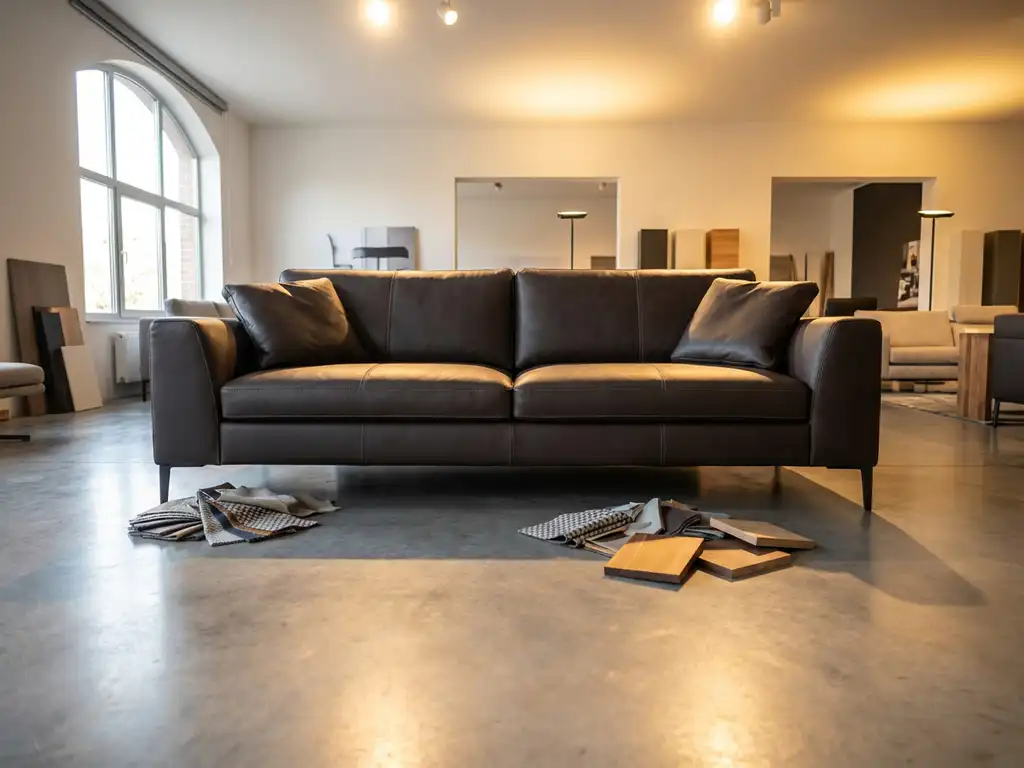
3D product rendering creates photorealistic digital representations of products that can completely replace the need for physical samples. This technology generates accurate visuals that show materials, textures, and configurations instantly, eliminating production costs, storage requirements, and shipping delays. Modern rendering achieves such high quality that customers can make confident purchasing decisions using digital samples alone.
What exactly is 3D product rendering, and how does it replace physical samples?
3D product rendering is a digital technology that creates photorealistic images and interactive models of products using computer-generated imagery. Instead of manufacturing physical prototypes, businesses can showcase every product variation, colour option, and configuration through highly detailed digital representations that customers can view, rotate, and customise in real time.
The technology works by building accurate digital twins of products, capturing precise measurements, material properties, and surface textures. These digital models can then be rendered with realistic lighting, shadows, and reflections that match real-world conditions. The result is visual content that often surpasses traditional photography in consistency and detail.
Digital samples replace physical ones by providing the same visual information customers need to make purchasing decisions. Interactive 3D models allow users to examine products from every angle, zoom in on specific details, and see how different options look together. This level of engagement often exceeds what’s possible with static physical samples.
Why are physical samples becoming a bottleneck for modern businesses?
Physical samples create significant operational challenges that slow business growth and increase costs. Manufacturing samples for every product variant, colour combination, and configuration option requires substantial investment in materials, labour, and production time before any sales occur.
Storage and logistics present ongoing problems. Physical samples need warehouse space, careful handling, and expensive shipping to sales locations, trade shows, and customer meetings. Damaged samples require replacement, and outdated versions must be disposed of when products change.
The biggest bottleneck is scalability. As product ranges expand, the cost and complexity of maintaining comprehensive physical sample libraries grow exponentially. Sales teams often work with incomplete sample sets, limiting their ability to showcase all available options to potential customers.
Time delays also impact competitiveness. Producing physical samples can take weeks or months, slowing product launches and preventing rapid responses to market demands or customer feedback.
Visual Commerce Solutions
Talk to our team about your project.
How does 3D rendering solve the cost and logistics problems of physical sampling?
Digital rendering eliminates the recurring costs of sample production, storage, and distribution while providing instant access to unlimited product variations. Once a 3D model is created, generating new configurations, colours, or material options requires no additional manufacturing investment.
Storage costs disappear entirely, as digital samples exist as computer files rather than physical inventory. There’s no need for warehouse space, protective packaging, or climate-controlled environments. Updates happen instantly across all platforms without the need to dispose of outdated physical samples.
Shipping and logistics become irrelevant. Sales teams can access complete product ranges immediately through digital solutions, whether they’re in the office, at customer meetings, or working remotely. International expansion doesn’t require shipping samples around the world.
The scalability advantage is enormous. Adding new products, variations, or customisation options to digital catalogues costs a fraction of physical sample production. Businesses can offer virtually unlimited configuration possibilities without proportional increases in sampling costs.
What are the key advantages of digital samples over physical ones for sales teams?
Sales teams gain immediate access to complete product ranges without carrying physical inventory or worrying about sample availability. Digital samples never run out, get damaged, or become outdated, ensuring consistent presentation quality at every customer interaction.
Interactive capabilities transform sales presentations. Customers can customise products in real time, seeing exactly how their chosen specifications look before ordering. This interactivity increases engagement and helps customers visualise products in their specific context.
Consistency across all sales channels becomes achievable. Every salesperson, retail location, and online platform shows identical product representations, eliminating confusion and maintaining brand standards. Updates roll out simultaneously across all touchpoints.
The ability to showcase products that don’t physically exist yet provides a competitive advantage. Sales teams can take orders for new configurations or seasonal variations before manufacturing begins, reducing inventory risk while capturing market demand early.
How accurate and realistic can 3D product rendering actually be?
Modern 3D product rendering achieves photorealistic quality that often exceeds traditional photography in accuracy and consistency. Advanced rendering engines simulate material properties, surface textures, and lighting conditions with scientific precision, creating images that are indistinguishable from photographs of real products.
Material representation has reached sophisticated levels, where fabric weaves, wood grains, metal finishes, and leather textures appear completely authentic. Rendering software can simulate how different materials reflect light, cast shadows, and interact with their environment exactly as physical materials would.
Lighting and shadow accuracy ensures products appear natural in various contexts. Rendering systems can simulate different lighting conditions, from showroom environments to natural daylight, helping customers understand how products will look in their intended settings.
Quality standards now enable pixel-perfect accuracy for product dimensions, proportions, and details. Many businesses find that 3D renders provide more consistent and accurate product representation than traditional photography, which can be affected by lighting variations, camera angles, and post-processing inconsistencies.
How 3Dimerce helps eliminate physical samples
We specialise in creating high-quality 3D product configurators that completely replace the need for physical samples through our comprehensive visual product experience platform. Our technology enables businesses to showcase unlimited product variations with photorealistic accuracy that exceeds traditional photography standards.
Our solution provides:
- Interactive product configuration allowing real-time customisation and visualisation
- Seamless integration with existing e-commerce platforms and sales systems
- Consistent visual quality across all channels and devices
- Instant availability of new product variations without additional production costs
- Professional-grade rendering that maintains premium brand positioning
With over 20 years of experience in 3D visualisation and product configuration, we help European manufacturers and retailers transition from costly physical sampling to scalable digital solutions. Our platform integrates with your existing workflows while delivering the stunning visual quality your customers expect.
Discover how our proven solutions can eliminate your physical sampling costs and accelerate your sales processes. Contact us to explore how 3D product rendering can transform your business operations, or learn more about our expertise in digital product visualisation.