
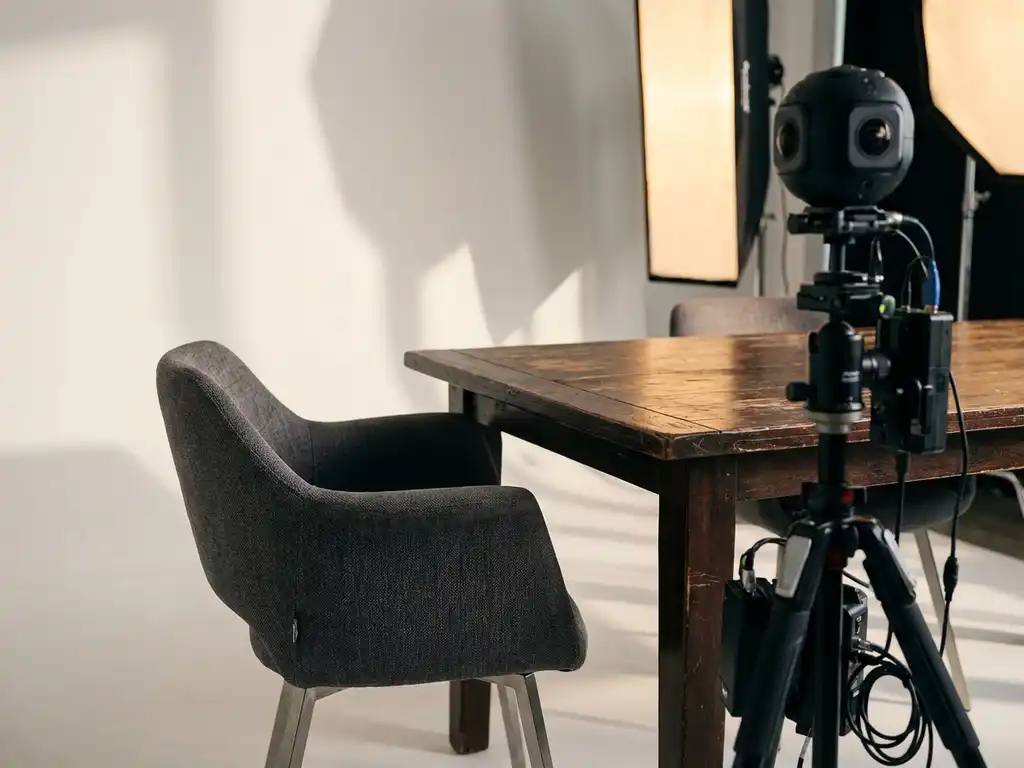
3D product rendering creates digital product visuals using computer software, while 360-degree photography captures real products from multiple camera angles. Both methods produce interactive product displays, but 3D rendering offers unlimited customisation and configuration options that traditional photography cannot match. Understanding their differences helps businesses choose the right approach for their product visualisation needs.
What’s the difference between 3D product rendering and 360-degree photography?
3D product rendering creates entirely digital product visuals using computer-generated imagery (CGI), building products from scratch in virtual environments. This technology constructs three-dimensional models that can be manipulated, customised, and viewed from any angle without physical constraints.
360-degree photography captures existing physical products through a series of photographs taken at regular intervals around the item. These images are then stitched together to create an interactive viewing experience that allows customers to rotate and examine the product from multiple angles.
The fundamental difference lies in their creation process: 3D rendering builds products digitally, while 360-degree photography documents existing items. This distinction affects everything from customisation capabilities to production timelines and long-term scalability for businesses.
Which method provides better visual quality for product displays?
3D product rendering typically delivers superior visual quality for product displays because it offers complete control over lighting, materials, and environmental factors. Digital rendering can achieve photorealistic results while maintaining perfect consistency across all product variants and viewing angles.
360-degree photography quality depends heavily on lighting conditions, camera equipment, and photographer expertise during the shoot. While it captures authentic product details, maintaining consistent quality across multiple products and variants can be challenging, particularly when shooting conditions vary.
3D rendering excels at creating flawless product presentations with perfect lighting, shadows, and reflections that remain consistent across entire product ranges. The technology also allows for enhanced visual effects and environmental settings that would be impossible or costly to achieve through traditional photography.
Visual Commerce Solutions
Talk to our team about your project.
How do costs compare between 3D rendering and 360-degree photography?
Initial setup costs for 3D product rendering are typically higher due to model creation and software requirements, but per-product costs decrease significantly once the system is established. Scaling becomes highly cost-effective, as new variants require minimal additional investment.
360-degree photography has lower initial setup costs but higher ongoing expenses for each product shoot. Every new product or variant requires a complete photography session, including studio time, equipment, and professional photographer fees.
Long-term investment considerations favour 3D rendering for businesses with multiple product variants or frequent updates. The technology eliminates recurring photography costs while providing unlimited configuration options. However, companies with small, stable product lines might find 360-degree photography more cost-effective initially.
What are the main advantages of 3D product rendering over traditional photography?
3D product rendering offers unlimited customisation capabilities that allow customers to configure products in real time, changing colours, materials, and features instantly. This level of interactivity is impossible to achieve with traditional photography methods.
The technology provides complete control over visual presentation, enabling perfect lighting conditions and unlimited viewing angles without physical constraints. Products can be shown in various environments and configurations without additional photography sessions.
Integration possibilities with e-commerce platforms are far superior with 3D rendering. The technology supports dynamic pricing, real-time configuration updates, and seamless visual product configuration that enhances the customer shopping experience while reducing return rates through accurate product representation.
When should businesses choose 360-degree photography instead of 3D rendering?
360-degree photography works best for businesses with simple product lines that don’t require customisation or frequent updates. Companies selling unique, handcrafted items or products with complex textures that are difficult to replicate digitally may benefit from this approach.
Budget constraints and tight timelines can make 360-degree photography more suitable for immediate needs. The process requires less technical expertise and can be completed quickly for small product catalogues without significant upfront investment in 3D modelling.
Businesses operating in industries where product authenticity is paramount, such as vintage items or artisanal goods, might prefer 360-degree photography to showcase genuine product characteristics. However, these scenarios are becoming less common as 3D rendering technology continues to advance in realism and accessibility.
How does 3Dimerce help with advanced product visualisation solutions?
We specialise in creating high-quality 3D product configurators that transform how businesses present their products online and in retail environments. Our SaaS platform combines visual product configuration with computer-generated imagery to deliver stunning, interactive product experiences.
Our comprehensive solution includes:
- Visual product configuration with real-time customisation capabilities
- Photorealistic CGI imagery that matches premium brand positioning
- Seamless integration with existing e-commerce platforms and retail systems
- Scalable technology that grows with your product range
- Omnichannel consistency across web, mobile, and in-store experiences
With over 20 years of experience in virtual product visualisation, we help brands eliminate the limitations of traditional photography while creating engaging customer experiences. Our platform enables unlimited product configurations, reduces dependency on physical prototypes, and accelerates time to market for new product launches.
Ready to transform your product visualisation? Learn more about our expertise in 3D rendering solutions, explore our use cases to see how we’ve helped brands achieve stunning visual results, or contact us to discuss your specific requirements and discover how our advanced 3D rendering solutions can elevate your product presentation.