
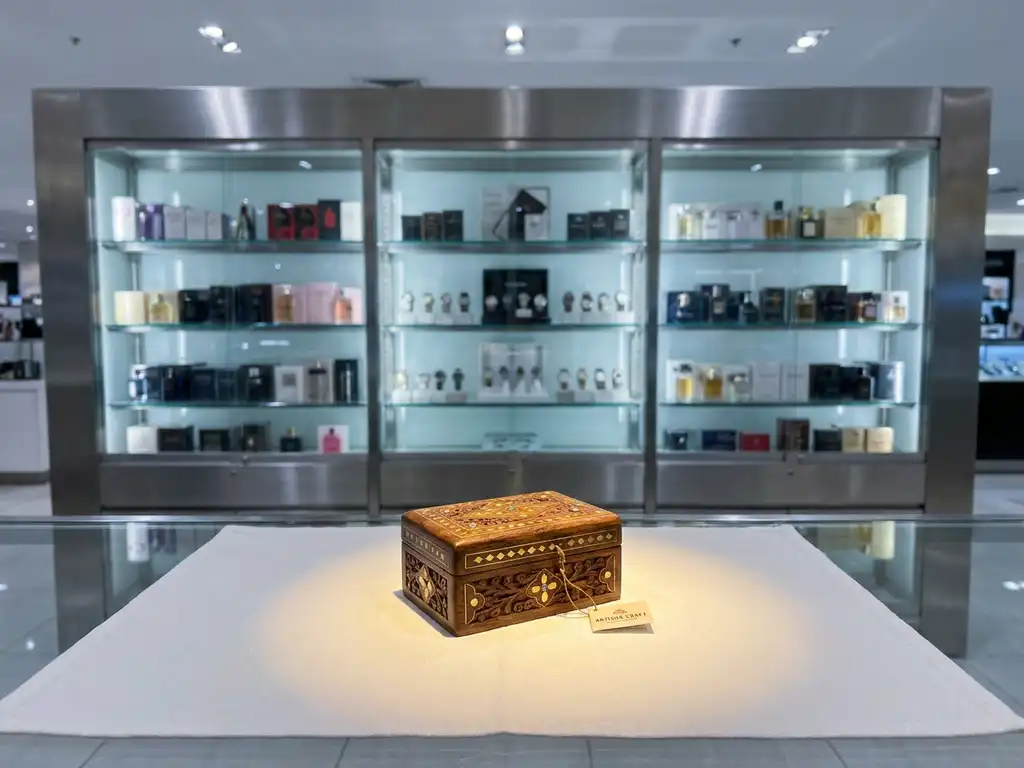
3D product rendering gives smaller brands the power to compete on visual quality with retail giants that have massive photography budgets. Instead of being limited by costly photoshoots that can only capture a handful of product variations, smaller brands can now create unlimited product configurations and stunning visuals at a fraction of traditional costs. This technology levels the playing field, allowing boutique manufacturers and emerging brands to showcase their products with the same professional polish as major retailers.
Why are limited product visuals costing you potential customers?
When customers can’t properly visualize your products online, they abandon their shopping carts and move to competitors that offer better visual experiences. Research consistently shows that poor product imagery directly correlates with higher bounce rates and lower conversion rates. For smaller brands, this visual disadvantage becomes even more critical because you’re already fighting for attention against established players with bigger marketing budgets.
The solution lies in embracing 3D product rendering technology that can generate multiple product views, configurations, and lifestyle settings without the need for expensive photoshoots. This approach allows you to showcase every possible product variation while maintaining consistent, high-quality visuals across all your marketing channels.
How is traditional photography holding back your product launch speed?
Traditional product photography creates bottlenecks that can delay your time-to-market by weeks or even months. Every new product variation requires scheduling photographers, setting up studios, coordinating lighting, and managing post-production workflows. For smaller brands operating with lean teams, these delays can mean missing seasonal opportunities or losing first-mover advantage in emerging market segments.
3D rendering eliminates these time constraints by allowing you to create product visuals as soon as your designs are finalized. You can generate multiple angles, color variations, and environmental settings within days rather than weeks, giving you the agility to respond quickly to market demands and customer feedback.
Visual Commerce Solutions
Talk to our team about your project.
What is 3D product rendering and why does it matter for smaller brands?
3D product rendering creates photorealistic images of products using computer-generated imagery instead of traditional photography. This technology builds detailed digital models of your products that can be manipulated, configured, and visualized from any angle or in any environment. For smaller brands, this represents a fundamental shift from resource-intensive photography to scalable digital visualization.
The technology matters because it democratizes high-quality product visualization. Previously, only large retailers could afford the extensive photography required to showcase comprehensive product catalogs. Now, smaller brands can create unlimited product variations, test different configurations, and present their offerings with the same visual sophistication as major competitors. This capability becomes especially powerful when combined with interactive configurators that let customers customize products in real-time.
How does 3D rendering reduce costs compared to traditional product photography?
Traditional product photography involves substantial upfront and ongoing costs that can strain smaller brand budgets. Professional photographers charge between €500-2000 per day, studio rentals add another €200-500 daily, and you still need to factor in styling, props, post-production, and potential reshoots. For a product line with multiple color options and configurations, these costs multiply quickly.
3D rendering flips this cost structure entirely. Once you create the initial 3D model of your product, generating additional variations becomes virtually cost-free. Need to show your furniture piece in oak instead of walnut? Simply adjust the material properties. Want to display it in different room settings? Change the background environment. This scalability means your cost per product image decreases dramatically as your catalog grows, rather than increasing linearly like traditional photography.
The return on investment becomes even more compelling when you consider the speed factor. While traditional photography might take weeks to complete a product shoot, 3D rendering can produce the same variety of images in days. This time savings translates directly into faster market entry and reduced opportunity costs.
What advantages do 3D configurators give smaller brands over larger competitors?
3D configurators provide smaller brands with a significant competitive advantage through personalization and customer engagement that larger retailers often struggle to implement effectively. While big retailers focus on standardized experiences across massive product catalogs, smaller brands can offer highly customized, interactive shopping experiences that feel personal and premium.
These configurators allow customers to visualize exactly what they’re purchasing before committing to a purchase. They can experiment with different materials, colors, sizes, and configurations while seeing real-time visual feedback. This level of interaction builds confidence and reduces the uncertainty that typically leads to cart abandonment. You can explore various use cases to understand how different industries leverage this technology.
Perhaps most importantly, 3D configurators generate valuable customer data about preferences and behaviors that larger competitors often miss. You can track which configurations are most popular, identify emerging trends, and adapt your product offerings based on real customer interactions rather than assumptions.
How can smaller brands implement 3D product visualization without technical expertise?
Modern 3D visualization platforms are designed specifically for businesses without technical teams, offering user-friendly interfaces and comprehensive support systems. Many solutions operate as Software-as-a-Service platforms, meaning you don’t need to invest in expensive hardware or hire specialized staff to get started.
The implementation process typically begins with providing your existing product specifications, CAD files, or even detailed photographs to the platform provider. Professional 3D artists then create the initial product models, which you can subsequently modify and configure through intuitive web-based interfaces. Most platforms include training sessions and ongoing support to ensure your team can manage the system effectively.
Cloud-based solutions also handle the technical infrastructure automatically, including rendering processing, file storage, and integration with your existing e-commerce platform. This approach allows you to focus on your core business while leveraging sophisticated 3D technology without the associated technical complexity.
What types of products benefit most from 3D rendering for competitive advantage?
Products with high customization potential see the greatest competitive advantage from 3D rendering. Furniture, home décor, fashion accessories, and jewelry particularly benefit because customers want to see how different materials, colors, and configurations will look before purchasing. These categories also traditionally require expensive photography for each variation, making 3D rendering especially cost-effective.
Complex or technical products also gain significant advantages through 3D visualization. Items with internal components, modular designs, or assembly requirements can be shown in exploded views, cutaway sections, or step-by-step configurations that would be impossible or prohibitively expensive to photograph. This capability helps customers understand product functionality and builds confidence in their purchase decisions.
Premium and luxury products represent another ideal category for 3D rendering. These items require high-quality visuals that convey craftsmanship and attention to detail. 3D rendering can showcase fine textures, precise finishes, and sophisticated design elements with consistency that’s difficult to achieve through traditional photography, especially when dealing with multiple product variations.
How 3Dimerce helps with 3D product rendering for smaller brands
We specialize in creating high-quality 3D product configurators that give smaller brands the visual sophistication needed to compete with larger retailers. Our SaaS platform delivers stunning visuals with blazing-fast performance, ensuring your customers experience the same premium quality that defines your products. Key benefits include:
- Scalable visual content generation without per-variant costs
- Seamless integration with existing e-commerce platforms
- Interactive configurators that engage customers and drive conversions
- Professional 3D modeling services to get you started quickly
- Comprehensive support for implementation and ongoing optimization
Our solutions are designed specifically for design-led brands that refuse to compromise on visual quality. Ready to level the playing field with enterprise-grade 3D visualization? Contact us to discover how we can transform your product visualization strategy.
Frequently Asked Questions
How long does it typically take to create the initial 3D models for a product line?
The initial 3D modeling process usually takes 1-3 weeks depending on product complexity and the number of variations. Simple products like basic furniture pieces can be modeled within a few days, while complex items with intricate details or multiple components may require 2-3 weeks. Once the base models are complete, creating new variations or configurations takes only hours rather than weeks.
What file formats do I need to provide to get started with 3D product rendering?
Most 3D rendering platforms accept CAD files (.step, .iges, .dwg), 3D model files (.obj, .fbx, .3ds), or even high-quality product photos from multiple angles. If you only have 2D technical drawings or sketches, professional 3D artists can work with those as well. The key is providing accurate dimensions, material specifications, and any reference imagery that shows your product’s details.
Can 3D rendering handle products with complex materials like fabric textures or reflective surfaces?
Yes, modern 3D rendering excels at reproducing complex materials with photorealistic accuracy. Fabric weaves, leather grains, metallic finishes, glass transparency, and even subtle surface imperfections can all be accurately represented. Advanced material libraries and physically-based rendering ensure that textures respond to lighting just like real materials would, often producing results that are indistinguishable from professional photography.
How do I integrate 3D configurators with my existing e-commerce platform?
Most professional 3D platforms offer pre-built integrations with popular e-commerce systems like Shopify, WooCommerce, Magento, and custom solutions through APIs. The integration typically involves embedding the configurator widget into your product pages and connecting it to your inventory management system. Many providers handle the technical setup for you, ensuring the configurator seamlessly matches your website’s design and functionality.
What happens if I need to make changes to my products after the 3D models are created?
Making changes to 3D models is much more flexible than traditional photography. Minor adjustments like color changes, material swaps, or dimension modifications can often be completed within hours. More significant changes like design alterations or new components may take 1-3 days depending on complexity. This flexibility allows you to iterate on designs, test market responses, and adapt to customer feedback much faster than traditional photography workflows.
How do customers typically respond to 3D configurators compared to static product images?
Customer engagement with 3D configurators is significantly higher than static images, with many brands reporting 40-60% increases in time spent on product pages and 20-30% improvements in conversion rates. Customers appreciate being able to see exactly what they’re purchasing and often spend more time exploring different configurations, leading to higher average order values. The interactive experience also reduces post-purchase returns since customers have a clearer understanding of their chosen product.
What are the ongoing costs after implementing 3D product rendering?
Ongoing costs are typically much lower than traditional photography since you’re not paying for new photoshoots with each product variation. Most platforms charge monthly subscription fees based on usage or number of products, ranging from a few hundred to several thousand euros depending on your catalog size and feature requirements. Additional costs may include occasional model updates, new product additions, or expanded configurator features, but these are generally a fraction of equivalent photography expenses.