
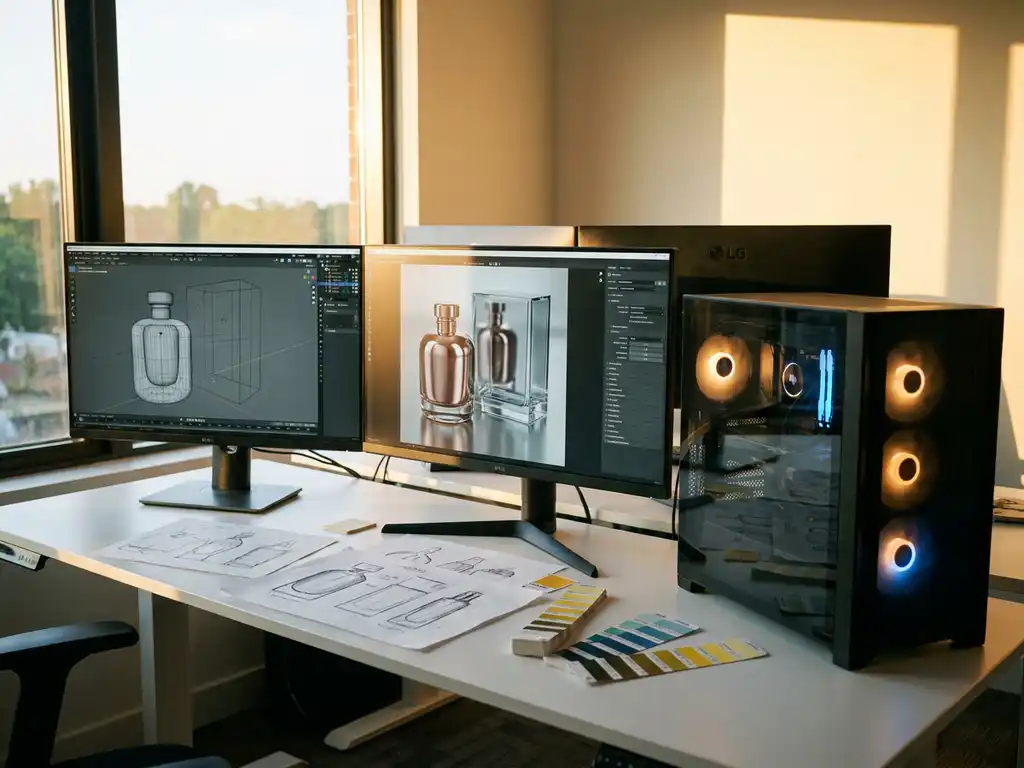
Yes, 3D rendering is experiencing unprecedented demand across virtually every industry that sells physical products. From furniture and automotive to fashion and electronics, businesses are rapidly adopting 3D rendering technologies to create photorealistic product visuals, interactive experiences, and customizable configurations that traditional photography simply cannot match at scale.
Why is outdated product photography costing you a competitive advantage?
Traditional product photography creates a bottleneck that slows your time to market and limits your ability to showcase product variations. Every new color, material, or configuration requires a new photoshoot, which means weeks of scheduling, setup, and post-production before you can launch. Meanwhile, your competitors using 3D rendering can generate unlimited product variations instantly, respond to market trends faster, and offer customers the interactive experiences they increasingly expect. The cost isn’t just financial — it’s lost sales from delayed launches and missed opportunities when customers can’t visualize exactly what they want.
What does inconsistent visual quality signal about your brand positioning?
When your product visuals vary in lighting, angles, and quality across different channels — your website, social media, print catalogs, and retail displays — you’re unintentionally communicating that your brand lacks attention to detail. This inconsistency is particularly damaging for premium brands, where visual excellence directly correlates with perceived value. 3D rendering ensures every product image maintains the same high standard, controlled lighting, and perfect presentation, reinforcing your brand’s commitment to quality at every customer touchpoint.
Visual Commerce Solutions
Talk to our team about your project.
What is 3D rendering and why is it becoming essential?
3D rendering is the process of creating photorealistic images from three-dimensional digital models using specialized software and algorithms. Unlike traditional photography, 3D rendering generates images computationally, allowing for infinite variations in lighting, materials, colors, and angles without physical constraints. This technology has become essential because it offers unprecedented flexibility, speed, and cost-effectiveness for businesses that need to visualize products across multiple configurations and channels.
The technology works by creating detailed digital twins of products, complete with accurate materials, textures, and lighting properties. These models can then be rendered from any angle, in any environment, with any material or color variation. Advanced rendering engines simulate realistic physics like light reflection, shadow casting, and material interaction, producing images that are often indistinguishable from professional photography.
Which industries are driving 3D rendering demand?
The furniture and interior design industry leads 3D rendering adoption, driven by the need to showcase countless material, color, and configuration options without maintaining massive physical inventories. Luxury brands particularly benefit from 3D rendering’s ability to maintain consistent, premium visual quality across all customer touchpoints.
Automotive manufacturers have embraced 3D rendering for both marketing and sales configuration tools, allowing customers to visualize vehicles with different paint colors, wheel options, and interior materials. The fashion and jewelry industries use 3D rendering to reduce sample production costs while enabling customers to see products in various colors and finishes before manufacturing begins.
Architecture and real estate leverage 3D rendering for pre-construction visualization, helping clients understand spaces before they’re built. Consumer electronics companies use the technology to showcase products from every angle and demonstrate functionality through interactive 3D experiences.
How big is the 3D rendering market right now?
The global 3D rendering market has experienced explosive growth, reaching significant scale as businesses recognize its competitive advantages. Industry analysts project continued strong growth through 2026 and beyond, driven by increasing demand for interactive product experiences and the limitations of traditional photography in meeting modern customer expectations.
The market expansion reflects not just adoption by large enterprises, but also growing accessibility for mid-sized businesses through Software as a Service platforms. This democratization has opened 3D rendering capabilities to companies that previously couldn’t justify the investment in specialized hardware and software.
European markets, particularly in the design and luxury goods sectors, show especially strong adoption rates as brands prioritize visual quality and customer experience differentiation.
What’s driving businesses to choose 3D over traditional photography?
Cost efficiency drives much of the transition to 3D rendering. Traditional photography requires physical samples, professional studios, lighting equipment, and skilled photographers for every product variation. A single furniture piece with ten color options requires ten separate photoshoots, while 3D rendering generates all variations from one digital model.
Speed to market represents another critical advantage. Physical photoshoots can take weeks to schedule and execute, while 3D rendering produces new product visuals in hours or days. This agility becomes crucial when responding to market trends or launching seasonal collections.
Consistency across channels proves increasingly valuable as brands expand their omnichannel presence. 3D rendering ensures identical visual quality whether customers encounter products online, in print catalogs, or on digital displays in retail environments. Real-world applications demonstrate how this consistency strengthens brand perception and customer confidence.
How do 3D product configurators impact sales and conversion?
Interactive 3D product configurators significantly increase customer engagement and conversion rates by allowing shoppers to visualize exactly what they’re purchasing. Rather than imagining how a sofa might look in blue fabric, customers can see it rendered in photorealistic detail, reducing purchase hesitation and return rates.
The technology enables guided selling experiences where customers can explore options systematically, understanding how different choices affect the final product. This interactive approach builds confidence in purchase decisions, particularly for high-value items where customers want assurance about their choices.
Sales teams benefit from configurators that demonstrate product options clearly, reducing explanation time and enabling faster decision-making. The visual clarity helps overcome common objections and allows sales professionals to focus on value rather than basic product understanding.
What skills and careers are in demand in 3D rendering?
Technical 3D artists skilled in software like Blender, 3ds Max, or Cinema 4D are highly sought after, particularly those who understand both artistic principles and technical optimization for real-time rendering. Knowledge of physically-based rendering principles and material creation represents especially valuable expertise.
User experience designers who understand 3D interaction paradigms are increasingly important as businesses implement interactive product configurators. These professionals bridge the gap between technical capability and customer experience, ensuring 3D tools enhance rather than complicate the buying process.
Technical project managers who can coordinate between creative teams, developers, and business stakeholders play crucial roles in successful 3D rendering implementations. Understanding both the creative and technical constraints helps ensure projects deliver business value within realistic timelines and budgets.
How we help with 3D product visualization
At 3Dimerce, we specialize in creating premium 3D product configurators and CGI imagery that elevate your brand’s visual presence across all channels. Our comprehensive platform combines:
- Photorealistic rendering quality that matches your premium product positioning
- Blazing-fast performance across all devices, from desktop to mobile
- Seamless integration with your existing e-commerce and sales systems
- Scalable configuration options that grow with your product range
- Omnichannel consistency from online stores to retail environments
With over 20 years of experience serving European design and luxury brands, we understand the unique challenges of maintaining visual excellence while scaling your product visualization needs. Our tailored solutions replace costly photoshoots with agile digital workflows, reducing time-to-market while enhancing customer engagement through interactive product experiences.
Ready to transform your product visualization strategy? Contact our team to discover how 3D rendering can accelerate your sales cycle and strengthen your brand positioning in today’s competitive market.
Frequently Asked Questions
How long does it typically take to create 3D models and set up a product configurator for my product line?
The timeline depends on product complexity and the number of variations, but most projects take 4-8 weeks from initial consultation to launch. Simple products with basic material variations can be completed faster, while complex items with multiple components may require additional time. We work in phases, so you can start seeing results and providing feedback within the first 2-3 weeks.
What file formats and product information do you need from us to get started?
We work with CAD files (STEP, IGES), technical drawings, physical samples, or high-quality reference photos. The more detailed technical specifications you can provide about materials, dimensions, and color options, the more accurate our 3D models will be. Don’t worry if your files aren’t perfect – our team can work with various formats and help optimize your product data.
Can 3D rendering really match the quality of professional product photography for luxury brands?
Yes, modern 3D rendering often exceeds traditional photography quality because we have complete control over lighting, materials, and presentation. Many luxury brands now prefer 3D rendering because it ensures perfect consistency across all marketing materials and eliminates variables like studio lighting inconsistencies or photographer style differences that can affect brand perception.
How do you handle material accuracy, especially for fabrics, leather, and complex textures?
We create custom material libraries based on your actual product samples, using advanced scanning techniques and manual refinement to capture subtle texture details, reflectance properties, and color accuracy. For fabrics and leather, we often request physical samples to ensure our digital materials match exactly under different lighting conditions.
What happens if we need to add new products or modify existing ones after the configurator is live?
Our platform is designed for easy updates and expansions. Adding new color options or materials typically takes 1-2 days, while entirely new products require creating new 3D models. We provide training and tools so your team can manage basic updates independently, and we’re always available for more complex modifications or technical support.
How do you ensure the 3D configurator performs well on mobile devices and doesn't slow down our website?
We optimize all 3D models and rendering processes specifically for web performance, using techniques like level-of-detail optimization and progressive loading. Our configurators are built with mobile-first design principles and typically load faster than traditional image galleries because we only render what customers actually view, rather than loading dozens of pre-made product photos.
Can customers save and share their custom configurations, and how does this integrate with our sales process?
Yes, customers can save configurations with unique URLs, share them via social media or email, and sales teams can access detailed specifications for quotes and orders. The configurator integrates with most CRM and e-commerce systems, automatically capturing customer preferences and configuration details to streamline your sales process and reduce order errors.