
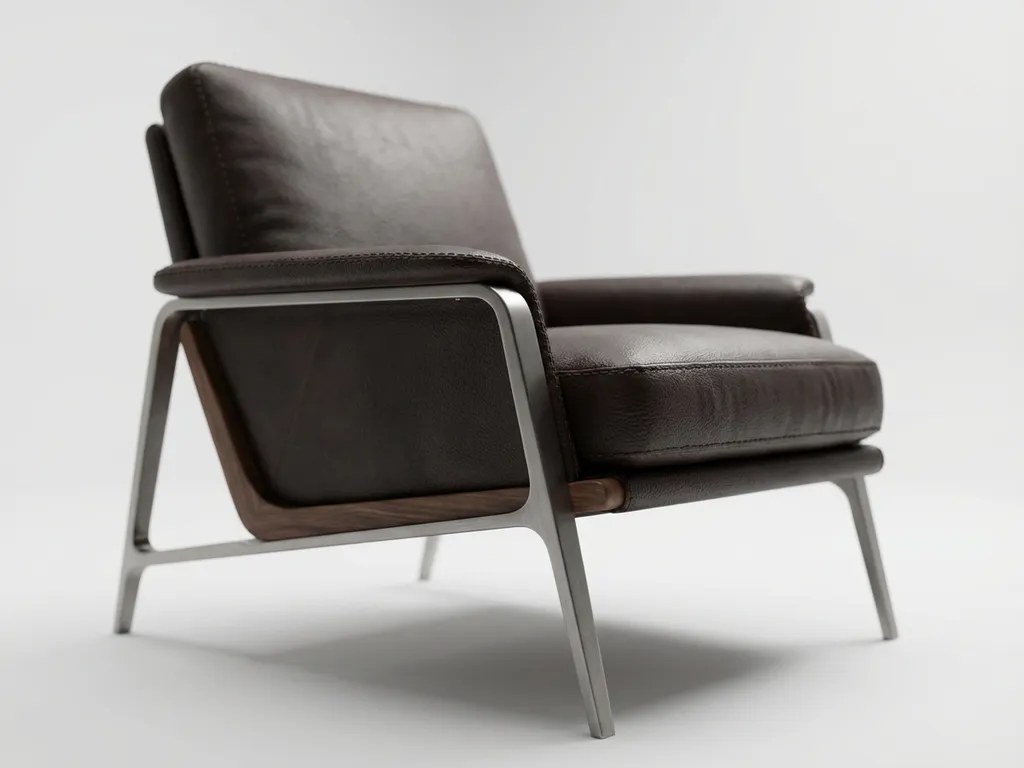
Photorealistic 3D product rendering creates digital images that match or exceed the visual fidelity of professional studio photography, across any product material, finish, or configuration. Our renders achieve a level of realism that makes them virtually indistinguishable from traditional photography, and we deliver them with blazing-fast turnaround for luxury and design-focused brands. On this page, you will learn what different types of realistic product rendering look like, how to recognize high-quality 3D product renderings, which industries benefit most, and how interactive configurators work in practice.
What is photorealistic 3D product rendering, and how realistic does it actually look?
Photorealistic 3D product rendering is a computer graphics process that generates lifelike images of products using digital 3D models, simulated lighting, and virtual materials, without requiring physical prototypes or a photography studio. Today’s rendering technology achieves such high visual fidelity that rendered images are virtually indistinguishable from professional photography.
The realism achieved through modern 3D product rendering rivals traditional photography in several key areas. Advanced rendering engines simulate natural lighting conditions, creating accurate shadows, reflections, and highlights that mirror real-world physics. Material textures appear authentic, whether showing the grain of wood furniture, the smoothness of ceramic surfaces, or the subtle variations in fabric weaves.
Professional-grade rendering produces images with exceptional detail and clarity. Surface imperfections, wear patterns, and natural irregularities can be precisely controlled, often resulting in more consistent visual quality than traditional photography. The technology excels at capturing complex materials like glass, metal, and translucent plastics, along with their unique light-interaction properties.
Visual fidelity standards in the industry now demand pixel-perfect accuracy. High-resolution renders support extreme close-up views without quality loss while maintaining fast loading speeds across all devices. This level of quality makes 3D rendering particularly valuable for luxury and design-focused brands, where visual excellence directly impacts brand perception.
Photorealistic 3D product rendering vs. traditional photography: quality, cost, and speed
One of the most common questions from marketing and e-commerce managers is whether high-quality 3D product renderings can genuinely replace studio photography. The answer, for the vast majority of commercial use cases, is yes. Modern photorealistic renders are indistinguishable from studio photography while offering capabilities that traditional photography simply cannot match.
Visual quality
Professional digital product rendering achieves visual results that are on par with, and in some respects superior to, studio photography. Because every image is generated from a single 3D model, you can produce an infinite number of angles, configurations, and environments without ever reshooting. Pixel-perfect consistency is guaranteed across hundreds of SKUs, something that is extremely difficult to achieve across multiple photography sessions with different crew setups and lighting conditions.
Production cost factors
Traditional product photography incurs per-shoot costs that multiply with every product variant: studio rental, crew, props, logistics, and post-production retouching all add up with each new colorway or configuration. With 3D rendering, once the base model is built, generating additional variants, new angles, or alternative backgrounds carries near-zero marginal cost. For brands managing large product ranges, this difference in cost structure is significant.
Turnaround speed
Organizing a traditional photography shoot requires coordinating schedules, shipping physical samples, and booking studio time, which can take days or weeks per product. Once a 3D model exists, new angles, colorways, and scene environments are generated in hours. This speed advantage is especially valuable when launching new product lines or responding quickly to market opportunities. For design-focused brands where time-to-market matters, this is a decisive benefit.
The conclusion is straightforward: modern photorealistic 3D product rendering delivers studio-quality visuals at greater speed, lower per-variant cost, and with a level of scalability that traditional photography cannot replicate.
Types of photorealistic 3D product renderings: from static images to interactive configurators
3D product rendering encompasses several distinct output formats, each serving specific marketing and sales purposes. The main types are: static product images, 360-degree interactive views, real-time product configurators, augmented reality (AR) experiences, animated product demonstrations, lifestyle product renderings, and product mockups.
Static product images remain the foundation of product visualization. These high-resolution renders work for catalogs, e-commerce websites, and print materials. They offer complete control over lighting, angles, and composition while delivering consistent quality across entire product ranges.
360-degree product views allow customers to examine items from every angle. These interactive experiences work particularly well for complex products where customers need to see construction details, connection points, or design elements from multiple perspectives.
Interactive product configurators represent the most sophisticated rendering type. Customers can change colors, materials, sizes, and components while seeing real-time visual updates. This technology is most effective for customizable products like furniture, where navigating choices significantly impacts purchase decisions.
Visual Commerce Solutions
Talk to our team about your project.
Augmented reality (AR) experiences place rendered products in customers’ actual environments through smartphone cameras. This approach works particularly well for furniture and home décor, helping customers visualize scale and fit before purchasing.
Animated product demonstrations showcase functionality, assembly processes, or feature highlights. These are valuable for complex products that require explanation or for products where movement improves understanding.
Lifestyle product renderings place products inside a fully rendered, photorealistic environment, such as a living room, a kitchen countertop, or an outdoor terrace, without requiring a physical set or location shoot. This type of 3D lifestyle product rendering is especially powerful for the furniture, interior design, and home décor sectors because it helps customers emotionally connect with how a product fits into their space. Rather than showing a product in isolation, lifestyle renders communicate context, scale, and atmosphere in a single image.
Product mockups place a product design onto a standardized template, such as packaging, apparel, or branded merchandise, allowing brands to visualize the final presentation before physical production begins. This is particularly relevant for packaging design, private-label brands, and e-commerce product listings where accurate visual representation of the finished product is needed before any physical item exists.
How we create photorealistic 3D product renderings: the production process
Understanding how photorealistic product rendering is produced helps marketing managers and buyers set accurate expectations and plan their projects effectively. Our production process follows four clearly defined stages, each contributing to the final visual quality of the output.
1. 3D modeling
Every project begins with building a precise digital model from product specifications, CAD files, or physical reference samples. Our modelers capture every dimension, curve, surface detail, and mechanical component with exact accuracy. The quality of this foundation directly determines how convincing the final render will be, which is why we invest significant care at this stage.
2. Texturing and material setup
Once the model is complete, materials are mapped onto its surfaces using physically based rendering (PBR) techniques that simulate real-world light interaction. Wood grain, fabric weave, metal finish, leather texture, and glass properties are all defined at this stage. PBR ensures that materials respond to light the way their physical counterparts do, which is what gives our photorealistic product rendering its convincing realism.
3. Lighting and scene composition
Virtual lighting rigs are constructed to replicate studio conditions or natural environments, controlling shadows, reflections, ambient light, and mood. For lifestyle scenes, full environments are built around the product. For clean product shots, carefully calibrated studio lighting setups are used. This stage is where the artistic direction of the final image takes shape.
4. Rendering and final output
The final photorealistic output is computed and delivered as high-resolution files ready for any channel, whether that is an e-commerce product page, a printed catalog, a digital advertisement, or an interactive configurator. Our process is engineered for blazing-fast turnaround without any compromise on visual quality, so brands can move from brief to publication-ready assets faster than traditional photography allows.
What industries and products benefit most from 3D rendering?
Furniture, automotive, electronics, fashion, and manufacturing are the industries that benefit most from 3D product rendering. Products with multiple configurations, complex designs, or high customization requirements see the greatest advantages from digital visualization over traditional photography.
The furniture industry leads in 3D rendering adoption. Configurable seating, modular storage systems, and custom cabinetry benefit enormously from interactive visualization. Customers can explore different fabrics, finishes, and configurations without requiring physical samples or showroom space.
Brands managing large product catalogs often struggle with visual inconsistency: different lighting conditions, varying camera setups, and seasonal photography schedules create noticeable style differences across a product range that erode brand trust. High-quality 3D product renderings solve this problem at the root. Because every image is generated from the same lighting rig, material library, and camera settings, visual consistency is guaranteed across hundreds or thousands of SKUs. That consistency extends across every channel: the same render can be adapted for a website product page, a printed catalog, a digital advertisement, and an in-store display without reshooting. For luxury and design-focused brands, where visual coherence is inseparable from brand equity, this level of control is a decisive competitive advantage.
Automotive manufacturers use rendering for both marketing and configuration purposes. Vehicle customization tools allow customers to select paint colors, interior materials, and optional features while seeing real-time updates, particularly valuable for luxury vehicles, where personalization drives purchase decisions.
Electronics companies leverage rendering for product launches and technical documentation. Complex devices can be shown with transparent casings that reveal internal components, or demonstrated through exploded views that show assembly processes.
Fashion and accessories brands use rendering for products with multiple color and material options. Handbags, shoes, and jewelry can be visualized in countless combinations without requiring physical samples of every variant.
Manufacturing companies use rendering for technical sales presentations and customer approvals. Industrial equipment, machinery, and custom fabrications can be visualized before production, reducing prototyping costs and improving customer understanding.
Interior design and architecture rely on rendering for space visualization and material selection. Complete room environments can be created to show how different products work together in realistic settings.
What determines the cost of 3D product rendering, and what is the return?
For marketing managers and buyers with budget responsibility, understanding the investment involved in digital product rendering, and where that investment pays back, is essential for making a confident decision. The cost of a rendering project is shaped by several qualitative factors, and the return on that investment is measurable across multiple dimensions of the business.
Factors that influence rendering investment
The primary drivers of project cost are model complexity, the number of variants required, the type of output, and scene complexity. A product with many individual parts, intricate surface details, or mechanical components requires more modeling time than a simple object. The number of material and color variants multiplies the scope of texturing work. The type of output matters significantly: a static render on a white background is far less resource-intensive than a full interactive configurator or an AR-ready asset. Finally, a full lifestyle environment with props, architecture, and atmospheric lighting requires considerably more production effort than a clean studio setup.
The business case: where 3D rendering pays for itself
The business case for high-quality 3D product renderings is clearest for brands with large SKU counts or highly configurable products. The first value driver is the elimination of per-variant photography costs: once a 3D model exists, generating every additional colorway, configuration, or angle carries near-zero marginal cost, whereas traditional photography charges per shoot. The second driver is the reduction of physical sample and prototype production, which represents a significant logistics and manufacturing cost for many product categories. The third driver is conversion rate improvement: richer, more interactive product visualization consistently supports better purchasing decisions and reduces return rates. Brands that transition to digital product rendering at scale typically find that the investment pays back fastest where product ranges are large, variants are numerous, and visual content needs to reach multiple channels simultaneously.
How to recognize high-quality photorealistic product renders vs. amateur work
High-quality 3D rendering is identifiable by six core characteristics: accurate lighting, realistic material textures, natural shadows, precise surface detail, true color representation, and professional composition. Poor rendering typically fails on lighting and material realism first.
Lighting accuracy is the primary quality indicator in 3D product rendering. Professional rendering uses complex lighting setups that create natural-looking illumination with soft shadows and realistic highlights. Poor-quality renders often display flat, even lighting that lacks depth and dimension. In a high-quality photorealistic render, you will notice that light wraps around curved surfaces gradually, that specular highlights are sharp but not blown out, and that shadows have soft, graduated edges rather than hard cutoffs.
Material texture quality separates professional work from amateur attempts. Good rendering shows authentic surface properties: wood grain flows naturally, metal surfaces reflect appropriately, and fabric displays realistic weave patterns. Poor rendering presents materials that look plastic or artificially perfect. Premium fabric renders show individual thread variations and subtle pile direction; metal surfaces display anisotropic reflections that shift as the viewing angle changes.
Shadow realism indicates rendering sophistication. Quality renders include multiple shadow types: contact shadows where objects meet surfaces, cast shadows from lighting, and ambient occlusion in crevices. Poor rendering often shows a single harsh shadow or unrealistic shadow directions.
Surface detail accuracy demonstrates technical expertise. Professional rendering captures subtle imperfections, natural wear patterns, and authentic irregularities that make products appear real. Amateur work typically shows overly perfect surfaces that lack believable character.
Color accuracy requires proper calibration and an understanding of color science. Quality rendering maintains consistent colors across different lighting conditions and viewing angles, while poor rendering may show color shifts or unrealistic saturation levels.
Composition and camera work is the sixth quality indicator, and one that distinguishes truly professional photorealistic product renders from technically competent but visually flat outputs. Professional renders use realistic focal lengths, typically in the 50 to 85mm equivalent range, that match how the human eye naturally perceives objects. Intentional depth of field draws the viewer’s attention to key product features while softening distracting background elements. The relationship between the product and its background or environment is carefully considered: backgrounds complement the product rather than compete with it, and the overall frame guides the eye toward the product’s most important visual qualities.
How does interactive 3D product configuration work for customers?
Interactive 3D product configuration is a technology that lets customers customize a product, selecting colors, materials, sizes, and features, through on-screen controls, while a photorealistic 3D visualization updates in real time to reflect each choice. The result is a self-service buying experience that replaces physical samples and showroom visits.
The customer experience begins with a base product model displayed in an interactive viewer. Customization options appear as clearly labeled controls, color swatches, material samples, dropdown menus, or sliders. Each option typically includes preview images or descriptions to guide selection.
Real-time visual updates happen instantly as customers make choices. Changing a sofa fabric, for example, immediately updates the 3D model to show the new material with accurate texture, color, and pattern representation. This immediate feedback helps customers understand exactly what they are selecting before they commit to a purchase.
Material and color changes maintain photorealistic quality throughout the configuration process. Advanced rendering ensures that new materials display authentic properties: leather shows natural grain patterns, metals reflect light appropriately, and fabrics display realistic weave characteristics.
The configuration process integrates smoothly with purchasing decisions. Customers can save configurations, share them with others, or add customized products directly to shopping carts. Pricing updates automatically reflect selected options, providing transparent cost information throughout the customization process.
Many configurators include additional features like scale references, zoom capabilities, and multiple viewing angles. Some offer augmented reality (AR) options for placing configured products in customers’ actual spaces, bridging the gap between digital visualization and physical reality.
Frequently asked questions about 3D product rendering
How long does it take to produce a photorealistic 3D product rendering?
Timelines depend on model complexity and output type. A static render of a straightforward product can be completed in a matter of days, while a full interactive configurator with multiple material libraries requires a more extensive build process. Once a base 3D model exists, generating additional angles, colorways, and scene variants is significantly faster than any subsequent photography shoot would be.
Can 3D product rendering fully replace traditional product photography?
Yes, for the vast majority of commercial use cases. Photorealistic product rendering now matches studio photography quality for most product categories while offering greater flexibility, unlimited angles, and near-zero marginal cost for additional variants. Many leading brands in furniture, electronics, and luxury goods have already made the transition and no longer rely on traditional photography for their standard product imagery.
What file formats are delivered for photorealistic product renders?
Final renders are delivered as high-resolution files suitable for any channel. Common formats include PNG and JPEG for web and print use, along with layered files where required for post-production flexibility. For interactive configurators and AR applications, optimized 3D asset formats are delivered that meet the performance requirements of the target platform.
Which products are best suited for 3D lifestyle rendering?
Products that benefit most from 3D lifestyle product rendering are those where context and environment are central to the purchase decision. Furniture, home décor, lighting, and interior accessories are the clearest examples, because customers need to visualize how a product fits into a real living space. Outdoor products, kitchen appliances, and fashion accessories also perform strongly in lifestyle rendering contexts.
How does 3D product rendering support e-commerce conversion?
Realistic product rendering supports conversion by giving customers the visual confidence they need to make a purchase decision without handling the product physically. Interactive configurators reduce purchase hesitation by letting customers see exactly what they are ordering. Lifestyle renders communicate product scale, material quality, and aesthetic fit in ways that isolated product shots cannot. Together, these formats reduce return rates and increase average order values, particularly for high-consideration purchases.
How 3dimerce helps with advanced 3D product visualization
We provide comprehensive 3D visualization solutions that transform product experiences through photorealistic rendering and interactive configuration technology. Our SaaS platform delivers stunning visuals with blazing-fast performance across all devices, specifically designed for luxury and design-focused brands.
Our advanced 3D product rendering capabilities include:
- Photorealistic quality: Achieving visual fidelity that matches or exceeds traditional photography standards
- Interactive configurators: Real-time customization tools that integrate seamlessly with existing e-commerce platforms
- Omnichannel consistency: Unified visual experiences across online stores, physical retail environments, and mobile applications
- Scalable content production: Efficient generation of visual content for entire product ranges without proportional cost increases
- Technical integration: Headless architecture that connects with existing business systems and workflows
Brands in the furniture and luxury goods sectors that have moved to our photorealistic 3D rendering platform consistently report significant reductions in visual content production costs and faster go-to-market timelines. Furniture manufacturers, in particular, have used our platform to eliminate the need for physical sample photography across entire product ranges, generating every colorway and configuration from a single 3D model. Our portfolio spans furniture, automotive, electronics, and luxury goods sectors, built on over 20 years of expertise in virtual art and CGI.
With over 20 years of experience in virtual art and CGI, we understand the specific needs of manufacturers and retailers seeking professional product visualization. Our platform enables brands to create sophisticated virtual showrooms and digital twins that enhance customer engagement while reducing dependence on physical prototypes and traditional photography. Learn more about our expertise in delivering cutting-edge visualization solutions.
Explore our implementation examples or contact our team to discover how advanced 3D product visualization can transform your customer experience and streamline your visual content production.