
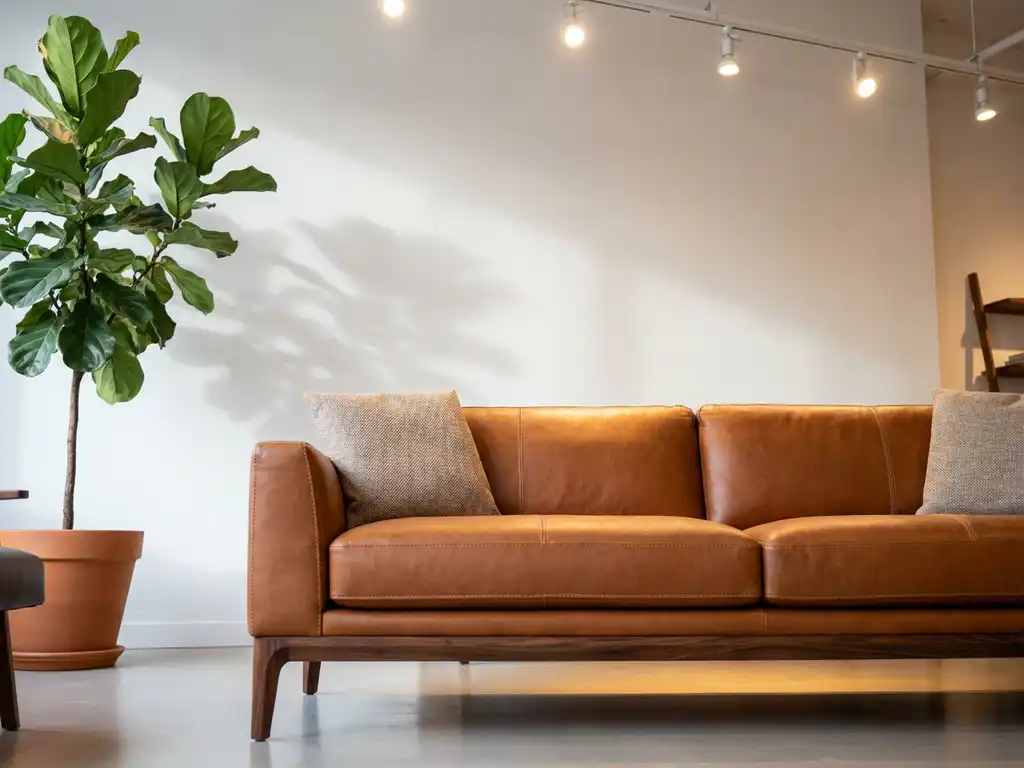
Several industries rely heavily on 3D product rendering to showcase complex products, reduce costs, and enhance customer experiences. Furniture and interior design companies lead adoption, followed by the automotive, fashion, electronics, and manufacturing sectors. These industries benefit from 3D visualisation because they offer customisable products, require extensive visual content, and serve customers who need to see detailed configurations before purchasing.
What industries are leading the adoption of 3D product rendering?
The furniture and interior design sector dominates 3D product rendering adoption, accounting for the largest share of implementation across European markets. Automotive manufacturers follow closely, using 3D visualisation for vehicle configurators and marketing materials. Fashion and e-commerce brands increasingly invest in 3D rendering to showcase products and reduce return rates.
Electronics manufacturers utilise 3D rendering for product launches and technical documentation, whilst manufacturing companies employ the technology for prototyping and sales presentations. These sectors share common characteristics that make 3D rendering particularly valuable: they offer highly customisable products, require extensive visual content across multiple channels, and serve customers who make significant purchasing decisions based on visual information.
The technology proves especially beneficial for businesses selling premium or design-led products, where visual quality directly impacts brand perception and sales conversion rates.
Why do furniture and interior design companies need 3D product rendering most?
Furniture companies face unique challenges that make 3D product rendering essential to their operations. Traditional photography cannot keep pace with the volume of product configurations available in modern furniture lines. A single sofa might have dozens of fabric options, multiple size variations, and different leg finishes, creating thousands of possible combinations.
3D rendering solves this complexity by generating any configuration instantly, without physical samples or photoshoots. Interior design brands use the technology to create virtual showrooms where customers can visualise products in realistic room settings. This approach reduces the costs associated with maintaining large physical showrooms whilst providing customers with more comprehensive product exploration.
The technology also enables furniture retailers to maintain consistent visual quality across all sales channels, from e-commerce websites to in-store displays. Customers can explore detailed product configurations and see exactly how their chosen options will appear before making purchase decisions.
How does 3D rendering transform the automotive industry’s customer experience?
Automotive manufacturers use 3D product rendering to create interactive vehicle configurators that allow customers to explore every available option before visiting dealerships. These systems enable real-time visualisation of colour combinations, interior materials, wheel designs, and optional equipment packages.
Car manufacturers benefit from 3D rendering throughout the product development cycle, using the technology for prototype visualisation and marketing materials before physical vehicles exist. This approach reduces development costs whilst enabling earlier customer engagement and feedback collection.
Virtual showrooms powered by 3D rendering allow customers to examine vehicles in detail from any location. The technology creates photorealistic representations that accurately show how different options affect the vehicle’s appearance, helping customers make informed decisions about significant purchases.
What makes fashion and e-commerce brands invest in 3D product visualisation?
Fashion retailers invest in 3D product rendering to address high return rates caused by customers receiving products that don’t match their expectations. 3D visualisation creates consistent, accurate product imagery that shows items exactly as they appear in reality, reducing the gap between online presentation and physical products.
E-commerce brands use 3D rendering to generate multiple product views, lifestyle images, and contextual presentations from a single 3D model. This approach dramatically reduces photography costs whilst ensuring consistent lighting, backgrounds, and presentation quality across entire product catalogues.
The technology enables virtual try-on experiences and product customisation tools that increase customer engagement and confidence in purchase decisions. Fashion brands can showcase products in various settings and combinations without extensive photoshoot logistics.
How 3Dimerce helps with 3D product visualisation for different industries
We provide industry-specific visual product configuration solutions that address the unique challenges faced by the furniture, automotive, fashion, and manufacturing sectors. Our platform combines high-quality 3D rendering with flexible integration options that work across online and offline sales environments.
Key benefits include:
- Stunning visual quality that matches premium brand positioning
- A scalable platform that grows with product ranges without additional costs per variant
- Omnichannel integration for consistent experiences across all touchpoints
- Fast implementation with comprehensive support throughout the process
- Blazing-fast performance that maintains engagement across all devices
Our expertise in luxury and design-led markets ensures your 3D visualisation reflects the quality and sophistication your customers expect. Learn more about our company and how our 3D product rendering solutions can transform your customer experience and reduce operational costs. Contact us to discover how we can help your business.