
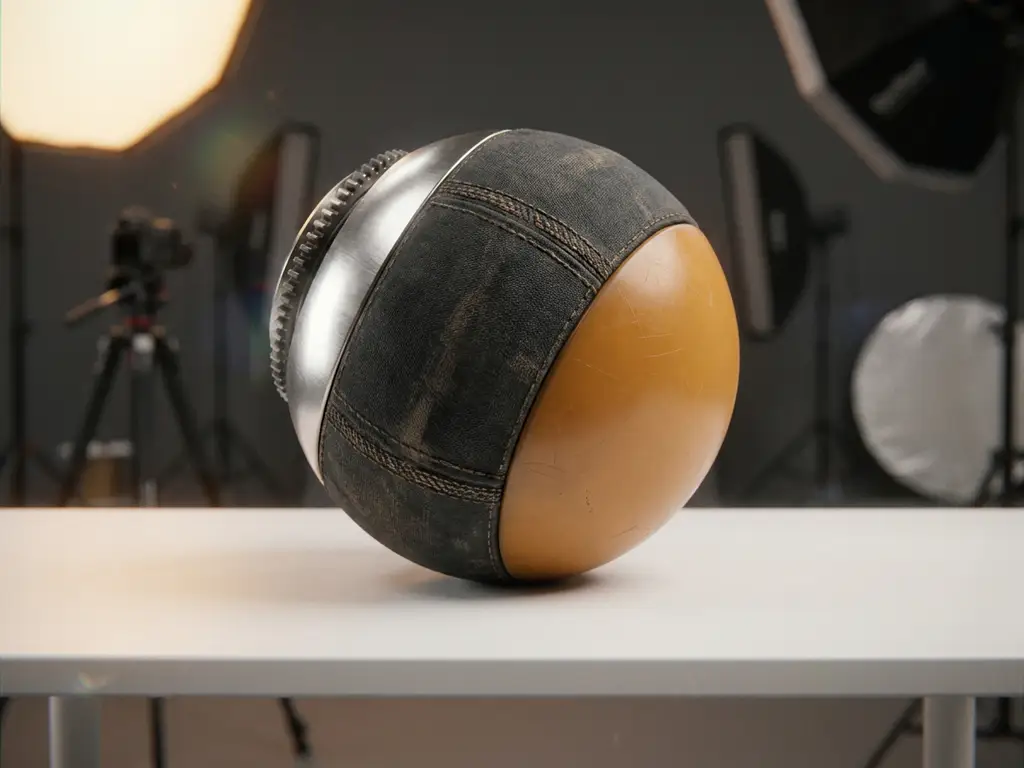
What does PBR stand for? Definition and meaning
PBR stands for Physically Based Rendering — a computer graphics technique that simulates how light physically interacts with surfaces to produce photorealistic 3D visuals. Also written as P.B.R., the meaning of PBR in product visualization is the use of mathematically accurate material models to represent real-world surfaces such as metal, fabric, glass, and wood. The PBR abbreviation is widely used across 3D design, game development, and digital commerce. Understanding the PBR acronym meaning is the first step toward appreciating why it has become the universal standard for product visualization.
In practical terms, the PBR def refers to a rendering approach grounded in real physics rather than artistic guesswork. For brands, this means product visuals that look photorealistic, consistent, and convincing across every digital channel — from a website configurator to an in-store display.
What is PBR used for in product visualization?
PBR is used to create consistent, photorealistic product visuals across every digital touchpoint. Because PBR materials are built on standardized physics-based lighting models, a product rendered in a web configurator looks identical whether viewed on a desktop browser, a mobile device, or an in-store kiosk. This consistency is one of the most powerful capabilities that digital material visualization brings to modern e-commerce and retail.
Beyond visual consistency, PBR dramatically accelerates content production. Once a 3D model is configured with PBR materials, new color variants, finishes, or textures can be generated in minutes — without scheduling a photoshoot, arranging physical samples, or waiting weeks for post-production. Brands with large catalogs or frequent product updates benefit enormously from this scalability, reducing time-to-market while eliminating the recurring costs associated with traditional photography. The result is a faster, more flexible, and more cost-effective visual workflow that keeps brands competitive.
What is PBR and how does it work?
Physically Based Rendering (PBR) — sometimes written as P.B.R., with the acronym meaning Physically Based Rendering — is a computer graphics technique that simulates light behavior using real-world physics principles. Instead of relying on artistic interpretation, PBR materials use scientific measurements of how different surfaces interact with light. The system works through several texture maps that operate together to define every visible property of a surface.
Albedo map
The albedo map defines the base color of a surface — the way you would describe a material as warm terracotta or natural oak — without any lighting applied. It represents the raw color information before light influences the appearance.
Roughness map
The roughness map controls how polished or matte a surface looks. A low roughness value produces a mirror-like finish, while a high value creates the appearance of raw concrete or unfinished linen. This single map has an enormous influence on how premium or tactile a material feels to the viewer.
Metallic map
The metallic map tells the rendering engine whether to treat the surface like a metal — which reflects its surrounding environment — or a non-metal such as plastic, fabric, or ceramic. This distinction is fundamental to achieving convincing material realism.
Normal map
The normal map adds the illusion of fine surface detail — stitching, grain, scratches, embossing — without making the underlying 3D model more complex or slower to render. It is what gives a leather sofa its tactile quality or a brushed steel panel its characteristic texture.
When these maps combine with sophisticated lighting calculations, the rendering engine determines exactly how much light should be reflected, absorbed, or scattered based on each surface’s physical properties. The result is materials that look convincing under any lighting setup — delivering consistent, photorealistic results across every device and lighting environment.
How did Physically Based Rendering develop?
PBR has its roots in academic research on physically based shading and light transport that emerged in the late 1980s and through the 1990s. Researchers established the mathematical principles describing how light interacts with surfaces, laying the theoretical groundwork that would later be adopted by the broader industry. During the early 2000s, Hollywood VFX studios began applying these principles in feature film production, where the demand for photorealistic visuals justified the significant computational investment.
The pivotal shift came in the early 2010s, when major real-time game engines brought PBR to interactive applications. Suddenly, the same physics-based material quality that had required hours of offline rendering was achievable in real time. Today, PBR is the default material standard in tools such as Blender, Unreal Engine, and Unity, as well as in web-optimized formats like glTF — making it the universal foundation of modern product visualization, interactive configurators, and immersive digital experiences.
What industries use PBR for product visualization?
The furniture and interior design industry has embraced PBR materials extensively, particularly for showcasing wood grains, fabric textures, and metal finishes. Luxury brands use PBR to maintain their premium positioning by ensuring their digital products match the quality expectations of their physical counterparts. Automotive manufacturers rely on PBR for configurators that let customers visualize different paint colors, interior materials, and wheel finishes with photorealistic accuracy.
Fashion and jewelry brands leverage PBR materials to showcase intricate details like leather textures, gemstone reflections, and metal polish levels. The technology is also gaining traction in electronics, where brands need to accurately represent different device colors, screen reflections, and material finishes. The architecture and construction industries use PBR for material selection tools, allowing clients to visualize how different flooring, wall treatments, and fixtures will look in their spaces. Across all of these sectors, digital material visualization has become the standard for achieving the visual fidelity that drives customer engagement and sales. Real-world applications demonstrate how these industries achieve remarkable results.
How PBR materials improve collaboration across teams and sales channels
One of the less-discussed but highly impactful benefits of PBR is what it does for internal alignment. When R&D, Marketing, and Design teams all work from a shared PBR material library, they share a single, photorealistic visual reference for every product. Physical samples, mood boards, and inconsistent renders no longer create miscommunication between departments. Approval cycles shorten because all stakeholders review the same digital asset — one that accurately reflects the final physical product.
A shared visual language for R&D, Marketing, and Design
A centralized PBR material library acts as a single source of truth for the entire organization. Design teams can explore new finishes digitally before committing to production. Marketing can produce campaign visuals from the same assets used in the product configurator. R&D can validate material choices against physical references without waiting for new sample runs. The result is a faster, more aligned workflow that reduces errors and accelerates decision-making at every stage.
Building a virtual product catalog that updates instantly
A PBR-powered virtual catalog is always current. When a new finish, color, or variant is added to the material library, it appears instantly across every channel — website configurator, sales app, trade show kiosk, and digital lookbook — without commissioning a new photoshoot. For brands with large or frequently updated catalogs, this capability eliminates one of the most persistent bottlenecks in product marketing. We build and maintain both capabilities — shared material libraries and always-current virtual catalogs — as core parts of our platform.
How does PBR improve 3D product configurators?
PBR materials transform product configurators from simple visualization tools into powerful sales instruments. When customers can see exactly how different material choices will look — from the subtle grain in oak wood to the deep reflection in polished chrome — they gain confidence in their purchasing decisions. The realistic lighting behavior means materials look natural under any lighting condition, whether the configurator is used on a bright showroom floor or viewed on a customer’s mobile device at home.
The technology enables real-time material switching without compromising visual quality. Customers can instantly compare how the same product looks in different finishes, colors, or textures, seeing immediate visual feedback that helps them make informed choices. This interactivity reduces the need for physical samples and prototypes, streamlining the sales process while providing a more engaging customer experience. Advanced configurator solutions powered by PBR materials can display thousands of material combinations instantly, giving customers unprecedented customization options.
How PBR replaces physical prototyping and validates materials digitally
For product and R&D teams, one of the most significant advantages of PBR is its ability to replace — or substantially reduce — the need for physical prototypes. The traditional prototype cycle is costly and slow: physical samples must be manufactured, shipped, reviewed, and revised before a material decision is finalized. PBR compresses this process dramatically by moving it into the digital domain.
Virtual prototyping before production
PBR allows product teams to design, test, and compare material concepts digitally — across unlimited color, texture, and finish combinations — before committing to a single physical production run. Automotive manufacturers can evaluate dozens of interior leather options. Furniture brands can explore every wood stain and fabric weave in a single session. Luxury goods producers can iterate on metal finishes without tooling costs. Industries with complex material specifications and high prototype costs benefit most from this capability, and it is a workflow we deliver as standard.
Measuring digital accuracy against physical samples
Precision matters when digital assets must match physical products exactly. The validation process begins with specialized measurement equipment that captures the surface properties of a physical sample — roughness values, reflectance curves, and color data. These measurements feed directly into the PBR material parameters, and the resulting digital material is then compared side by side with the physical reference under multiple lighting conditions. Only when the digital and physical versions are indistinguishable is the material approved for deployment. We apply this level of rigor to every project, ensuring that what customers see on screen is an accurate representation of what they will receive in hand.
PBR vs. traditional rendering and product photography
Traditional rendering relies heavily on artistic interpretation and manual adjustments to achieve desired visual results. Artists must manually tweak lighting, shadows, and reflections for each scene, making it difficult to maintain consistency across different products or lighting conditions. This approach often requires extensive post-processing to achieve photorealistic results, and materials may look artificial under different lighting setups.
PBR eliminates much of this guesswork by using physically accurate calculations. Materials automatically respond correctly to different lighting conditions without manual adjustments, ensuring consistency across all applications. Traditional rendering might require separate material setups for indoor and outdoor scenes, while PBR materials work seamlessly in both environments. The workflow is also more efficient — once PBR materials are properly configured, they can be applied across multiple products and scenes without additional tweaking, dramatically reducing production time and ensuring visual consistency.
The comparison with traditional product photography is equally compelling. For those researching the PBR def for the first time, it is worth noting that PBR does not just improve rendering quality — it fundamentally changes the economics of visual content production. The following comparison illustrates the key differences across five dimensions:
- Cost structure: Traditional photography incurs recurring per-shoot costs for every new variant, seasonal update, or angle change. PBR materials require a higher one-time creation investment, with near-zero marginal cost for additional variants once the library is built.
- Production speed: Traditional photography takes weeks to months per product line, including scheduling, shooting, and post-production. PBR enables new variants to be generated in minutes once base materials are configured.
- Visual consistency: Traditional photography is subject to variation in lighting, equipment, and retouching between shoots. PBR delivers mathematically identical results every time, across every channel.
- Scalability: Traditional photography scales linearly — more variants mean more shoots. PBR scales exponentially — a single material library can produce virtually unlimited combinations without additional production effort.
- Update flexibility: Traditional photography requires a new shoot to reflect any product change. PBR materials can be updated in the library and the change propagates instantly across all live channels.
What tools and software support PBR workflows?
Professional 3D software packages like Blender, Autodesk Maya, and 3ds Max all include robust PBR material systems and real-time rendering engines. Specialized rendering engines such as V-Ray, Corona, and Cycles provide advanced PBR capabilities with sophisticated lighting calculations. For real-time applications, game engines like Unity and Unreal Engine offer powerful PBR workflows optimized for interactive experiences and web deployment.
Web-based solutions have made PBR more accessible, with platforms offering cloud-based rendering and material libraries. Many of these tools include pre-built material libraries with scientifically accurate PBR materials for common surfaces like metals, woods, fabrics, and plastics. The integration capabilities vary, with some platforms offering headless solutions that can embed PBR-powered configurators directly into existing e-commerce websites or mobile applications.
PBR in augmented reality, virtual reality, and future product experiences
PBR is not only the standard for web-based product visualization — it is also the foundational material system for augmented reality (AR) and virtual reality (VR) experiences. The same PBR material assets used in a web configurator can be deployed directly into AR try-before-you-buy features and immersive VR showrooms without rebuilding from scratch. This asset portability is one of the most strategically important properties of PBR for brands investing in their visual infrastructure today.
PBR materials are natively supported by industry-standard formats such as glTF — used for web and AR delivery across browsers and mobile platforms — and USD (Universal Scene Description), which underpins professional pipelines including Apple Vision Pro. A brand that builds a PBR material library today automatically holds assets that are ready for AR product placement, VR showrooms, and emerging retail environments, without any additional production work. Unity and Unreal Engine, already the leading platforms for real-time interactive experiences, use PBR as their default material system for both traditional and XR (extended reality) development. We build on these universal standards so that every client’s visual assets are future-proof from day one — ready for wherever commerce moves next.
How 3Dimerce helps with PBR materials
We specialize in creating sophisticated 3D product configurators that harness the full power of PBR materials to deliver stunning visual experiences. Our platform combines advanced PBR rendering with blazing-fast performance, ensuring your customers see photorealistic product variations instantly, whether they’re shopping online or using in-store configurators.
What a PBR project with us looks like
Every engagement follows a structured process designed to deliver precision at every stage and minimize disruption to your existing operations.
- Material discovery and sampling: We measure your physical materials using specialized equipment to capture accurate surface data — roughness, reflectance, and color values — so the digital result matches the physical product with measurable accuracy.
- PBR library creation: We build your custom material library with full validation against physical references, so every asset meets the standard before it goes live.
- Configurator build and integration: We deploy the PBR-powered configurator into your existing e-commerce or sales environment, maintaining your customer experience while adding advanced visualization capabilities.
- Ongoing updates: New finishes and variants are added to your library without disrupting live systems, keeping your visual catalog current as your product range evolves.
Our comprehensive solution includes:
- Custom PBR material libraries tailored to your specific products and brand aesthetic — so every digital asset matches your physical product with measurable accuracy
- Real-time configurators that maintain visual consistency across all devices and lighting conditions — eliminating the inconsistencies that erode customer trust
- Seamless integration with existing e-commerce platforms and point-of-sale systems — so your existing workflows are enhanced, not replaced
- Scalable workflows that eliminate the need for traditional photography while significantly reducing time-to-market — so new variants reach customers faster than ever
Ready to transform your product visualization with professional PBR materials? Contact our team to discover how our visual product experience platform can elevate your brand’s digital presence and drive measurable improvements in customer engagement and sales conversion.
Visual Commerce Solutions
Talk to our team about your project.
Frequently Asked Questions
How long does it take to create PBR materials for my existing product line?
The timeline depends on your product complexity and material variety, but typically ranges from 2-6 weeks for a complete product line. Simple products with basic materials can be completed in days, while complex items with multiple finishes may take several weeks. Once created, these materials can generate unlimited product variations instantly, making the initial investment highly scalable.
Can PBR materials work with my existing e-commerce platform?
Yes, PBR-powered configurators can integrate with most major e-commerce platforms including Shopify, WooCommerce, Magento, and custom solutions. The integration typically involves embedding web-based configurators that communicate product selections back to your existing cart and checkout systems, maintaining your current customer experience while adding advanced visualization capabilities.
What's the cost difference between PBR materials and traditional product photography?
While PBR materials require higher upfront investment, they eliminate ongoing photography costs for new variants, seasonal updates, and marketing campaigns. Most businesses see cost savings within 6-12 months, especially those with frequent product updates or extensive customization options. The ROI accelerates significantly for brands with large product catalogs or multiple material variations.
How do I ensure PBR materials accurately represent my physical products?
Accurate PBR materials start with proper material sampling and measurement using specialized equipment to capture surface properties like roughness, reflectance, and color values. Professional PBR workflows include validation steps where digital materials are compared against physical samples under various lighting conditions to ensure accuracy before deployment.
What happens if customers can't run PBR configurators on older devices?
Modern PBR solutions include progressive enhancement and fallback options for older devices. The system automatically detects device capabilities and serves appropriate quality levels – from full PBR rendering on powerful devices to optimized static images on older hardware. This ensures all customers can access product visualization regardless of their device limitations.
Can I update PBR materials when I change suppliers or introduce new finishes?
Yes, PBR materials are designed for easy updates and additions. New materials can be added to your library without affecting existing ones, and material properties can be modified to reflect supplier changes or new finish options. Most platforms provide content management systems that allow you to update materials without technical expertise.
How do PBR materials perform for mobile shopping experiences?
PBR materials are optimized for mobile devices through adaptive rendering techniques that maintain visual quality while ensuring fast loading times. Mobile-specific optimizations include compressed textures, level-of-detail systems, and touch-friendly configurator interfaces. The result is smooth, responsive product visualization that works seamlessly across all mobile devices and network conditions.