
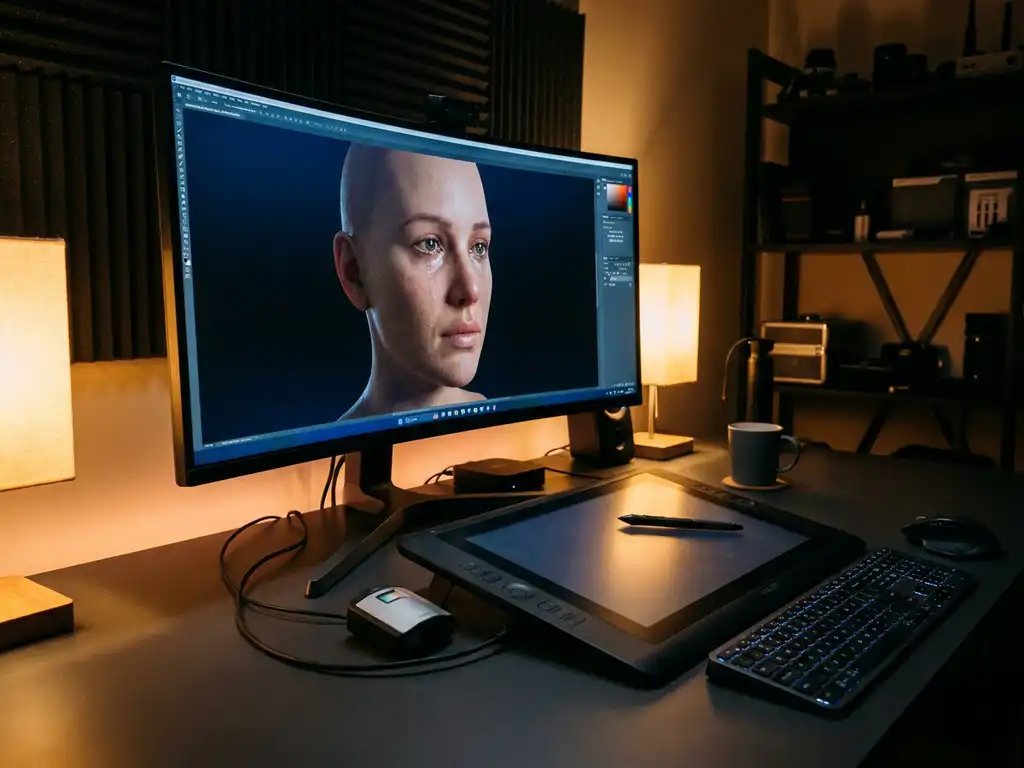
The most realistic-looking animation in 2026 is photorealistic CGI rendered with path tracing — the same technique behind the strikingly lifelike visuals in high-end automotive commercials, luxury product campaigns, and nature documentary productions created entirely in CGI. Unlike traditional or 2D animation, photorealistic 3D rendering simulates real-world light physics to produce results virtually indistinguishable from live photography. Modern animation techniques combine advanced ray tracing, physically based materials, sophisticated lighting models, and high-resolution texturing to create visuals that blur the line between digital and physical reality.
What Is the Most Realistic-Looking Animation? A Direct Answer
Not all animation styles are created equal when it comes to realism. The spectrum runs from stylized hand-drawn art to fully photorealistic CGI, and understanding where each style sits helps clarify why path-traced 3D rendering stands at the top. Here is how animation realism ranks, from least to most convincing:
- Traditional hand-drawn animation — Stylized by design; realism is never the goal, and the human eye immediately reads it as illustrated.
- 2D digital animation — Cleaner and faster to produce than hand-drawn, but still flat and graphical, with no simulation of real-world light or depth.
- Stop motion / claymation — Physical materials give it tactile authenticity, but frame-by-frame capture introduces inherent motion inconsistencies.
- 3D keyframe CGI — Three-dimensional geometry and lighting bring significant realism, but manually animated motion can appear stiff or artificial.
- Motion capture + CGI — Recording real human or animal movement and applying it to 3D characters eliminates the “uncanny valley” stiffness of keyframed motion, producing highly convincing character animation.
- Photorealistic path-traced rendering — The current peak of animation realism: mathematically accurate light simulation, physically based materials, and high-resolution geometry combine to produce results indistinguishable from real photography.
For e-commerce brands, this realism spectrum matters directly. The closer your product visualization sits to the top of this scale, the more confidently customers can evaluate what they are buying — and the more your digital presentation reflects the true quality of your products.
How Realistic Animation Has Evolved: From Early CGI to 2026
The history of realistic animation is a story of steadily closing the gap between digital imagery and physical reality. Each decade brought a breakthrough that redefined what audiences and brands could expect from CGI.
1995 — The first fully CGI feature film: Toy Story demonstrated that computer-generated characters and environments could carry an entire feature film. While clearly stylized by today’s standards, it established 3D CGI as a legitimate storytelling medium and set the foundation for photorealistic CGI animation milestones that followed.
2009 — Performance capture meets photorealistic environments: Avatar combined motion capture with CGI environments at a scale never seen before, producing alien landscapes and characters that felt physically present. The CGI realism evolution it represented — particularly in organic surfaces, water, and foliage — shifted industry expectations permanently.
2019–2021 — Real-time rendering enters film production: The Mandalorian pioneered the use of Unreal Engine-powered LED volume stages, rendering photorealistic environments in real time on set. This marked the moment real-time CGI crossed into cinematic quality, with Unreal Engine 5’s Lumen global illumination and Nanite geometry systems (released 2021–2022) bringing the same capability to developers and visualization studios worldwide.
2026 — Photorealistic rendering accessible for e-commerce: What once required a Hollywood render farm is now deployable for interactive product visualization. Real-time photorealistic rendering — the same technology behind virtual film production — now powers product configurators, virtual showrooms, and immersive brand experiences for premium e-commerce. This is precisely where we operate at 3Dimerce.
What makes animation look realistic?
Animation looks realistic when several interdependent elements — lighting, materials, motion, and geometry — work together accurately. No single element produces realism in isolation; the convincing result comes from how they integrate. Proper lighting simulation forms the foundation — realistic shadows, reflections, and light bouncing create the visual cues our brains expect from real-world objects. Material properties must accurately represent how different surfaces interact with light, from the subtle subsurface scattering in skin to the complex reflectance of brushed metal.
Motion blur and depth of field add crucial realism by mimicking how cameras and human eyes actually perceive movement and focus. Physics simulation ensures objects move, bend, and interact according to natural laws. Finally, high-resolution textures and geometric detail provide the surface complexity that distinguishes hyperrealistic 3D animation from obviously digital content.
The key lies in understanding that realism isn’t just about individual elements but how they integrate. A perfectly modeled object with unrealistic lighting will still look fake, while a simpler model with excellent lighting and materials can appear remarkably convincing. These are the same principles that make photorealistic CGI in modern animated films and commercials so convincingly lifelike.
Emerging Trends: Virtual Production and Real-Time Cinematography
Virtual production represents one of the most significant shifts in how photorealistic animation is created. Productions like The Mandalorian replaced traditional green-screen stages with massive LED volume walls displaying real-time CGI environments rendered by Unreal Engine. Actors perform in front of photorealistic digital worlds that respond to camera movement in real time, with accurate lighting cast directly onto the set. The result is a seamless blend of physical and digital reality that no post-production compositing could match in authenticity.
Game engine technology has now reached cinematic quality. Unreal Engine’s Lumen global illumination system calculates fully dynamic, indirect lighting in real time — a capability that previously required hours of offline rendering per frame. This means that real-time CGI is no longer a visual compromise; it is a genuine alternative to pre-rendered animation for a growing range of applications, from game cinematics to high-end commercial production.
The same real-time rendering advances that power virtual film production now enable interactive, photorealistic product configurators for e-commerce. A luxury furniture brand can offer customers a real-time configurator where materials, finishes, and lighting respond instantly — rendered with the same fidelity as a cinematic production. This is the frontier where we work at 3Dimerce: applying virtual production-grade rendering technology to premium product visualization.
Which animation techniques produce the most photorealistic results?
The most photorealistic animation results come from path tracing, physically based rendering (PBR), and hybrid approaches that combine pre-computed and real-time elements — each suited to different use cases and performance requirements. These techniques underpin everything from realistic animated films and automotive CGI commercials to interactive product configurators for high-end brands.
Path tracing
Path tracing represents the gold standard for photorealistic rendering, simulating light behavior with mathematical precision. This technique calculates how light rays bounce between surfaces, creating natural-looking illumination and shadows. The output — often described as the most realistic animation style achievable today — is used extensively in film visual effects, luxury advertising, and pre-rendered product visualization. However, path tracing requires significant computational power, making it more suitable for pre-rendered content than real-time applications.
Physically based rendering (PBR)
For real-time applications, physically based rendering (PBR) offers an excellent balance between quality and performance. PBR uses scientifically accurate material models to ensure consistent appearance under different lighting conditions. Advanced techniques like screen-space reflections, ambient occlusion, and temporal anti-aliasing enhance the final image quality without overwhelming hardware resources. For e-commerce product visualization, PBR delivers lifelike digital animation that performs smoothly across devices — making it the practical backbone of interactive 3D experiences.
Hybrid rendering approaches
Hybrid approaches combining real-time and pre-computed elements often deliver the best results for interactive applications. These systems might use pre-baked global illumination for environmental lighting while calculating direct lighting and reflections in real time, achieving both visual fidelity and responsive performance. For premium brands, this hybrid model is particularly valuable: it delivers the visual richness of pre-rendered CGI realism within an interactive, real-time experience.
Motion Capture and Hybrid Techniques
Motion capture is one of the most powerful tools for achieving realistic character animation. By recording the precise movements of real humans or animals and applying that data to 3D characters, motion capture eliminates the subtle stiffness that keyframed animation inevitably introduces. Films like Avatar and The Polar Express demonstrated how mocap-driven characters — when combined with photorealistic rendering — can achieve a level of believability that pure CGI keyframing cannot match. The technique has since become standard in high-end game cinematics and animated feature films where realistic character animation is non-negotiable.
The most realistic animated films and productions today use hybrid pipelines: motion capture provides the movement data, while path-traced or PBR rendering provides the visual fidelity. The combination is formidable — organic, physically accurate motion paired with mathematically correct light simulation produces results that consistently challenge audiences’ ability to distinguish digital from real. This is the current peak of mocap CGI realism.
For product visualization, physics-based motion simulation plays a parallel role to motion capture in character animation. Rather than recording human movement, physics engines simulate how products behave under real-world conditions — how fabric drapes and moves, how liquid flows, how a luxury watch strap flexes. Physics-based animation ensures that products move and interact with surfaces in physically accurate ways, reinforcing the credibility of the visualization and giving customers genuine confidence in what they are seeing.
Which Rendering Engines Produce the Most Realistic Animation?
Behind every photorealistic rendering is a rendering engine — the software that translates 3D geometry, materials, and lighting into a final image. Several best-in-class engines define the industry standard for realistic 3D animation software, each optimized for different production contexts.
Unreal Engine
Unreal Engine is the leading real-time 3D visualization tool for both interactive applications and virtual film production. Its Lumen global illumination system and Nanite virtualized geometry deliver cinematic-quality output in real time, making it the engine of choice for game development, architectural visualization, and virtual production stages. For e-commerce, Unreal Engine powers interactive product configurators and virtual showrooms that match the visual quality of pre-rendered content while remaining fully responsive. Its real-time capability makes it the most versatile photorealistic rendering engine for interactive brand experiences.
V-Ray
V-Ray by Chaos Group is the industry benchmark for production rendering in architecture, product design, and advertising. As an offline, physically accurate renderer, V-Ray excels at complex light simulations — caustics through glass, subsurface scattering in organic materials, and the nuanced reflections of polished metal surfaces. It is widely used for high-end product visualization campaigns where render time is not a constraint and absolute visual perfection is the priority. V-Ray output is routinely used as the photorealistic quality reference against which real-time engines are benchmarked.
Blender Cycles
Blender Cycles is an open-source path tracing engine that has earned serious credibility in professional production pipelines. It delivers physically accurate, photorealistic CGI rendering with full support for complex materials, volumetrics, and global illumination. Cycles is used across product visualization, short film production, and commercial advertising — often producing results visually comparable to commercial engines at a significantly lower cost. Its accessibility has made high-quality 3D rendering realism available to a broader range of studios and independent creators.
Arnold and Octane
Arnold, developed by Autodesk and used extensively in Hollywood visual effects, is a Monte Carlo ray tracing engine optimized for complex scenes with demanding lighting requirements. It is the renderer behind the visual effects in numerous major feature films and is prized for its stability and predictability in large-scale production pipelines. Octane Render, by OTOY, is a GPU-accelerated unbiased renderer known for exceptional speed without sacrificing physical accuracy — making it a preferred choice for product visualization and advertising studios that need fast turnaround on hyperrealistic 3D rendering. Our rendering pipeline at 3Dimerce draws on best-in-class engine technology to deliver the premium visual quality that high-end brands demand.
Real-World Examples of the Most Realistic-Looking Animation
Understanding the techniques behind photorealistic CGI is one thing — seeing them applied in real productions makes the standard concrete. The following examples illustrate what the most realistic-looking animation looks like in practice, both in media production and in product visualization.
Automotive CGI Commercials
High-end automotive advertising has long been a benchmark for photorealistic CGI animation. Brands like BMW, Mercedes-Benz, and Audi routinely produce commercials in which the vehicle is entirely computer-generated — indistinguishable from footage of a physical car. The visual challenge is formidable: automotive paint involves complex multi-layer reflectance, chrome trim requires accurate environment reflections, and glass must transmit and refract light correctly. Path-traced rendering engines like V-Ray and Arnold handle these material challenges with physical precision, producing realistic animated visuals that set the standard for product CGI across all categories.
CGI Nature Documentaries and Film Environments
Productions that recreate natural environments entirely in CGI — from photorealistic foliage and water to atmospheric light scattering — represent another peak of realistic computer animation. The rendering challenge here lies in the sheer complexity of organic materials and volumetric effects: subsurface scattering in leaves, caustic light patterns underwater, and the behavior of atmospheric haze. These productions use path tracing at scale, often spending significant render time per frame to achieve the level of photorealistic animated movie quality that audiences now expect from premium documentary and film content.
Luxury Product Visualization: Watches and Jewelry
For e-commerce, luxury watches and jewelry represent one of the most demanding product visualization challenges — and the clearest demonstration of what photorealistic CGI can achieve. Polished metal, faceted gemstones, and intricate mechanical details require accurate reflections, refractions, and micro-surface rendering to look convincing. When executed correctly, the digital product is indistinguishable from a studio photograph — and in some cases surpasses it, allowing lighting conditions and angles that would be physically impossible to capture. Brands that invest in this level of realistic product animation consistently report stronger conversion rates and fewer returns, because customers can evaluate the product with genuine confidence.
High-End Furniture and Interior Visualization
Furniture and interior design brands face a visualization challenge centered on material complexity: fabric weave, leather grain, wood texture, and the interplay of soft furnishings with architectural lighting. Hyperrealistic 3D rendering applied to furniture allows customers to see exactly how a piece will look in different material finishes and lighting environments — something physical photography cannot replicate at scale. Interactive configurators built on PBR rendering engines give customers real-time control over these variables, directly addressing one of the primary drivers of online furniture returns: uncertainty about how the product will look in context.
How do modern 3D rendering engines achieve lifelike visuals?
Modern 3D rendering engines achieve lifelike visuals through a combination of GPU acceleration, physically accurate material systems, machine learning optimization, and temporal rendering techniques. Contemporary rendering engines leverage GPU acceleration and advanced algorithms to process complex lighting calculations efficiently. Modern engines implement sophisticated material systems that accurately simulate how different substances interact with light — from the way fabric fibers scatter illumination to how automotive paint reflects the environment.
Machine learning increasingly plays a role in rendering optimization. AI-powered denoising algorithms clean up noisy ray-traced images in real time, while neural networks can upscale textures and generate realistic surface details. Some engines use machine learning to predict lighting behavior, dramatically reducing computation time while maintaining visual quality.
Advanced engines also implement temporal techniques, using information from previous frames to improve current frame quality. This approach enables features like temporal anti-aliasing and accumulated lighting, creating smoother, more detailed visuals than would be possible from a single frame calculation. Check out our use cases to see these techniques in action.
What’s the difference between real-time and pre-rendered realistic animation?
Real-time rendering targets interactive frame rates (typically 30–60 FPS) and prioritizes responsiveness, while pre-rendered animation prioritizes maximum visual quality with no frame rate constraint — often spending hours per frame to achieve film-quality results.
Pre-rendered animation uses computationally expensive techniques like global illumination and complex material simulations. Studios can spend hours or even days rendering individual frames, allowing for incredibly detailed lighting, textures, and effects. This approach dominates film, advertising, and high-end product visualization where visual perfection matters more than interactivity.
Real-time rendering must balance quality with performance. Modern real-time engines achieve impressive results through clever optimizations: baking complex lighting calculations beforehand, using simplified material models, and employing temporal techniques to improve quality over time.
The gap between these approaches continues to narrow as hardware improves and algorithms become more efficient. Today’s real-time rendering can achieve quality levels that would have required pre-rendering just a few years ago, making interactive photorealistic experiences increasingly accessible.
| Animation Style | Realism Level (1–10) | Primary Use Case | Key Limitation |
|---|---|---|---|
| Traditional 2D animation | 2 | Storytelling, entertainment | No depth or light simulation |
| Stop motion / claymation | 4 | Film, advertising | Motion inconsistency, limited scale |
| 3D keyframe CGI | 6 | Games, film, product viz | Motion can appear stiff or artificial |
| Motion capture + CGI | 8 | Film, game cinematics | Requires physical capture setup |
| Physically Based Rendering (PBR) real-time | 8 | E-commerce, configurators, games | Quality trade-offs vs. offline rendering |
| Path-traced pre-rendered CGI | 10 | Film, luxury advertising, product viz | High render time; not real-time |
For e-commerce product visualization, photorealistic PBR and path-traced rendering deliver the highest realism with practical performance — the standard we apply at 3Dimerce.
How do you evaluate animation realism quality?
Animation realism quality is evaluated through two complementary methods: technical measurement (lighting accuracy, material consistency, geometric precision) and perceptual assessment (how convincing the result appears to human observers). Effective realism evaluation requires both. Professional workflows often use reference photography for direct comparison, measuring how closely rendered images match real-world lighting and material behavior.
Perceptual evaluation focuses on how convincing the animation appears to human observers. This includes testing for common realism pitfalls: unnatural motion, inconsistent lighting, or materials that don’t behave as expected. User testing with target audiences provides valuable feedback on whether animations successfully communicate product quality and features.
Performance metrics matter equally for interactive applications. Frame rate consistency, loading times, and responsiveness across different devices all impact the perceived quality of realistic animation. An animation that looks photorealistic but performs poorly may actually harm user experience more than a simpler, smoother alternative.
Why are unrealistic product visuals costing you customer trust?
Understanding what makes animation realistic is one thing — but for e-commerce brands, the real question is what poor-quality animation is costing you. Unrealistic product visuals erode customer trust because they create a visible gap between what a product looks like online and what arrives at the door. When customers encounter flat, unconvincing product animations on your website, they immediately question the quality of your actual products. Poor visual representation creates a disconnect between expectation and reality, leading to increased return rates and damaged brand credibility. Research consistently shows that customers form judgments about product quality within milliseconds of viewing digital representations.
The solution lies in investing in photorealistic rendering that showcases your products with accurate materials, proper lighting, and realistic textures. This approach builds confidence in the buying decision and reduces the gap between digital presentation and physical product experience.
What does choppy animation performance signal about your competitive position?
Slow-loading or laggy product animations signal technical weakness to customers — and in premium and luxury markets, that perception directly damages brand credibility. Slow-loading, laggy animations don’t just frustrate users — they signal to customers that your brand lacks the technical sophistication expected in today’s market. When competitors offer smooth, responsive product visualization while your animations stutter or fail to load, you’re essentially handing market share to more technologically advanced rivals.
Modern customers expect blazing-fast performance across all devices. Optimizing your rendering pipeline for real-time performance while maintaining visual quality becomes crucial for staying competitive in the premium market segment.
Visual Commerce Solutions
Talk to our team about your project.
How 3Dimerce helps with photorealistic rendering
3Dimerce specializes in photorealistic product visualization for design-led, luxury, and high-end brands. We create stunning visuals that elevate your brand’s digital presence — combining blazing-fast real-time performance with the kind of material fidelity and tailored detail that premium products demand. Our advanced rendering technology delivers:
- Blazing-fast performance: Real-time photorealistic rendering that works smoothly across all devices
- Premium visual quality: Touchable textures, natural lighting, and perfectly irregular contours that bring products to life
- Scalable solutions: From individual product configurators to complete virtual showrooms
- Seamless integration: Headless architecture that works with your existing systems and workflows
Our comprehensive solutions transform how customers experience your products, whether they’re browsing online or visiting your physical showroom. Ready to see the difference photorealistic rendering can make for your brand? Contact us to discuss your specific visualization needs and discover how we can help you achieve stunning, realistic product animations that drive sales and enhance customer engagement.
Frequently Asked Questions
What is the most realistic type of animation, and why does it matter for my brand?
The most realistic-looking animation available today is photorealistic 3D CGI rendering — a technology that works by simulating how light actually behaves in the real world, combined with materials that look and react exactly like the real thing. It is the same technology used in high-end automotive commercials and luxury advertising campaigns where digital products are indistinguishable from physical photography. For e-commerce brands, this level of realism directly translates to stronger customer confidence, higher conversion rates, and fewer returns — because customers can see exactly what they are buying. We bring this same level of photorealistic precision to product visualization, helping premium brands present their products exactly as they appear in real life.
How long does it typically take to implement photorealistic rendering for an existing e-commerce site?
Implementation timelines vary based on product complexity and catalog size, but most projects take 4-8 weeks from initial consultation to launch. Simple product categories with standardized materials can be deployed faster, while complex products with multiple material variations require more development time. The key is starting with a pilot project to establish workflows before scaling across your entire catalog.
What’s the performance impact of photorealistic rendering on mobile devices?
Modern photorealistic rendering solutions are optimized for mobile performance through adaptive quality scaling and progressive loading techniques. While high-end smartphones can handle near-desktop quality, the system automatically adjusts rendering complexity based on device capabilities. Most users experience smooth 30+ FPS performance with photorealistic visuals on devices from the last 3-4 years.
Can photorealistic rendering work with products that have highly reflective or transparent materials?
Yes, advanced rendering engines excel at handling challenging materials like chrome, glass, and gemstones. These materials actually showcase the technology’s capabilities best, as accurate reflections and light transmission are hallmarks of photorealistic rendering. The key is proper material calibration using real-world reference samples to ensure the digital version matches your physical product exactly.
What file formats and 3D assets do I need to provide for photorealistic rendering?
Most rendering platforms accept standard 3D formats like FBX, OBJ, or glTF, along with high-resolution texture maps for materials. You’ll need diffuse, normal, roughness, and metallic maps for best results. If you don’t have 3D assets, many providers offer 3D scanning or modeling services to create assets from your physical products or CAD files.
How do I measure ROI from investing in photorealistic product visualization?
Track key metrics like conversion rates, time spent on product pages, return rates, and customer satisfaction scores. Most businesses see 15-40% increases in conversion rates and 20-60% reductions in returns due to better product understanding. Additionally, monitor engagement metrics like 360° view interactions and configurator usage to understand how customers interact with realistic visuals.
What happens if my product designs change frequently – can the rendering be updated easily?
Modern rendering systems are built for flexibility, allowing rapid updates to materials, colors, and configurations without rebuilding entire 3D models. Many platforms offer parametric systems where you can adjust properties like fabric patterns, metal finishes, or component colors in real-time. For major design changes, having a modular 3D asset structure makes updates much more efficient.
Do I need special hardware or infrastructure to support photorealistic rendering?
Most photorealistic rendering solutions are cloud-based, requiring no special hardware on your end beyond standard web hosting. The rendering happens on powerful GPU clusters managed by the service provider, with optimized content delivered to your customers’ devices. This approach ensures consistent performance and eliminates the need for significant infrastructure investment.