
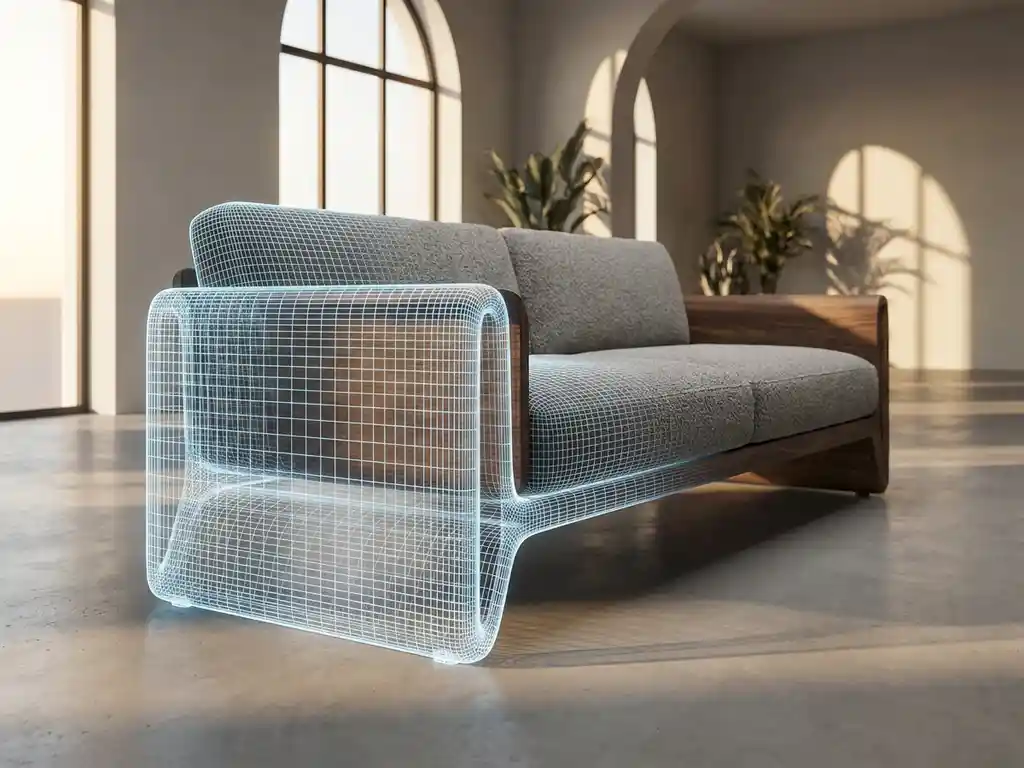
3D product rendering is rapidly transforming retail, with many industry experts predicting it will become standard practice within the next decade. This technology creates photorealistic product images without physical photography, offering retailers unprecedented flexibility and cost savings. The shift toward digital-first shopping experiences and customer demand for customization are accelerating adoption across all retail sectors.
What is 3D product rendering, and why are retailers interested?
3D product rendering is computer-generated imagery (CGI) technology that creates photorealistic product visuals without requiring physical photography or prototypes. The software builds detailed digital models that can be viewed from any angle, customized with different materials or colours, and placed in virtual environments that look completely realistic.
Retailers are embracing this technology because it solves several persistent challenges. Traditional product photography requires physical samples, professional studios, and extensive coordination between design teams, photographers, and marketing departments. Every product variant needs a separate shoot, making it expensive and time-consuming to maintain comprehensive visual libraries.
The technology offers three compelling advantages driving retail adoption. Cost reduction becomes significant when retailers can generate unlimited product variations without additional photography expenses. Customization capabilities allow customers to visualize products in different configurations, colours, or materials instantly. An enhanced customer experience results from interactive product exploration that builds confidence and reduces return rates.
Modern consumers expect rich visual experiences when shopping online. Product configurators meet this demand by allowing customers to modify products and see changes in real time, creating engagement that static images cannot match.
How much does it cost to implement 3D rendering for retail businesses?
Implementation costs for 3D product rendering vary significantly based on business size and complexity requirements. Small retailers might spend between £15,000 and £50,000 annually for basic solutions, while larger enterprises often invest £100,000 to £500,000 in comprehensive platforms with advanced customization features.
The main cost components include software licensing, initial content creation, system integration, and ongoing maintenance. Software licensing typically represents the largest ongoing expense, ranging from £500 to £5,000 per month depending on features and usage volume. Initial content creation involves building 3D models of existing products, which can cost £200 to £2,000 per product depending on complexity.
Integration expenses cover connecting the rendering platform with existing e-commerce systems, product databases, and inventory management tools. This technical work usually costs £10,000 to £75,000, depending on system complexity and customization requirements.
Visual Commerce Solutions
Talk to our team about your project.
When compared with traditional photography costs, most retailers achieve a positive return on investment within 12 to 18 months. Professional product photography typically costs £50 to £500 per product variant, making 3D rendering more economical for businesses with extensive product ranges or frequent updates. The technology becomes particularly cost-effective for retailers offering customizable products, where traditional photography would be prohibitively expensive.
What challenges do retailers face when adopting 3D product visualization?
Technical integration complexity represents the most common obstacle retailers encounter when implementing 3D product visualization. Connecting rendering platforms with existing e-commerce systems, inventory databases, and content management tools requires careful planning and often custom development work.
Staff training requirements create another significant challenge. Teams need to learn new workflows for creating and managing 3D content, which differs substantially from traditional photography processes. Marketing teams must understand how to optimize 3D visuals for different channels, while sales staff need training on interactive product demonstration tools.
Initial content creation time can overwhelm unprepared retailers. Building comprehensive 3D product libraries requires substantial upfront investment in modelling and texturing work. Many businesses underestimate the time needed to achieve photorealistic quality standards that match their brand expectations.
Quality control standards become more complex with 3D rendering. Retailers must establish new approval processes for digital assets and ensure consistency across different viewing environments. Managing customer expectations during transition periods requires clear communication about new features and capabilities.
Resource allocation often proves challenging as retailers balance maintaining existing photography workflows while building new 3D capabilities. The transition period requires running parallel processes until 3D libraries are complete.
Which types of products work best with 3D rendering technology?
Furniture and home décor products achieve exceptional results with 3D rendering technology because customers benefit enormously from viewing items in different room settings and configurations. The ability to change materials, colours, and arrangements helps customers visualize products in their own spaces.
Customizable products across all categories work particularly well because 3D rendering can instantly display countless variations without requiring individual photography. This includes configurable electronics, personalized jewellery, custom clothing, and modular furniture systems, where traditional photography would be impractical.
Fashion items with multiple colour and material options benefit significantly from 3D visualization. Rather than photographing every possible combination, retailers can show the same garment in dozens of fabrics and colours. This approach works especially well for luxury brands, where material quality and appearance are crucial purchasing factors.
Complex products with internal components or moving parts showcase well in 3D environments. Electronics, machinery, and automotive parts can be displayed with cutaway views, exploded diagrams, or animated demonstrations that traditional photography cannot provide.
Products requiring scale context often perform better with 3D rendering than with traditional photography. Large furniture pieces, architectural elements, or industrial equipment can be shown in realistic environments that help customers understand size relationships and practical applications. Advanced visualization solutions excel at creating these contextual experiences.
How do customers respond to 3D product experiences in retail?
Customer engagement increases substantially when retailers implement interactive 3D product experiences. Shoppers typically spend more time exploring products they can rotate, customize, and view in different settings than they do with static image galleries. This extended engagement often translates into higher purchase confidence and conversion rates.
Younger consumers, particularly those aged 25 to 40, show a strong preference for interactive product visualization. They expect digital experiences that match the sophistication they encounter in gaming and entertainment. These customers readily adopt 3D configurators and often share customized product images on social media.
Trust improves when customers can thoroughly examine products before purchasing. The ability to zoom in on details, view products from multiple angles, and see realistic material textures reduces uncertainty about online purchases. This comprehensive visualization helps bridge the gap between online and in-store shopping experiences.
Conversion-rate impacts vary by product category and implementation quality. Retailers with well-executed 3D experiences typically see improvements in key metrics, though results depend heavily on user interface design and loading performance. Mobile optimization is crucial, as many customers prefer shopping on smartphones and tablets.
Generational differences affect adoption patterns. While younger customers embrace interactive features immediately, older shoppers may need time to understand new interface elements. Successful implementations provide both traditional and interactive viewing options to accommodate different preferences and comfort levels.
How 3dimerce helps with 3D product rendering implementation
We provide comprehensive 3D product visualization solutions specifically designed for premium retailers and manufacturers seeking to enhance their digital presence. Our platform combines advanced rendering technology with intuitive interfaces that work seamlessly across online and in-store environments.
Our implementation approach includes:
- Complete platform integration with existing e-commerce systems and product databases
- Professional 3D content creation services that match your brand’s quality standards
- Customizable configurator tools that enable real-time product personalization
- Cross-device optimization ensuring consistent performance on all platforms
- Ongoing technical support and content management assistance
The platform delivers measurable business impact through enhanced customer engagement, reduced photography costs, and accelerated time to market for new products. Our solution scales with your business growth while maintaining the premium visual quality that luxury and design-focused brands require.
Ready to transform your product visualization strategy? Contact our team to discuss how 3D rendering can enhance your retail operations and customer experience.