
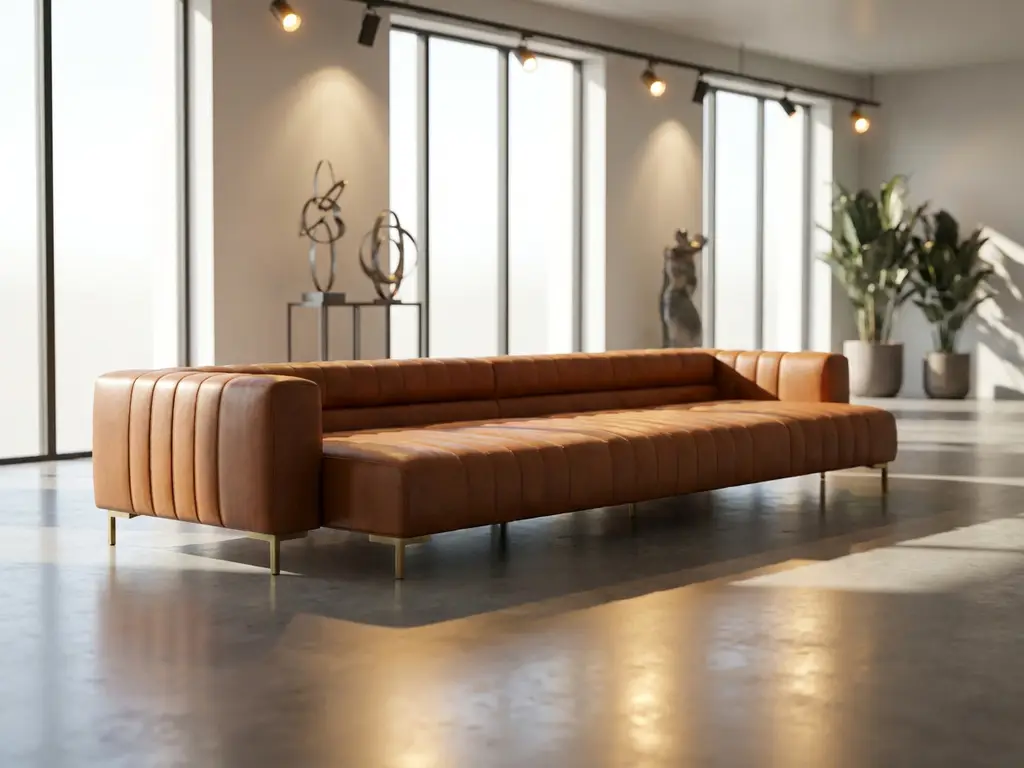
3D product rendering delivers the greatest impact for retail sectors that sell complex, customisable, or design-focused products. Furniture, automotive, fashion, jewellery, and home improvement retailers benefit most because they handle numerous product variations, require detailed visualisation, and face high photography costs. These sectors see improved customer engagement, reduced return rates, and significant cost savings by eliminating traditional product photography.
Which retail sectors see the biggest impact from 3D product rendering?
Furniture, automotive, fashion, jewellery, and home improvement sectors experience the most dramatic benefits from 3D product rendering technology. These industries share common characteristics that make them ideal candidates: extensive product customisation options, high-value purchases requiring detailed visualisation, and complex inventory management challenges.
Furniture retailers lead the pack because customers need to visualise how pieces will look in their spaces with different materials, colours, and configurations. The automotive sector follows closely, as dealers can showcase vehicle customisation options without maintaining massive physical inventory. Fashion brands benefit from displaying colour variations and fabric textures, while jewellery retailers can highlight intricate craftsmanship details that are difficult to capture with traditional photography.
Home improvement retailers round out the top sectors, particularly those selling modular systems like kitchens, bathrooms, or storage solutions. These products require customers to understand how components work together, making 3D product rendering essential for confident purchasing decisions.
Why do furniture and interior design brands benefit most from 3D configurators?
Furniture retailers face unique challenges that make 3D configurators particularly valuable: countless fabric and finish combinations, space visualisation needs, and prohibitively expensive traditional photography. A single sofa might have 50 fabric options across 10 colours, creating 500 potential variations that would be impossible to photograph cost-effectively.
3D configurators solve these challenges by allowing customers to see exactly how furniture will look in different materials and settings. Customers can visualise a dining table in oak versus walnut, or see how a modular sofa system fits their specific room layout. This reduces uncertainty and significantly decreases return rates.
Visual Commerce Solutions
Talk to our team about your project.
The space visualisation aspect is particularly powerful. Customers can place furniture pieces in virtual rooms similar to their own, helping them make confident decisions about size, style, and colour coordination. This capability addresses one of furniture retail’s biggest obstacles: helping customers imagine products in their homes.
Interior design brands also benefit from showcasing complete room solutions. Rather than selling individual pieces, they can present coordinated furniture collections that demonstrate their design expertise and encourage larger purchases.
How does 3D product visualization transform the automotive retail experience?
Automotive retailers use 3D product rendering to showcase vehicle customisation options without the massive costs of maintaining every possible configuration in showrooms. Customers can explore different paint colours, wheel designs, interior materials, and optional features through interactive configurators that provide photorealistic results.
The technology transforms the traditional test-drive experience by allowing customers to explore vehicles virtually before visiting dealerships. They can examine interior details, understand feature functionality, and compare different trim levels from home. This pre-qualification process means customers arrive at dealerships better informed and closer to a purchase decision.
Dealerships benefit from reduced inventory pressure. Instead of stocking multiple vehicle variants, they can display one model while using 3D configurators to showcase all available options. This approach reduces floor space requirements and inventory costs while improving the customer experience.
The automotive sector also uses 3D rendering for spare parts and accessories, helping customers visualise how modifications will look before purchase. This application is particularly valuable for commercial vehicles, where customisation options are extensive.
What makes fashion and jewelry retailers ideal candidates for 3D rendering?
Fashion and jewellery retailers handle products where material texture, colour accuracy, and fine details significantly influence purchasing decisions. Traditional photography struggles to capture fabric drape, surface textures, and intricate craftsmanship details that 3D rendering can showcase with remarkable precision.
Fashion brands benefit from displaying garments in multiple colours and materials without expensive photoshoots for every variation. A dress design can be rendered in dozens of fabrics and colours, showing how different materials affect the garment’s appearance and fit. This capability is essential for brands offering customisation options.
Jewellery retailers face particular challenges with traditional photography. Precious metals and gemstones require specific lighting to showcase their beauty, and capturing intricate details often proves difficult. 3D product rendering allows jewellery to be displayed with perfect lighting, highlighting craftsmanship details and allowing customers to examine pieces from every angle.
The personalisation aspect is crucial for both sectors. Fashion brands can show how garments look in different sizes or with various customisation options, while jewellery retailers can demonstrate engraving options, stone selections, and metal choices. This level of detail builds confidence in high-value purchases.
How does 3D product rendering help retailers reduce costs and increase sales?
3D product rendering delivers significant cost savings by eliminating expensive photography sessions, reducing return rates, and accelerating time-to-market for new products. Retailers save thousands on photoshoots while achieving consistent, high-quality visuals across their entire product range.
The cost benefits extend beyond photography savings. Traditional product shoots require physical samples, studio time, professional photographers, and post-production work. With 3D rendering, new product variations can be visualised immediately without creating physical prototypes or scheduling additional photography sessions.
Sales improvements come from enhanced customer confidence and engagement. When customers can thoroughly explore products through interactive 3D experiences, they make more informed purchasing decisions. This leads to higher conversion rates and fewer returns, as customers better understand what they’re buying.
The technology also enables retailers to test market response to new products before manufacturing. By creating 3D renders of proposed designs, brands can gauge customer interest and refine products based on feedback, reducing the risk of unsuccessful launches.
Omnichannel consistency represents another significant benefit. The same 3D assets work across websites, mobile apps, in-store displays, and marketing materials, ensuring consistent brand presentation while reducing content creation costs.
How 3Dimerce helps retailers with 3D product visualisation
We specialise in creating sophisticated 3D product configurators that transform how retailers showcase their products. Our visual product experience platform addresses the specific challenges faced by furniture, automotive, fashion, and luxury retailers through comprehensive 3D visualisation solutions.
Our platform delivers:
- Photorealistic rendering quality that matches premium product positioning
- Seamless integration with existing webshops and in-store environments
- Scalable solutions that grow with your product range without additional costs per variant
- Blazing-fast performance across all devices and platforms
- Comprehensive configurator tools for complex product customisation
With over 20 years of experience in virtual art and CGI, we understand the unique requirements of design-led brands. Our solutions enable retailers to replace costly photography workflows with agile digital processes while maintaining the stunning visual quality that luxury brands demand. Learn more about our expertise in transforming product visualisation strategies for leading retailers.
Ready to transform your product visualisation strategy? Contact our team to discover how 3D product rendering can reduce your costs and increase sales across all retail channels.