
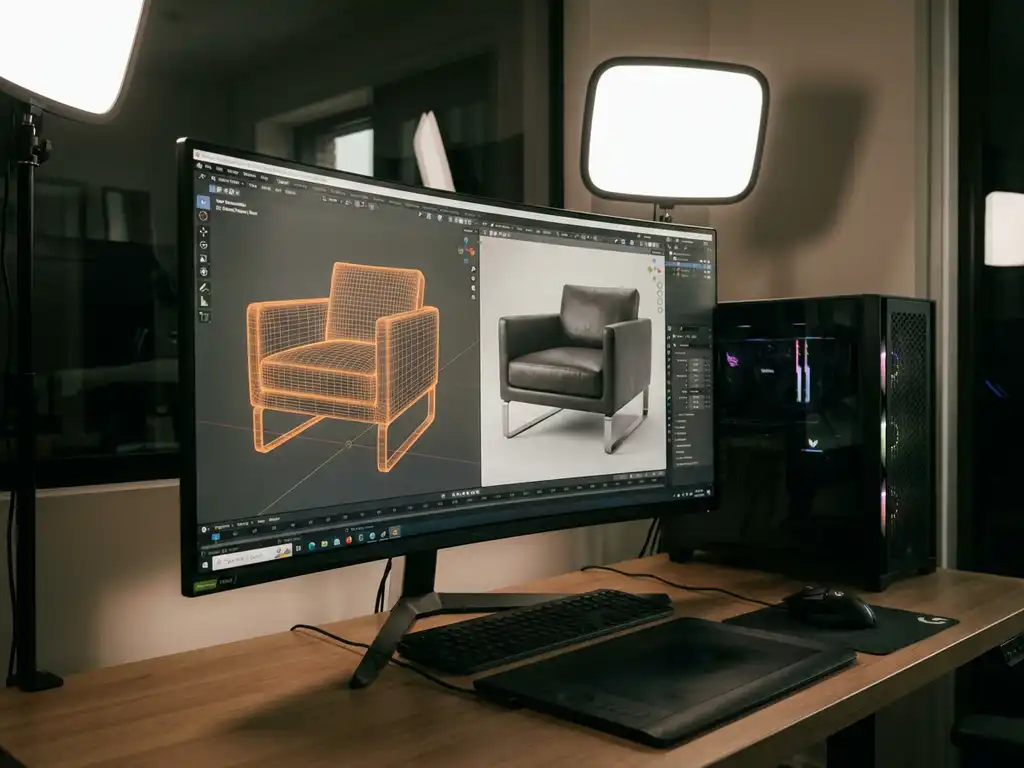
3D product rendering is undergoing rapid transformation through advances in artificial intelligence, cloud computing, real-time processing, and mobile-first design. These technological developments are making high-quality 3D visualisation more accessible, faster, and more cost-effective for businesses across industries. Modern rendering solutions now combine cutting-edge hardware capabilities with intelligent software optimisation to deliver stunning visual experiences that meet evolving consumer expectations.
What are the biggest technological advances in 3D product rendering?
Real-time ray tracing, AI-powered rendering optimisation, cloud-based processing, and advanced material simulation represent the most significant technological breakthroughs in modern 3D product rendering. These innovations dramatically improve rendering speed, visual quality, and accessibility for businesses of all sizes.
Real-time ray tracing has revolutionised lighting accuracy in 3D product rendering by calculating light behaviour as it naturally occurs in the physical world. This technology produces photorealistic reflections, shadows, and refractions that were previously achievable only through time-intensive offline rendering processes. Graphics processing units now handle these complex calculations instantaneously, enabling interactive product experiences with cinema-quality visuals.
Advanced material simulation allows rendering engines to accurately reproduce complex surface properties such as fabric textures, metallic finishes, and translucent materials. This capability is particularly valuable for luxury and design-focused brands that require precise representation of their products’ characteristics. The technology captures subtle details such as surface irregularities and material depth that contribute to authentic visual experiences.
Cloud-based processing has democratised access to high-performance rendering capabilities. Businesses can now leverage powerful server infrastructure without investing in expensive local hardware, making professional-quality 3D rendering accessible to companies with varying technical resources and budgets.
How is artificial intelligence changing product rendering workflows?
Artificial intelligence automates texture generation, optimises lighting setups, predicts rendering performance, and enhances quality control processes in 3D product rendering workflows. AI significantly reduces manual work while improving consistency and visual output quality across large product catalogues.
Automated texture generation through machine learning algorithms can create realistic surface materials from simple input parameters or reference images. This capability accelerates the content creation process while maintaining visual authenticity. AI systems learn from extensive material databases to generate textures that respond naturally to different lighting conditions and viewing angles.
Intelligent lighting setup uses AI to analyse product geometry and automatically configure optimal illumination for different viewing scenarios. The technology understands how various materials interact with light sources and adjusts parameters to highlight product features effectively. This automation ensures consistent lighting quality across entire product ranges without manual intervention.
Predictive rendering optimisation employs machine learning to anticipate performance bottlenecks and adjust rendering settings accordingly. AI algorithms analyse scene complexity and automatically balance visual quality with processing speed to maintain smooth interactive experiences. This intelligent resource management is particularly valuable for real-time product configuration applications where responsiveness is crucial.
Machine learning-enhanced quality control systems can identify rendering artefacts, inconsistencies, or technical issues automatically. These AI-powered tools maintain visual standards across large content libraries and flag potential problems before they reach customers.
Why are brands shifting toward real-time 3D product configuration?
Customer expectations for personalisation, improved e-commerce conversion rates, reduced photography costs, and omnichannel consistency requirements are driving brands toward interactive, real-time 3D product experiences. This shift enables immediate visual feedback during the customisation process and creates more engaging shopping experiences.
Consumer behaviour has evolved to include an expectation of immediate visual confirmation of product customisations. Traditional static imagery cannot accommodate the vast number of possible product variations that modern personalisation demands. Real-time 3D configuration allows customers to see their choices instantly, building confidence in purchase decisions and reducing return rates.
E-commerce conversion improvements result from enhanced product visualisation that bridges the gap between online and physical shopping experiences. Interactive 3D models allow customers to examine products from multiple angles, understand scale and proportions, and appreciate material qualities. This comprehensive visual information reduces uncertainty and hesitation during the purchase process.
Photography cost reduction represents a significant operational benefit for brands with extensive product ranges or frequent updates. Traditional product photography requires substantial resources for setup, shooting, and post-processing, particularly when accommodating multiple variations and configurations. 3D product rendering eliminates these recurring costs while providing greater flexibility for visual content creation.
Omnichannel consistency becomes achievable through centralised 3D assets that work across web platforms, mobile applications, and in-store displays. This unified approach ensures customers receive identical visual experiences regardless of where they encounter the brand, strengthening brand recognition and trust.
What role does cloud computing play in modern 3D rendering?
Cloud computing provides scalable processing power, enables collaborative workflows, reduces hardware requirements, and improves accessibility for businesses implementing 3D rendering solutions. This technology democratises high-quality visual content creation by removing traditional barriers related to computational resources and technical expertise.
Scalable processing power allows rendering workloads to expand and contract based on demand without fixed infrastructure investments. Businesses can handle peak periods or large projects by temporarily accessing additional computational resources. This flexibility is particularly valuable for seasonal businesses or companies launching new product lines that require extensive visual content creation.
Collaborative workflows benefit from cloud-based platforms that enable team members to access, modify, and review 3D content from different locations. Design teams, marketing departments, and external partners can work simultaneously on projects without geographical constraints. Version control and asset management become more streamlined when centralised in cloud environments.
Reduced hardware requirements eliminate the need for expensive local rendering workstations and ongoing maintenance costs. Companies can redirect technology budgets toward other business priorities while accessing cutting-edge rendering capabilities through cloud services. This approach also ensures access to the latest software updates and performance improvements without manual installations.
Accessibility benefits extend to smaller businesses and startups that previously couldn’t afford professional-quality 3D rendering capabilities. Cloud-based solutions often operate on subscription models that make advanced technology accessible to companies with varying budget constraints and technical resources.
How are mobile devices influencing 3D rendering development priorities?
Mobile-first rendering approaches prioritise optimisation for smaller screens, touch-based interactions, processor limitations, and mobile commerce requirements. The growing importance of smartphone shopping is driving innovation in efficient rendering techniques and responsive 3D experiences.
Screen size optimisation requires careful consideration of visual hierarchy and interface design to ensure 3D product rendering remains effective on compact displays. Rendering engines now prioritise clarity and detail visibility at smaller scales while maintaining visual appeal. This involves intelligent level-of-detail systems that adjust model complexity based on screen size and viewing distance.
Touch-based interaction design has influenced how users navigate and manipulate 3D product models. Intuitive gesture controls for rotation, zooming, and configuration changes must feel natural on touchscreen interfaces. Mobile rendering solutions incorporate responsive touch feedback and smooth animation transitions that work reliably across different device types and operating systems.
Processing power considerations drive the development of efficient rendering algorithms that deliver quality visuals without overwhelming mobile processors or draining battery life. Techniques such as adaptive quality scaling and intelligent caching help maintain smooth performance across varying device capabilities. Advanced rendering solutions now automatically adjust performance parameters based on device specifications.
Mobile commerce growth has made smartphone compatibility essential for product visualisation tools. Customers increasingly expect full functionality when shopping on mobile devices, including the ability to customise products and view realistic 3D representations. This demand drives continuous optimisation of mobile rendering performance and user experience design.
How 3Dimerce helps with 3D product rendering trends
3Dimerce’s platform addresses current 3D product rendering trends through comprehensive technology integration, streamlined workflows, and business-focused solutions. Our experienced team at 3Dimerce combines real-time rendering capabilities with AI-powered optimisation and cloud-based accessibility to deliver stunning visual experiences across all devices.
Our technology integration includes:
- Real-time ray tracing for photorealistic lighting and material representation
- AI-powered rendering optimisation that automatically adjusts quality and performance
- Cloud-based processing that scales with your business needs
- Mobile-optimised rendering for seamless smartphone and tablet experiences
- Advanced material simulation for authentic texture and surface representation
Workflow optimisation benefits include automated content generation, intelligent quality control, and collaborative tools that streamline the entire visual content creation process. Our platform integrates seamlessly with existing e-commerce systems and point-of-sale environments, ensuring consistent experiences across all customer touchpoints.
Business advantages include reduced photography costs, faster time-to-market for new products, improved conversion rates through enhanced visualisation, and scalable solutions that grow with your product range. Our technology enables brands to create virtual showrooms and interactive experiences that engage customers while reducing operational complexity.
Ready to explore how advanced 3D rendering can transform your product visualisation strategy? Contact our team to discover how our platform addresses the latest trends in 3D product rendering while delivering measurable business results.