
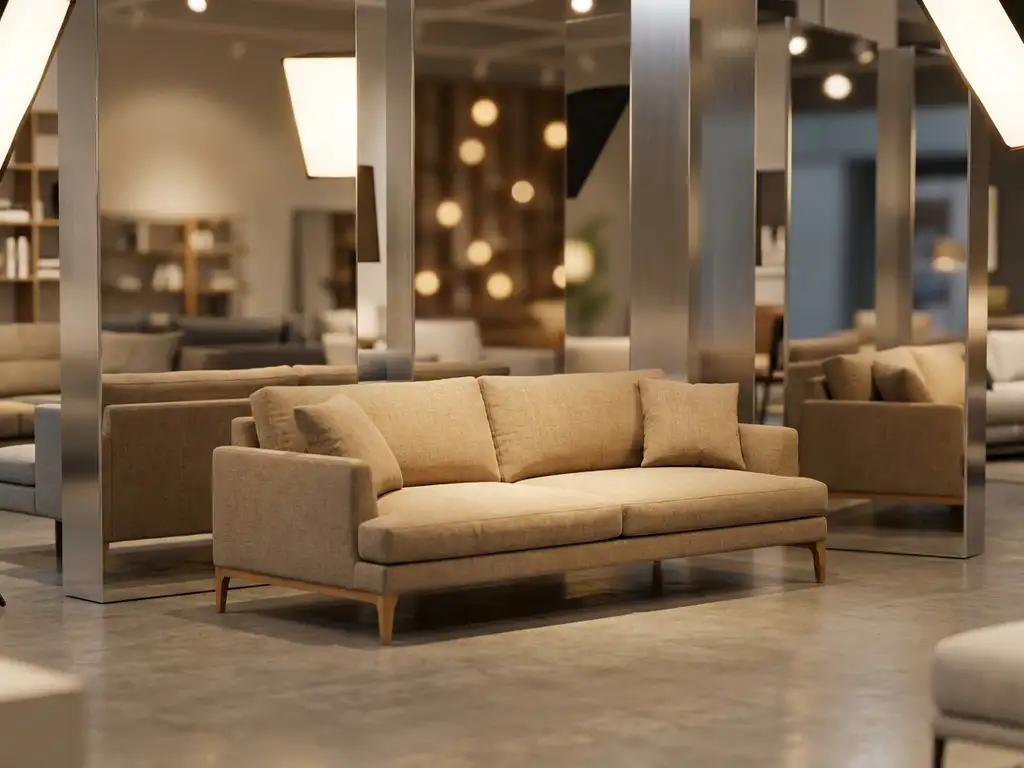
3D product rendering creates photorealistic digital images of products using computer graphics technology, eliminating the need for traditional photography. For dealer and retail networks, this technology addresses critical challenges, including inventory limitations, visual consistency across channels, and enhanced customer engagement. Modern rendering solutions enable dealers to showcase unlimited product variations while maintaining brand quality standards.
What is 3D product rendering, and why do dealer networks need it?
3D product rendering uses advanced computer graphics to create lifelike digital images of products from three-dimensional models. This technology generates photorealistic visuals that are indistinguishable from traditional photography, allowing businesses to showcase products without physical samples or expensive photoshoots.
Dealer networks face unique challenges that make 3D rendering essential for modern operations. Physical showroom space limitations prevent dealers from displaying every product variation, color option, or configuration. Traditional photography becomes prohibitively expensive when dealing with hundreds or thousands of product combinations, while maintaining visual consistency across multiple dealer locations proves nearly impossible with conventional methods.
The technology addresses these pain points by providing unlimited visual possibilities within a controlled digital environment. Dealers can present any product configuration instantly, maintain brand-consistent imagery across all locations, and reduce dependence on physical inventory for sales presentations.
How does 3D visualization improve the dealer sales process?
3D visualization transforms sales presentations by enabling real-time product customization and immediate visual feedback during customer interactions. Sales teams can modify colors, materials, configurations, and accessories instantly, allowing customers to see exactly what they’re purchasing before making decisions.
The technology accelerates the sales cycle by eliminating waiting periods for physical samples or custom photography. Customers make faster purchasing decisions when they can visualize products immediately, while sales representatives can address objections and preferences on the spot. This immediacy particularly benefits complex products with multiple configuration options.
Interactive 3D experiences also increase customer engagement and confidence. Rather than relying on imagination or static images, buyers can explore products from every angle, zoom in on details, and experiment with different options. This hands-on approach builds trust and reduces post-purchase regret, leading to higher customer satisfaction and fewer returns.
Visual Commerce Solutions
Talk to our team about your project.
What are the key benefits of implementing 3D rendering in retail environments?
Implementing 3D product rendering in retail environments delivers significant cost reductions by eliminating the need for physical inventory for display purposes. Retailers can showcase entire product catalogs without storing physical samples, reducing warehouse costs and freeing valuable floor space for revenue-generating activities.
Customer experience improvements include enhanced product presentation capabilities and interactive exploration features. Shoppers can customize products in real time, compare different configurations side by side, and visualize how products will look in their own spaces. This level of interaction increases engagement and purchase confidence.
Conversion rates typically improve because customers have complete information before making purchase decisions. The technology reduces uncertainty by showing exact product appearances, materials, and configurations. Additionally, retailers can update product presentations instantly without reprinting materials or replacing physical displays, ensuring accuracy and reducing operational overhead.
How do dealers overcome common challenges when adopting 3D product visualization?
Technical integration challenges are addressed through careful planning and phased implementation. Most modern 3D rendering platforms offer flexible integration options that work with existing systems, allowing dealers to adopt the technology gradually without disrupting current operations.
Staff training concerns are managed through comprehensive onboarding programs and user-friendly interfaces designed for non-technical users. Successful implementations focus on intuitive controls and clear workflows that sales teams can master quickly. Ongoing support and regular training updates ensure staff remain confident using the technology.
Customer adoption improves when dealers emphasize the practical benefits rather than the technology itself. Presenting 3D visualization as a tool for better decision-making and product exploration resonates more effectively than focusing on technical capabilities. Real-world applications demonstrate value clearly to both staff and customers.
Cost considerations are managed through scalable implementation strategies. Starting with high-impact product categories or popular configurations allows dealers to demonstrate value before expanding. The technology typically pays for itself through reduced physical inventory costs and improved sales efficiency.
What makes 3D product configurators effective for both online and in-store experiences?
Omnichannel capabilities ensure consistent experiences across all customer touchpoints, from websites to physical showrooms. Modern 3D configurators synchronize seamlessly between devices and platforms, allowing customers to start product customization online and continue in-store, or vice versa.
User experience design principles focus on intuitive navigation and responsive performance across different devices. Effective configurators work equally well on smartphones, tablets, and large showroom displays, adapting interface elements appropriately for each screen size while maintaining functionality.
Performance optimization ensures fast loading times and smooth interactions regardless of device capabilities or internet connection speeds. Advanced rendering techniques and efficient data management prevent lag or delays that could frustrate customers during the configuration process.
Integration requirements are minimized through flexible architecture that connects with existing e-commerce platforms, point-of-sale systems, and inventory management tools. This seamless connectivity enables real-time pricing, availability checks, and order processing across all channels.
How 3dimerce helps support dealer and retail networks
We provide comprehensive 3D visualization solutions specifically designed for dealer and retail network requirements. Our platform addresses the unique challenges faced by multi-location businesses through:
- Scalable implementation – Deploy across multiple locations with consistent branding and functionality
- Flexible integration – Connect seamlessly with existing systems and workflows
- Comprehensive training – Ensure all staff can use the technology effectively
- Ongoing support – Provide continuous assistance and platform updates
- Performance optimization – Deliver blazing-fast visuals across all devices and environments
Our proven track record in the European market demonstrates measurable improvements in sales efficiency, customer engagement, and operational cost reduction for dealer networks. The platform’s high-quality rendering capabilities maintain premium brand positioning while enabling unlimited product customization possibilities. Learn more about our company and our commitment to transforming retail experiences through innovative 3D technology.
Ready to transform your dealer network with professional 3D product visualization? Contact our team to discuss your specific requirements and discover how our solutions can enhance your retail operations.