
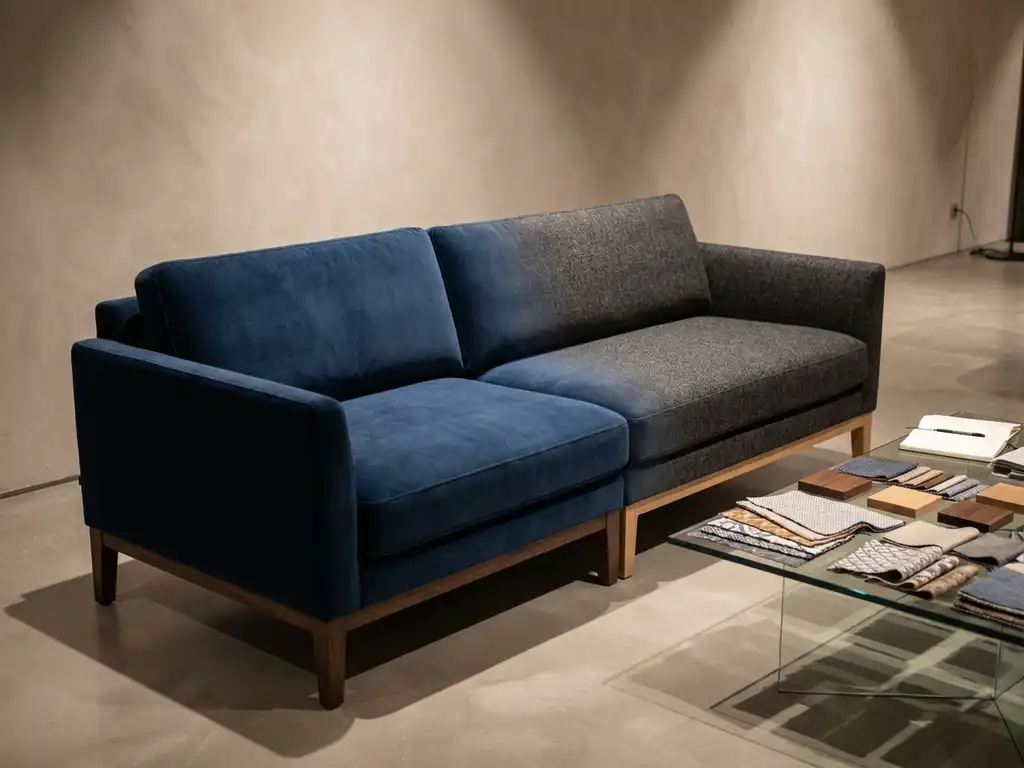
Configurable products need 3D product rendering because traditional photography cannot capture the endless variations and customisation options they offer. Unlike standard items with fixed specifications, configurable products allow customers to modify colours, materials, sizes, and features, creating thousands of potential combinations. 3D rendering enables real-time visualisation of any configuration, providing photorealistic quality without requiring physical prototypes or extensive photography sessions for every possible variation.
What makes configurable products different from standard products?
Configurable products offer multiple customisation options that customers can modify to suit their specific needs and preferences. Unlike standard products with fixed specifications, these items allow variations in colour, material, size, components, and features, creating potentially thousands of unique combinations from a single base product.
The complexity of configurable products extends beyond simple colour variations. Consider a modular sofa system where customers can choose the number of seats, arm styles, leg finishes, fabric types, cushion firmness, and additional features such as built-in storage or USB ports. Each decision affects the final product’s appearance and functionality, making it impossible to photograph every possible combination.
Modern customers expect interactive product experiences that allow them to visualise their customisations before purchase. They want to see how their chosen fabric looks on their selected sofa configuration, or how different wood finishes affect the overall aesthetic of their custom furniture piece. Traditional static images cannot meet these expectations, leaving customers uncertain about their final purchase and potentially leading to higher return rates.
Why can’t traditional photography handle configurable products effectively?
Traditional photography becomes impractical and cost-prohibitive when dealing with products that offer multiple configuration options. The sheer number of possible combinations makes it impossible to photograph every variant, while the time and resources required would be astronomical for most businesses.
Consider a configurable office chair with five colour options, three material choices, four base styles, and two armrest configurations. This creates 120 possible combinations, requiring 120 separate photo shoots to capture every variant. Add more options, and the numbers quickly become unmanageable. Each photo shoot involves setup time, professional photography costs, model fees, and post-production editing.
Storage and management present additional challenges. Thousands of product images require significant server space and complex cataloguing systems. Updating imagery when new options become available or existing ones change means repeating the entire photography process. The logistics of maintaining current, high-quality images for every possible configuration often prove more expensive than the products themselves.
Furthermore, traditional photography cannot show products that do not physically exist yet. During product development phases, companies need to showcase new configurations before manufacturing prototypes, making conventional photography impossible.
How does 3D product rendering solve the visualisation challenge?
3D product rendering creates photorealistic images of any product configuration in real time without requiring physical prototypes or extensive photography sessions. This technology uses detailed digital models that can be modified instantly to show any combination of colours, materials, and features customers might choose.
The rendering process begins with creating a comprehensive 3D model of the base product, including all possible components and variations. Advanced materials and lighting systems ensure the digital representation matches real-world appearance, capturing subtle details such as fabric textures, wood grain patterns, and metallic finishes with remarkable accuracy.
When customers make configuration choices, the 3D system instantly updates the visual representation, showing exactly how their customised product will look. This happens in seconds rather than the weeks required for traditional photography, enabling immediate customer feedback and decision-making. The technology can even simulate different lighting conditions and environments to help customers visualise how products will appear in their specific settings.
High-quality 3D rendering produces images indistinguishable from professional photography, while offering unlimited flexibility for modifications and updates. New colour options, materials, or design variations can be added to the system without additional photo shoots, dramatically reducing time to market for new product variants.
What are the key benefits of 3D rendering for configurable products?
3D rendering delivers substantial cost reductions by eliminating the need for extensive photography sessions, physical prototypes, and ongoing image management. Companies save thousands on photo shoot costs while gaining the ability to showcase unlimited product variations without additional expense per variant.
Time-to-market improvements represent another significant advantage. New product configurations can be visualised and marketed immediately without waiting for prototype manufacturing and photography scheduling. This agility allows companies to respond quickly to market demands and test new options without substantial upfront investment.
Customer engagement increases dramatically when buyers can interact with realistic 3D configurators. The ability to see immediate visual feedback from their choices builds confidence in purchase decisions and creates an engaging shopping experience. This enhanced interaction often leads to higher conversion rates and increased average order values as customers explore premium options.
Return rates typically decrease when customers can accurately visualise their configured products before purchase. The gap between customer expectations and received products shrinks significantly when buyers have seen photorealistic representations of their exact specifications.
Sales processes become more efficient as teams can demonstrate any product configuration instantly during presentations. Whether in showrooms or virtual meetings, sales representatives can modify products in real time to match customer preferences, accelerating decision-making and shortening sales cycles.
How do customers respond to 3D product configurators?
Customers demonstrate significantly higher engagement levels with 3D product configurators compared to traditional static product galleries. The interactive nature of these tools encourages exploration, with users typically spending more time on product pages and investigating various configuration options they might not have considered otherwise.
The psychological impact of visualising customised products creates stronger emotional connections between customers and their potential purchases. When buyers can see their specific choices rendered realistically, they develop a sense of ownership before completing the transaction, making them more likely to proceed with a purchase.
Conversion improvements often follow the implementation of 3D configurators, as the technology addresses common purchase hesitations. Customers feel more confident about their choices when they can see exactly what they are buying, reducing the uncertainty that often prevents online purchases of customisable products.
User experience benefits extend to accessibility, as 3D configurators can accommodate different learning styles and preferences. Visual learners appreciate seeing immediate changes, while detail-oriented customers can examine products from multiple angles and under different lighting conditions. The technology also supports various devices, ensuring consistent experiences across desktop and mobile platforms.
Customer feedback consistently highlights the convenience and confidence that 3D configurators provide. The ability to experiment with different options without pressure, combined with realistic visualisation, creates positive associations with the brand and products that often translate into customer loyalty and referrals.
How 3Dimerce helps with 3D product rendering for configurable products
We specialise in creating sophisticated 3D product configurators that transform how businesses showcase configurable products. Our platform combines advanced rendering technology with intuitive user interfaces, enabling companies to present their entire product range through interactive, photorealistic experiences.
Our comprehensive solution addresses the unique challenges of configurable product visualisation through:
- Real-time configuration rendering that instantly displays any product combination with photorealistic quality
- Seamless integration capabilities that work with existing e-commerce platforms and sales systems
- Advanced material simulation that accurately represents textures, finishes, and lighting conditions
- Multi-device compatibility ensuring consistent experiences across all customer touchpoints
- Scalable platform architecture that grows with your product range without additional per-variant costs
- Professional implementation support from our experienced team of specialists
Our proven track record with European manufacturers and retailers demonstrates the tangible benefits of professional 3D product rendering for configurable products. Ready to transform your product visualisation approach? Contact us to discuss how our 3D rendering solutions can enhance your configurable product presentations and drive customer engagement.