
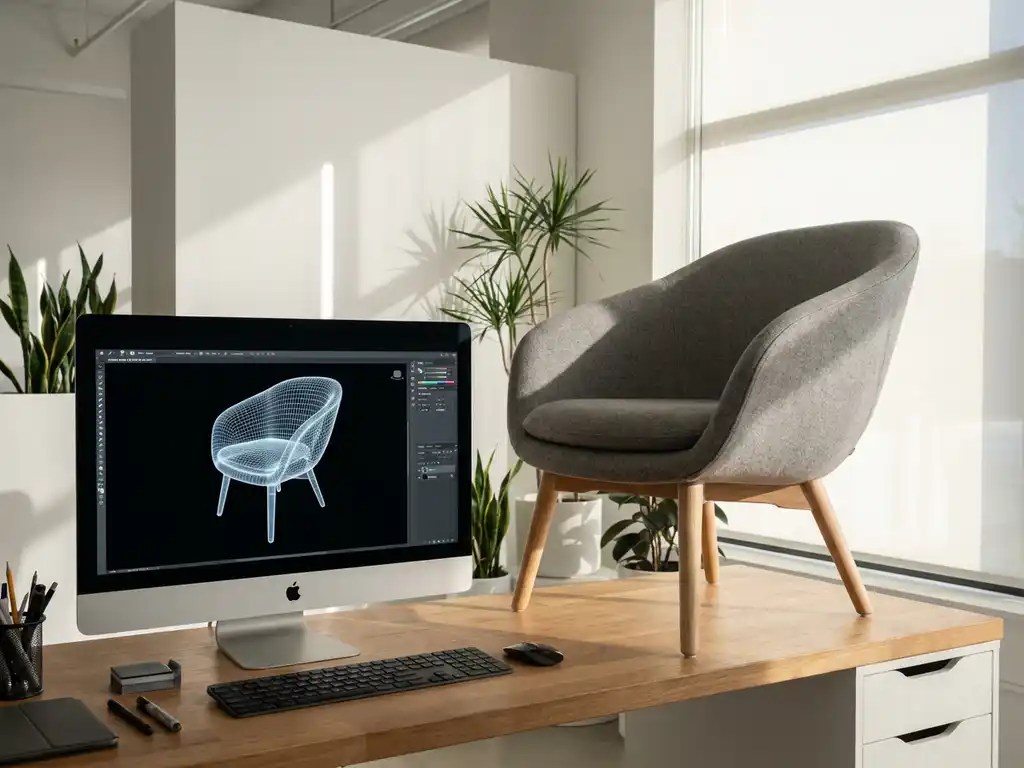
Furniture manufacturers use 3D product rendering to create unlimited visual content variations without the constraints of traditional photography. This technology generates photorealistic images of every product configuration, colour, and material combination digitally. It eliminates the need for physical prototypes and studio shoots while maintaining premium visual quality across all marketing channels.
What is 3D product rendering, and why do furniture manufacturers need it?
3D product rendering is computer-generated imagery that creates photorealistic visuals of furniture products using digital models, materials, and lighting. Traditional photography cannot keep pace with modern furniture customisation demands because each new colour, fabric, or configuration requires separate photo shoots, physical samples, and studio time.
Furniture manufacturers face mounting pressure to offer extensive customisation options while maintaining visual consistency across their marketing materials. A single sofa line might offer 20 fabric choices, 15 colours, and multiple configurations, resulting in thousands of potential combinations. Photographing every variation would require enormous resources and storage space for physical samples.
3D rendering addresses these scalability challenges by creating a digital foundation that can generate any product variation instantly. Once the initial 3D model exists, manufacturers can apply different materials, adjust dimensions, and modify components without additional photography. This approach transforms content production from a physical limitation into a digital opportunity.
The technology is particularly valuable for furniture brands launching new collections or expanding into international markets, where shipping samples for photography becomes impractical. Digital workflows enable rapid content creation that matches the speed of modern product development cycles.
How does 3D rendering help furniture brands reduce photography costs?
3D rendering eliminates recurring photography expenses by replacing physical shoots with digital content creation. Traditional furniture photography requires studio rental, professional lighting equipment, photographer fees, and logistics for moving large furniture pieces. These costs multiply with each product variation and seasonal catalogue update.
The cost breakdown reveals significant savings potential. A typical furniture photo shoot might cost £2,000–£5,000 per day, covering only a limited number of products and configurations. Physical sample production adds material costs, manufacturing time, and storage requirements. International brands often maintain sample libraries in multiple locations, creating ongoing overhead.
3D rendering shifts these variable costs into a one-time investment in digital asset creation. After initial model development, generating additional images costs a fraction of traditional photography. Furniture manufacturers can reallocate photography budgets toward enhanced marketing campaigns, improved customer experience, or product development initiatives.
The financial benefits extend beyond direct cost savings. Digital workflows reduce time to market for new products, enabling faster responses to trends and customer demands. Brands can test market reactions to new designs before committing to physical production, reducing inventory risk and development costs.
Visual Commerce Solutions
Talk to our team about your project.
What types of furniture products benefit most from 3D rendering?
Configurable and modular furniture systems see the greatest impact from 3D rendering technology. Products with multiple customisation options, material choices, or size variations benefit most because traditional photography becomes increasingly impractical as options multiply.
Upholstered furniture is an ideal application due to extensive fabric and colour options. A single chair design might offer 100+ upholstery choices, making comprehensive photography prohibitively expensive. 3D rendering enables furniture manufacturers to showcase every combination while maintaining consistent lighting and positioning.
Modular storage systems, office furniture, and kitchen cabinetry benefit significantly from digital visualisation. These products often feature complex configuration options where customers need to visualise different arrangements and finishes. Product configurators enable interactive exploration of these possibilities.
Outdoor furniture collections gain particular value from 3D rendering because seasonal photography windows limit traditional shoots. Weather dependencies and location requirements make digital alternatives especially attractive. High-end furniture with premium materials also benefits from 3D rendering’s ability to capture subtle texture details and material properties accurately.
Custom furniture manufacturers find 3D rendering essential for client presentations and approval processes. The technology enables detailed visualisation of bespoke pieces before production begins, reducing miscommunication and ensuring customer satisfaction.
How do furniture manufacturers implement 3D rendering workflows?
Furniture manufacturers typically begin implementing 3D rendering by digitising their core product lines through detailed model creation. This process involves measuring existing products, photographing materials and textures, and building accurate digital representations that serve as the foundation for all future content.
The implementation process follows these key stages:
- Asset creation: Develop 3D models of furniture frames, components, and mechanisms
- Material library development: Digitise fabrics, woods, metals, and finishes with accurate properties
- Integration planning: Connect rendering workflows with existing product development and marketing processes
- Team training: Educate marketing, sales, and product teams on digital asset management
Successful implementation requires collaboration between product development, marketing, and IT teams. Product teams provide technical specifications and material samples. Marketing defines visual requirements and brand standards. IT ensures integration with existing e-commerce platforms and content management systems.
Many manufacturers adopt a phased approach, starting with high-volume product lines or new collections. This strategy enables teams to develop expertise while demonstrating value before expanding to complete product catalogues. Comprehensive solutions often include training and support to ensure smooth transitions.
What quality standards should furniture brands expect from 3D rendering?
Photorealistic quality standards for furniture 3D rendering should match or exceed traditional photography in detail, accuracy, and visual appeal. Premium furniture brands require renders that maintain their luxury positioning while accurately representing materials, proportions, and craftsmanship details.
Technical specifications should include high-resolution outputs suitable for large-format printing and detailed web viewing. Texture accuracy is critical for furniture rendering, particularly for wood grain, fabric weaves, and leather surfaces. Lighting must create natural shadows and reflections that enhance, rather than distract from, product features.
Visual consistency across product lines ensures cohesive brand presentation. All renders should maintain identical lighting conditions, colour accuracy, and styling approaches. This consistency is especially important for furniture collections where products appear together in catalogues and showroom displays.
Quality benchmarks should address material representation accuracy, dimensional precision, and colour fidelity across different display devices. Furniture manufacturers should expect renders that accurately convey scale, proportion, and spatial relationships to prevent customer disappointment upon delivery.
Professional 3D rendering should also accommodate brand-specific requirements such as styling preferences, environmental settings, and presentation formats. The technology should support various output formats, from web-optimised images to high-resolution print materials, while maintaining consistent quality standards.
How 3dimerce helps scale visual content for furniture brands
We address furniture manufacturers’ content-scaling challenges through our comprehensive visual product configuration platform, which automates rendering workflows while maintaining premium quality standards. Our solution eliminates the bottlenecks that prevent furniture brands from showcasing their complete product ranges effectively.
Our platform offers furniture manufacturers:
- Automated content generation: Create unlimited product variations from master 3D models
- Seamless integration: Connect directly with existing e-commerce and sales systems
- Interactive configurators: Enable customer customisation in real time
- Omnichannel consistency: Maintain visual standards across all touchpoints
- Rapid deployment: Launch new products without photography delays
We specialise in premium furniture brands that require exceptional visual quality combined with extensive customisation capabilities. Our approach ensures that digital representations enhance, rather than compromise, brand positioning while dramatically reducing content production timelines and costs.
Ready to transform your furniture visualisation capabilities? Contact our team to discuss how our platform can scale your visual content production while maintaining the premium quality your customers expect.