
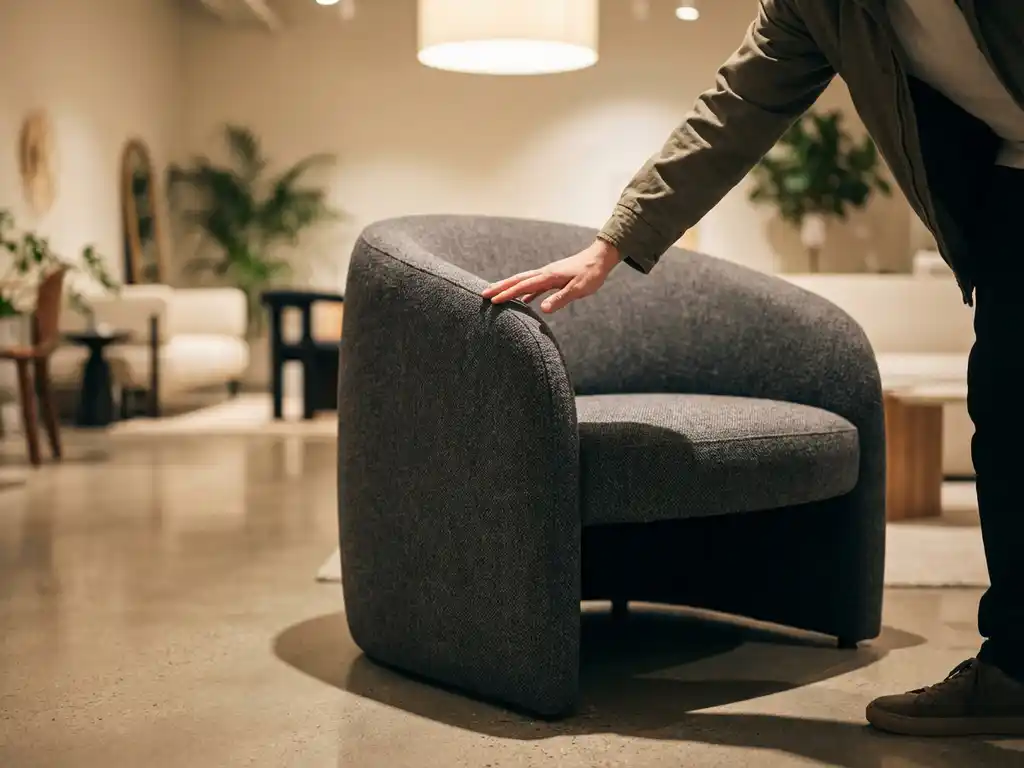
3D product rendering transforms in-store sales experiences by enabling customers to visualise, customise, and interact with products in ways that are impossible with physical displays alone. This technology creates immersive shopping environments where customers can explore every product variation, see real-time customisations, and make confident purchasing decisions without requiring extensive physical inventory.
What is 3D product rendering, and why does it matter for retail stores?
3D product rendering is computer-generated imagery technology that creates photorealistic digital representations of products. Unlike traditional photography, 3D rendering allows infinite customisation options, lighting conditions, and viewing angles without physical constraints. This technology matters for retail stores because it eliminates the need for extensive physical inventory whilst providing customers with comprehensive product visualisation capabilities.
Modern retail environments face increasing pressure to showcase vast product ranges whilst managing space and inventory costs. 3D rendering addresses this challenge by creating virtual showrooms where customers can explore products that may not be physically available in-store. The technology produces stunning visuals that match or exceed the quality of traditional photography, ensuring premium brand positioning remains intact.
Retail stores benefit from 3D rendering’s flexibility in displaying seasonal collections, limited editions, or customisable products without the logistical complexity of maintaining physical samples. This approach reduces storage requirements whilst expanding the range of products customers can experience during their visit.
How does 3D rendering change the way customers interact with products in-store?
3D rendering fundamentally transforms customer interaction by enabling real-time product customisation and exploration that physical displays cannot match. Customers can modify colours, materials, configurations, and features instantly, seeing immediate visual feedback on their choices. This interactive experience creates engagement levels far beyond traditional browsing.
The technology allows customers to examine products from every angle, zoom in on intricate details, and understand functionality through animated demonstrations. Interactive touchscreens or tablets equipped with 3D rendering software become powerful tools for customer exploration, particularly valuable for complex or highly customisable products.
Customers can visualise products in different environments or contexts, helping them understand how items will look in their own spaces. This contextual visualisation reduces uncertainty and increases confidence in purchasing decisions, particularly important for furniture, interior design products, or other items where environmental fit matters significantly.
Visual Commerce Solutions
Talk to our team about your project.
What are the main benefits of using 3D product visualisation for in-store sales?
The primary benefits of 3D product visualisation include increased customer engagement, reduced physical inventory requirements, faster decision-making, and improved sales conversion rates. Customers spend more time exploring products when they can interact with dynamic 3D representations, leading to deeper product understanding and stronger purchase intent.
Inventory management becomes significantly more efficient as stores can display entire product ranges without physical space constraints. This reduction in required floor space allows retailers to showcase more products or create more comfortable shopping environments whilst maintaining comprehensive product coverage.
Sales conversion rates improve because customers can see exactly what they’re purchasing, including customisations and variations. The technology eliminates guesswork and reduces post-purchase dissatisfaction by providing accurate visual representations of final products. Additionally, the impressive visual quality of 3D rendering enhances perceived product value and reinforces premium brand positioning.
How do sales teams use 3D rendering tools to close more deals?
Sales teams leverage 3D rendering tools to guide customers through complex product configurations whilst demonstrating features that aren’t physically available in-store. These visual presentations accelerate the sales process by making abstract concepts tangible and helping customers understand value propositions more clearly.
The technology enables sales staff to show multiple product variations quickly without searching through physical samples or catalogues. This efficiency keeps customer attention focused whilst building momentum towards purchase decisions. Sales teams can address objections by showing alternative configurations or demonstrating how products solve specific customer needs.
3D rendering tools also allow sales teams to create compelling visual presentations that customers can take home or receive via email. These materials serve as powerful follow-up tools, keeping products top of mind during consideration periods and enabling easy sharing with decision-makers who weren’t present during the initial consultation.
What types of products work best with 3D rendering in retail stores?
Products that benefit most from 3D rendering include highly customisable items with multiple variants, complex products requiring detailed explanation, and high-value purchases where visualisation significantly impacts buying decisions. Furniture, kitchen appliances, automotive products, and luxury goods particularly benefit from this technology.
Customisable products such as furniture, built-in storage solutions, or modular systems showcase 3D rendering’s strengths perfectly. Customers can explore countless combinations of materials, colours, and configurations without requiring physical samples of every possibility. This capability is especially valuable for products with extensive customisation options.
Complex technical products benefit from 3D rendering’s ability to demonstrate functionality, show internal components, or illustrate assembly processes. Products where size, fit, or spatial relationships matter significantly also work exceptionally well, as customers can visualise items in context and understand proportions more accurately than traditional displays allow.
You can explore various implementation examples to understand how different industries apply this technology effectively.
How 3dimerce helps with 3D product rendering for retail
We provide comprehensive 3D product rendering solutions specifically designed for retail environments, combining high-quality visual output with intuitive operation suitable for both customers and sales staff. Our platform integrates seamlessly into existing retail systems whilst delivering stunning visuals that enhance premium brand positioning. Learn more about our company and our commitment to transforming retail experiences through innovative technology.
Our retail-focused benefits include:
- Blazing-fast rendering performance that maintains customer engagement
- Intuitive interfaces that require minimal training for sales staff
- Seamless integration with existing point-of-sale and inventory systems
- Customisable brand styling to match your retail environment
- Omnichannel consistency across in-store and online experiences
Our visual product configuration platform transforms traditional retail spaces into interactive showrooms where every customer can explore your complete product range. The technology scales effortlessly as your product catalogue grows, ensuring long-term value without proportional cost increases.
Ready to transform your retail experience with professional 3D rendering solutions? Contact our team to discuss how we can enhance your in-store sales environment with cutting-edge visualisation technology tailored to your specific retail needs.