
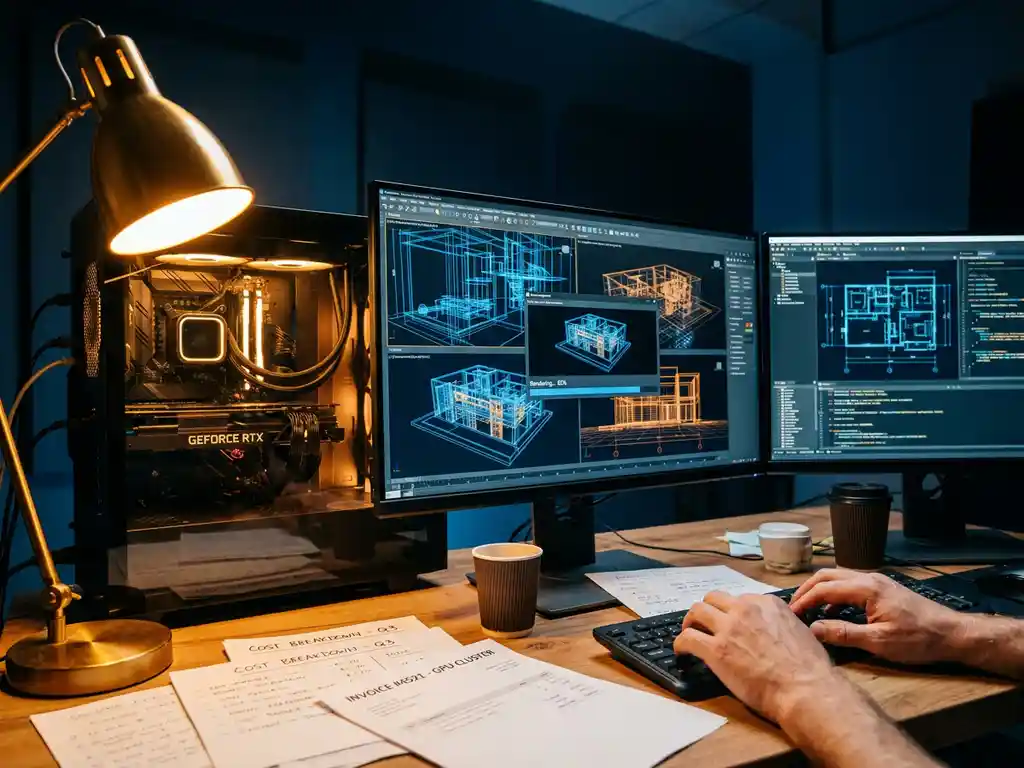
3D rendering costs significantly more than traditional photography because it requires specialized technical expertise, powerful computing resources, and a substantial time investment to create detailed digital models from scratch. While a product photoshoot might cost a few hundred dollars, professional 3D rendering projects typically range from thousands to tens of thousands of dollars, depending on complexity and quality requirements.
Why are high 3D rendering costs preventing your product launches from scaling?
High 3D rendering costs cause many businesses to delay or abandon digital transformation initiatives altogether — and that hesitation costs far more than the initial investment would have. While companies wait for a more affordable solution, competitors are launching product variants faster, reducing time-to-market, and offering interactive customer experiences that drive higher conversion rates. The real expense isn’t the 3D rendering cost itself but the revenue lost while waiting.
The most important reframe: 3D rendering is not a recurring photography expense. It is a scalable digital asset. Once built, a 3D model can generate unlimited variants, scenes, and formats without a new photoshoot — making the upfront cost a one-time infrastructure investment rather than a per-image fee.
What does sticker shock from 3D quotes signal about your project scope?
Extreme price variation in 3D rendering quotes — sometimes ranging from a few thousand to fifty thousand dollars for seemingly similar work — typically signals that providers are interpreting the project requirements differently. Some quotes cover basic static visualization; others include real-time product configurators, multiple output formats, and ongoing technical support. Without clear specifications, the cheapest option almost always fails to deliver the sophisticated visual experience a premium brand requires, leading to budget overruns and disappointing results.
When quotes vary by more than 300%, the project brief likely needs more specificity. Defining deliverables, quality level, output formats, and configurability requirements upfront is the most effective way to get comparable, accurate quotes.
Visual Commerce Solutions
Talk to our team about your project.
What makes 3D rendering so expensive compared to photography?
3D rendering costs more than photography because it builds a product’s digital replica entirely from scratch, rather than capturing a physical object that already exists. Photography requires a camera, lighting, and a subject. 3D rendering requires specialized software, high-performance computing hardware, and skilled artists who must reconstruct every surface, material, texture, and physical property of a product in a virtual environment.
The core cost drivers in 3D rendering include:
- Skilled 3D artists: Professionals who command premium rates due to the technical and artistic expertise required
- Software licenses: Industry-standard 3D tools can cost thousands of dollars annually
- Rendering hardware: Processing photorealistic images demands significant computational power
- Multi-phase production: Each project moves through 3D modeling, UV mapping and texturing, lighting setup, rendering calculations, and post-processing — each phase requiring specialist time
Unlike photography, where multiple products can be shot in a single session, each 3D model requires individual attention to accurately recreate materials, tolerances, and physical behavior. This is why the per-product investment is higher — but also why the resulting asset is far more versatile and reusable than a photograph.
How much does professional 3D rendering typically cost?
Professional 3D rendering costs vary based on product complexity, quality requirements, and whether the deliverable is static imagery or an interactive configurator. The following ranges reflect typical market pricing for high-quality, photorealistic work:
- Basic product visualization: €2,000 – €5,000 per product
- Mid-complexity furniture or design products: €3,000 – €8,000 for initial 3D modeling and rendering setup
- Fully configurable kitchen or modular systems: €25,000 – €75,000 for complete implementation
- Enterprise configurator solutions: €15,000 – €100,000+ depending on product range, integrations, and output formats
- Additional variants after initial setup: €100 – €500 per scene or configuration
Quality level is a significant pricing variable. Photorealistic rendering — the standard for luxury and design-focused brands — commands higher rates than basic visualization, due to advanced lighting calculations, detailed texture work, and extensive post-processing. Enterprise-level implementations often include real-time configuration, multiple output formats, and integration support, which increase the overall investment but also the long-term return.
What factors drive up the cost of 3D rendering projects?
The following factors are the primary cost drivers in professional 3D rendering projects:
- Product complexity: Multiple materials, intricate surface details, and moving or articulated components require substantially more modeling time
- Quality level: Photorealistic rendering demands advanced lighting simulations, detailed texture work, and extensive post-processing compared to basic visualization
- Interactivity: Real-time configuration capabilities require additional technical optimization and programming beyond static imagery
- Timeline: Rush delivery requires additional resources or overtime, increasing cost
- Custom environments: Branded scenes, specific lighting conditions, or unique camera setups add complexity
- System integration: Connecting rendered assets to e-commerce platforms, PIM systems, or CPQ tools adds technical scope
- Number of variants: Each configurable option — material, color, size, finish — requires individual attention and quality assurance
The number of product variants and customization options has an exponential effect on cost, because each configuration must be individually validated to ensure accurate visual representation.
Why is the initial 3D modeling setup more expensive than ongoing renders?
The initial 3D modeling phase is the most expensive part of any rendering project because it builds the entire digital foundation from scratch. This includes constructing accurate 3D geometry, developing physically accurate materials and textures, establishing lighting systems, and creating the technical framework that supports all future customization options.
Setup requires extensive reference gathering, precise measurements, and multiple revision cycles to achieve brand-accurate results. 3D artists must understand a product’s construction, material properties, and manufacturing constraints to model it in a way that behaves realistically across different configurations and lighting environments.
Once that foundation exists, generating additional renders or variants becomes significantly more efficient. The model, materials, and lighting rig can be reused and modified rather than rebuilt. This is why scalable 3D solutions become increasingly cost-effective as product ranges expand — the per-variant cost decreases substantially after the initial investment is made.
How can businesses reduce 3D rendering costs without sacrificing quality?
The most effective way to control 3D rendering costs is through clear requirements definition before any work begins. Vague briefs lead to misaligned quotes, scope creep, and expensive revision cycles. The strategies below consistently reduce cost without compromising visual quality:
- Define scope precisely upfront: Specify deliverables, quality tier, output formats, and configurability requirements before requesting quotes
- Phase the implementation: Begin with core products or best-sellers rather than digitizing an entire range at once — early ROI funds subsequent phases
- Standardize product families: Products sharing common components can share 3D model elements, reducing per-product modeling time significantly
- Provide complete reference materials: High-resolution photos, technical drawings, material specifications, and physical samples minimize revision cycles
- Build a long-term partnership: Ongoing relationships with a single provider allow for workflow optimization and asset reuse across projects, which lowers per-project cost over time
Phased implementation is particularly valuable for design and luxury brands with large product catalogs. Starting with hero products generates visual ROI quickly while the broader digitization program scales at a sustainable pace.
How 3Dimerce helps with 3D rendering costs
We understand that 3D rendering costs can seem overwhelming, which is why we’ve developed an efficient approach that maximizes value while controlling expenses. Our SaaS platform draws on over 20 years of experience delivering photorealistic visual quality at scale — purpose-built for luxury, design, and high-end brands that cannot afford to compromise on image quality or configurator performance.
Our approach to cost-effective, high-quality 3D rendering includes:
- Modular framework: Reusable components and standardized workflows reduce per-product modeling costs across your catalog
- Scalable platform: The initial setup investment pays dividends as your product range expands — each new variant costs a fraction of the original model
- Integrated solution: Combined configurator and rendering capabilities eliminate the cost and complexity of managing multiple vendors
- Proven methodology: Streamlined production processes minimize revision cycles, reduce project delays, and protect your timeline
We work exclusively in the design, luxury, and high-end market — which means our workflows, quality standards, and configurator capabilities are built for brands where visual precision is non-negotiable. Ready to explore how professional 3D rendering can transform your product visualization? Contact our team to discuss your specific requirements and discover cost-effective solutions tailored to your brand.
Frequently Asked Questions
How do I know if my project scope is realistic for my 3D rendering budget?
Start by clearly defining your must-have features versus nice-to-have additions. If quotes vary wildly (more than 300% difference), your specifications likely need clarification. Focus on core functionality first – basic product visualization, essential customization options, and primary use cases. You can always expand features in future phases once you see ROI from the initial implementation.
What's the biggest mistake companies make when budgeting for 3D rendering projects?
The most common mistake is underestimating the initial setup investment while overestimating ongoing costs. Many businesses expect 3D rendering to cost similarly to photography per image, but the value lies in the scalability after setup. Plan for a higher upfront investment that pays dividends as you add product variants and configurations over time.
How can I prepare my product information to minimize 3D rendering costs?
Provide comprehensive reference materials upfront: high-resolution photos from multiple angles, technical drawings, material specifications, and physical samples when possible. Clearly document all customization options, color variants, and configuration possibilities. The more complete your initial brief, the fewer expensive revision cycles you’ll need during development.
Should I hire a freelancer, agency, or use a SaaS platform for 3D rendering?
Freelancers work best for simple, one-off projects but lack scalability and support. Agencies suit complex custom projects but often have higher overhead costs. SaaS platforms like 3Dimerce offer the best value for ongoing product visualization needs, combining professional quality with scalable pricing and integrated configurator capabilities.
How long should I expect the initial 3D modeling phase to take?
Initial 3D modeling typically takes 2-6 weeks per product, depending on complexity. Simple products might be completed in 1-2 weeks, while complex items with multiple materials and configurations can take 4-8 weeks. Factor in revision cycles and feedback rounds when planning your timeline, and always build buffer time for quality assurance.
What ROI should I expect from investing in professional 3D rendering?
Most businesses see ROI within 6-18 months through reduced photography costs, faster product launches, and improved conversion rates. 3D rendering eliminates recurring photoshoot expenses, enables instant visualization of new variants, and supports interactive customer experiences that typically increase online conversion rates by 20-40% for configurable products.
Can I start with basic 3D rendering and upgrade quality later?
While possible, this approach often costs more long-term than starting with professional quality. Basic rendering requires rebuilding models and materials to achieve photorealistic results later. It’s more cost-effective to invest in proper setup initially, then scale by adding product variants rather than upgrading quality levels after launch.
Related Articles
- How can a CPQ tool reduce the need for physical product samples?
- What is the difference between 3D product rendering and traditional photography?
- Hoe verminder ik offertefouten met CPQ software?
- Can 3D product rendering increase customer engagement?
- What is the best time to start using 3D product rendering?