
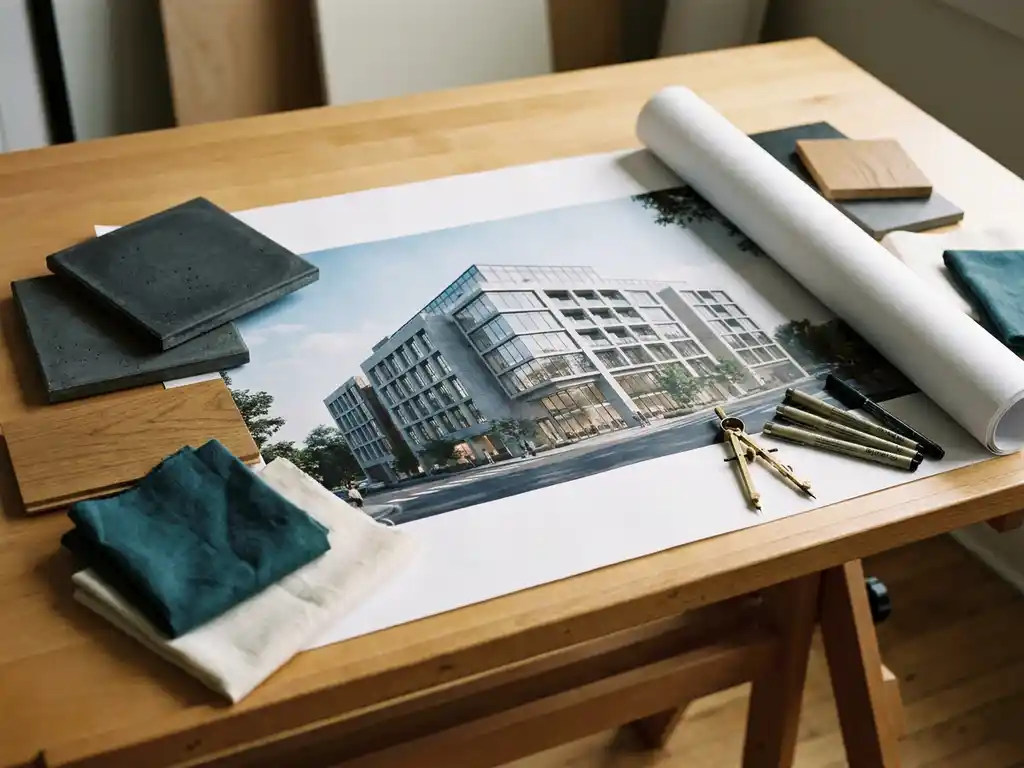
Architectural renderings fall into several distinct categories, each serving a different purpose in the design and sales process. The main types include photorealistic 3D renderings, non-photorealistic illustrations, 2D floor plans, 3D walkthroughs, and interactive configurators. Choosing the right type depends on your audience, your stage in the project, and the level of detail your viewers need.
From early concept sketches to fully immersive virtual tours, each rendering style communicates something different. The sections below break down the key questions designers, marketers, and manufacturers ask when deciding which type of architectural rendering to use.
What are the main categories of architectural rendering styles?
Architectural rendering styles are typically grouped into photorealistic renderings, non-photorealistic renderings (NPR), 2D technical drawings, 3D walkthroughs, and interactive or real-time renders. Each category serves a distinct communicative purpose, ranging from early-stage concept exploration to final client presentation and sales.
Here is a quick overview of the main categories:
- Photorealistic 3D renderings: High-fidelity images that replicate how a space or product would look in real life, complete with accurate lighting, shadows, and material textures.
- Non-photorealistic renderings (NPR): Stylised outputs such as watercolour, pencil sketch, or line-drawing aesthetics used to convey mood or concept rather than precision.
- 2D floor plans and elevations: Technical drawings that communicate spatial layout and dimensions, often used in planning and construction phases.
- 3D walkthroughs and fly-throughs: Animated sequences that guide a viewer through a space, simulating the experience of moving through it.
- Interactive and real-time renders: Dynamic, user-controlled visualisations where viewers can explore or customise a space or product in real time.
Each style has its strengths. Photorealistic renders dominate marketing and sales contexts, while NPR styles often appear in early design phases or branding materials where a hand-crafted aesthetic supports the brand story.
What is the difference between photorealistic and non-photorealistic rendering?
Photorealistic rendering aims to produce images that are visually indistinguishable from real photography, while non-photorealistic rendering (NPR) deliberately adopts an illustrative or stylised aesthetic. The core difference lies in intent: photorealism communicates precision and material truth, whereas NPR communicates concept, mood, or artistic vision.
Photorealistic renders rely on physically based rendering (PBR) engines that simulate how light behaves in the real world. They account for material reflectance, surface texture, ambient occlusion, and natural shadow fall. The result is an image that reads as a photograph even when no physical object or space yet exists.
Non-photorealistic styles, by contrast, use techniques such as cel shading, watercolour filters, or pencil-line overlays to produce outputs that feel more like illustrations. These are particularly effective in early design conversations where a polished photorealistic image might give the false impression that decisions have already been finalised.
For high-end product brands and luxury interior manufacturers, photorealistic rendering is almost always the preferred choice. The visual quality needs to match the premium positioning of the product itself, and anything less can undermine brand perception.
Visual Commerce Solutions
Talk to our team about your project.
How does 3D rendering differ from traditional architectural illustration?
3D rendering is produced using digital modelling software and rendering engines, while traditional architectural illustration is created by hand using drawing, painting, or printmaking techniques. The key practical differences are speed, flexibility, and the ability to update visuals as the design evolves.
Traditional illustration has a long and respected history in architecture. Hand-drawn perspectives and watercolour elevations carry a warmth and artistry that many clients still appreciate. However, they are time-intensive, difficult to revise, and cannot be repurposed across multiple formats or channels without significant additional effort.
3D rendering, on the other hand, is built on a digital model that can be updated, re-lit, re-textured, and re-rendered at any point. A single 3D model can generate dozens of still images, animated sequences, and interactive experiences without starting from scratch. For manufacturers and brands dealing with multiple product variants or configurations, this scalability is a significant operational advantage.
The quality ceiling for 3D rendering has also risen dramatically. Modern rendering engines produce outputs that are virtually indistinguishable from professional photography, making the traditional illustration’s quality advantage far less pronounced than it once was.
What types of architectural renderings are used in real estate marketing?
Real estate marketing typically uses photorealistic exterior and interior renderings, aerial or bird’s-eye views, 3D floor plans, and animated walkthroughs. These rendering types are selected to help prospective buyers visualise a property before it is built, making them essential tools in off-plan sales and new development marketing.
- Exterior renderings: Show the building facade, landscaping, and surrounding environment in realistic daylight or dusk lighting conditions.
- Interior renderings: Present furnished and styled rooms with accurate material finishes, lighting, and spatial proportions.
- Aerial views: Provide a contextual overview of the development within its neighbourhood or site.
- 3D floor plans: Offer a spatially accurate but visually accessible alternative to flat technical drawings.
- Animated walkthroughs: Guide potential buyers through the property in a cinematic sequence, often used in sales presentations and online listings.
- Virtual tours: Allow buyers to navigate a space independently, exploring rooms at their own pace.
The choice between these formats often comes down to the sales channel. Print brochures and billboard campaigns favour high-quality still renders, while digital platforms and sales centres benefit from interactive or animated formats that create a more immersive experience.
When should you use a 3D walkthrough instead of static renders?
A 3D walkthrough is the better choice when you need to communicate spatial flow, sequence, or the experience of moving through a space. Static renders are ideal for showcasing specific moments or finishes with maximum visual impact, but they cannot convey the relationship between rooms or the sense of scale that a moving sequence provides.
Use a 3D walkthrough when:
- The project involves multiple interconnected spaces where the journey between them is part of the experience.
- You are presenting to clients or buyers who struggle to read floor plans or interpret static perspectives.
- The sales environment is digital and you need content that holds attention on screen.
- You want to create a cinematic brand moment around a product launch or development reveal.
Static renders remain the stronger choice for print materials, social media imagery, and any context where a single, perfectly composed image needs to do the communicative work. Many projects use both: a set of hero stills for marketing materials, supported by a walkthrough for sales presentations and digital platforms.
How does product configuration fit into architectural rendering?
Product configuration integrates with architectural rendering by allowing users to customise individual products within a space in real time, seeing accurate visual updates as they make choices. This is particularly relevant for furniture, interior fittings, and building materials, where colour, finish, size, and material options significantly affect how a product looks in context.
A static architectural rendering shows one version of a space. A product configurator embedded within that visual environment allows a customer or sales professional to explore multiple versions without commissioning new renders for every combination. The visual output updates dynamically as selections are made, maintaining photorealistic quality throughout.
This approach is especially powerful in high-end interior and furniture markets, where customers are making considered purchases and need to see exactly how a product will look in their chosen finish before committing. It removes the guesswork that traditional sample books and static imagery leave behind. Explore our full range of visual product solutions to see how configuration and rendering work together in practice.
How 3Dimerce helps with architectural rendering and product visualisation
We bring together photorealistic 3D rendering and interactive product configuration in a single platform built for brands that refuse to compromise on visual quality. Whether you are a furniture manufacturer, an interior design brand, or a retailer selling configurable products, we give you the tools to present every variant beautifully, consistently, and at scale.
Here is what working with us looks like in practice:
- Photorealistic CGI imagery: Stunning product and interior visuals that match or exceed the quality of traditional photography, without the logistical cost of a physical shoot.
- Interactive 3D product configurators: Real-time configuration tools that let customers explore every finish, colour, and material option with accurate visual feedback.
- Seamless integration: Our platform connects to your existing webshop or in-store sales environment through headless integration, so the experience feels native to your brand.
- Scalable visual content: One 3D model generates unlimited visual outputs across all your channels, from e-commerce to print to point of sale.
- Built for premium brands: With over 20 years of experience in virtual art, design, and CGI, we understand what high-end product presentation demands.
If you are ready to replace slow, costly photography with a smarter visual workflow, we would love to talk. Get in touch with our team and let us show you what your products could look like.
Frequently Asked Questions
How do I know which type of architectural rendering is right for my project stage?
The best rendering type depends on where you are in the design or sales process. In early concept stages, non-photorealistic styles like sketches or watercolour renders are ideal because they communicate ideas without implying finality. As you move toward client presentations or marketing, photorealistic stills and walkthroughs become the stronger choice. A good rule of thumb: match the polish of your visuals to the confidence you have in your design decisions.
What are the most common mistakes brands make when commissioning architectural renderings?
One of the most frequent mistakes is commissioning renderings too late in the process, leaving no time to iterate or correct visual errors before a campaign launches. Another common pitfall is treating all rendering types as interchangeable — using a static render where a walkthrough would better serve the audience, or over-investing in animation when a hero still image would have more impact. Brands also often underestimate the importance of providing accurate material and finish references upfront, which can lead to costly revisions.
Can the same 3D model be reused across different rendering types and formats?
Yes, and this is one of the most significant advantages of working with 3D rendering over traditional photography or illustration. A single, well-built 3D model can generate photorealistic stills, animated walkthroughs, interactive configurator experiences, and even AR or VR outputs — all without rebuilding the asset from scratch. For manufacturers with multiple product variants or seasonal updates, this reusability dramatically reduces the cost and time of producing visual content at scale.
How long does it typically take to produce a photorealistic architectural rendering?
Timelines vary depending on the complexity of the scene, the number of assets involved, and the level of detail required, but a single high-quality photorealistic interior or exterior render typically takes between three and ten business days from a finalised brief. More complex projects involving full room sets, multiple camera angles, or animated sequences will naturally take longer. Working with a studio that has a structured briefing and asset pipeline — including ready-made material libraries — can significantly reduce turnaround times.
What information do I need to provide to a rendering studio before work can begin?
To get accurate, high-quality results, you should provide technical drawings or CAD files of the space or product, material and finish specifications (ideally with physical samples or reference images), preferred camera angles or mood board references, and any brand guidelines that affect lighting style or colour grading. The more precise your brief, the fewer revision rounds you will need. Studios experienced in working with premium brands will typically provide a structured briefing template to guide you through this process.
Is an interactive product configurator only suitable for large e-commerce businesses, or can smaller brands benefit too?
Interactive configurators are valuable for any brand selling products with multiple variants — finish options, sizes, materials, or colours — regardless of company size. For smaller brands, a configurator can actually level the playing field by replacing the need for expensive multi-variant photography across every product option. The key consideration is whether your product range has enough configuration complexity to justify the initial setup investment, and whether your customers are making considered, high-involvement purchase decisions where seeing accurate visual options matters.
How do architectural renderings and product configurators work together in a sales environment?
In a sales context, architectural renderings establish the aspirational setting — showing a product styled within a beautifully composed interior — while a product configurator gives the customer agency to personalise what they see in real time. This combination is particularly powerful in showroom and online retail environments, where a customer might fall in love with a sofa in a rendered lifestyle scene and then immediately explore it in their preferred fabric and leg finish through the configurator. Together, they shorten the decision-making journey and reduce the friction that comes from asking customers to imagine variations they cannot yet see.