
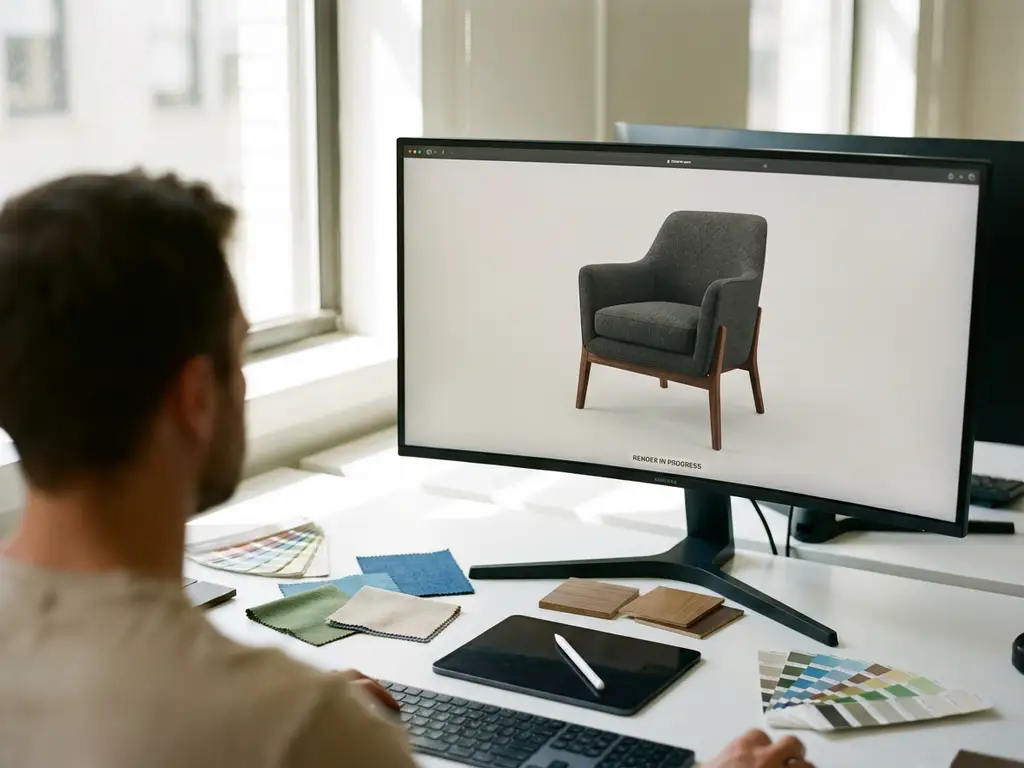
Yes, 3D product rendering can be extensively customised to match any brand’s unique visual identity and aesthetic requirements. Modern 3D rendering technology allows complete control over every visual element, from colour schemes and materials to lighting environments and stylistic treatments. This customisation ensures that product visualisations maintain perfect brand consistency across all channels while delivering the high-quality imagery that premium brands require for their market positioning.
What does brand customisation mean in 3D product rendering?
Brand customisation in 3D product rendering involves tailoring every visual element to match a company’s specific aesthetic guidelines and brand identity. This encompasses colour palettes, material finishes, lighting styles, background environments, and an overall visual atmosphere that reflects the brand’s positioning and values.
The customisation process begins with understanding the brand’s visual language. This includes primary and secondary colour schemes, preferred material treatments (matte, glossy, textured), lighting preferences (warm, cool, dramatic, soft), and the overall mood the brand wants to convey. These elements are then systematically applied to create a cohesive visual template.
Advanced 3D rendering systems allow precise control over surface properties, enabling brands to achieve exact material specifications. Whether a luxury furniture brand requires rich, deep wood grain with subtle reflections or a tech company needs clean, minimalist surfaces with precise colour matching, the rendering can be adjusted to meet these requirements perfectly.
How can 3D product rendering adapt to different brand visual identities?
3D rendering adapts to brand identities through comprehensive technical and creative customisation that addresses every aspect of visual presentation. This includes typography integration, logo placement, environmental settings, and maintaining brand-specific design elements throughout all product visualisations.
The technical adaptation involves creating brand-specific rendering templates that automatically apply the correct visual treatments. These templates include predefined lighting setups, material libraries with brand-approved finishes, and environmental presets that match the brand’s aesthetic preferences. The system can incorporate brand fonts, colour codes, and logo treatments seamlessly into the rendered scenes.
Creative adaptation focuses on the artistic direction of the renders. This includes camera angles that best represent the brand’s style, composition rules that align with brand guidelines, and post-processing effects that enhance the overall brand experience. For instance, a premium brand might require softer shadows and warmer tones, while a modern tech brand might prefer sharp contrasts and cooler lighting.
Visual Commerce Solutions
Talk to our team about your project.
What are the key benefits of customised 3D product visualisation for brands?
Customised 3D product visualisation delivers enhanced brand recognition and consistent customer experiences across all touchpoints while significantly reducing photography costs and production timelines. This approach ensures that every product image perfectly aligns with brand positioning and marketing objectives.
The primary benefits include:
- Consistent brand presentation across all channels and product variants
- Dramatic reduction in photography and prototype costs
- Faster time-to-market for new product launches
- Enhanced customer engagement through interactive visualisation
- Perfect quality control over every visual element
- Scalable content production without proportional cost increases
These advanced visualisation solutions enable brands to maintain premium positioning through consistently high-quality imagery while achieving operational efficiencies that traditional photography cannot match. The ability to create unlimited product variations without additional photoshoots provides tremendous flexibility for product marketing and sales strategies.
How do you ensure brand consistency across different product configurations?
Brand consistency across product configurations is maintained through systematic template systems and automated brand asset libraries that apply standardised visual treatments to every product variant. This approach includes comprehensive brand guideline integration and quality control processes that ensure uniformity.
The foundation lies in creating master brand templates that define lighting setups, material properties, colour specifications, and environmental settings. These templates automatically apply consistent treatments regardless of product configuration or variant. Automated consistency checks verify that each render meets brand standards before finalisation.
Brand asset libraries store approved materials, textures, colours, and environmental elements that can be systematically applied across all product visualisations. This ensures that whether displaying a single product or an entire product range, every image maintains the same brand aesthetic and quality standards.
Quality assurance processes include automated colour-matching verification, material property consistency checks, and lighting uniformity validation. These systems flag any deviations from brand standards, ensuring that every product configuration maintains perfect visual consistency.
What customisation options are available for different industries and brand types?
Customisation options vary significantly across industries, with luxury brands requiring premium aesthetic treatments while tech companies need clean, modern visuals. Each market segment demands specific approaches to lighting, materials, composition, and an overall visual atmosphere that reflects target-audience expectations.
Luxury and premium brands typically require sophisticated lighting with subtle shadows, rich material textures, and elegant environmental settings. The rendering emphasises craftsmanship details and premium finishes, creating an aspirational atmosphere that supports high-value positioning.
Technology and modern brands prefer clean, minimalist presentations with precise colour accuracy, sharp details, and contemporary environments. The focus remains on functionality, innovation, and sleek design elements that appeal to tech-savvy consumers.
Traditional and heritage brands benefit from warmer lighting, natural textures, and classic environmental settings that convey reliability and craftsmanship. These industry-specific approaches ensure that the visual presentation aligns perfectly with brand values and customer expectations.
How 3Dimerce helps with customised 3D product visualisation
We provide comprehensive customised 3D product rendering solutions that transform how brands present their products across all channels. Our platform delivers stunning visual quality with blazing-fast performance, specifically designed for the luxury and high-end market segments that demand exceptional visual standards.
Our customisation capabilities include:
- Complete brand identity integration with automated consistency controls
- Premium material libraries and lighting setups for luxury positioning
- Seamless integration with existing e-commerce and sales platforms
- Interactive product configuration with real-time customisation
- Omnichannel deployment for consistent brand experiences
- Scalable content production without compromising quality
We specialise in creating high-quality 3D product configurators that enhance product visualisation and customisation through our SaaS solution. Our approach focuses on delivering tactile textures, naturally irregular contours, and natural lighting effects that bring products to life with stunning realism. Learn more about our company and our commitment to excellence in 3D rendering technology.
Ready to transform your product visualisation strategy? Contact our team to discover how customised 3D rendering can elevate your brand presentation and drive customer engagement across all channels.