
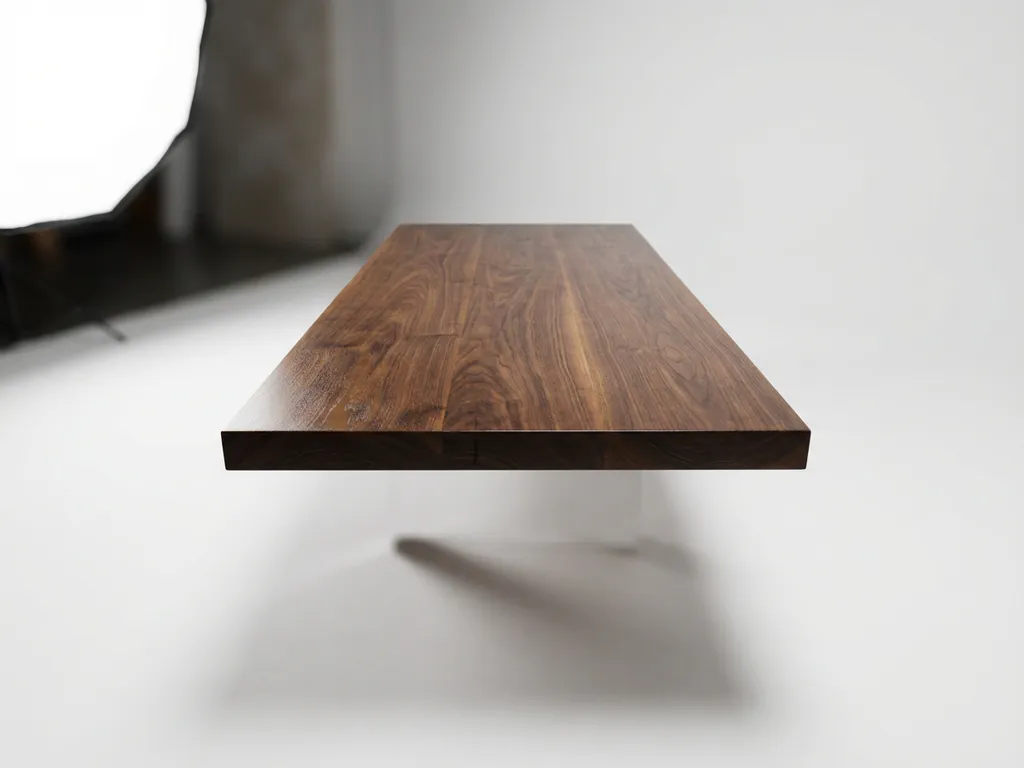
3D product rendering for e-commerce is the process of creating photorealistic digital images and interactive product experiences using computer graphics, replacing the need for traditional photography. In e-commerce, this technology enables businesses to showcase unlimited product variations, configurations, and customization options without physical prototypes. Interactive 3D models allow customers to rotate, zoom, and configure products in real time, creating engaging shopping experiences that increase conversion rates and reduce returns.
What exactly is 3D product rendering, and how does it work in online stores?
3D product rendering is the process of transforming digital 3D models into photorealistic images or interactive experiences displayed on e-commerce websites. The process begins with creating detailed 3D models of products, adding realistic materials, textures, and lighting, and then generating high-quality visuals that customers can interact with directly in their browsers. As a form of ecommerce CGI services, 3D rendering gives online retailers a scalable way to present every product variant with consistent, studio-quality visuals.
The technology works by building virtual representations of products with precise dimensions, materials, and surface properties. Advanced rendering engines calculate how light interacts with these virtual objects, producing images that are often indistinguishable from professional photographs. These rendered products can then be embedded into e-commerce platforms using web-based viewers that support rotation, zoom, and real-time configuration changes.
Modern 3D rendering integrates seamlessly with existing e-commerce platforms through APIs and embedded viewers. Customers can manipulate products using simple controls, change colors and materials instantly, and see exactly how their customizations will look before purchasing. This technology eliminates the need for extensive product photography while providing far more interactive possibilities than traditional static images.
Why are businesses switching from traditional photography to 3D rendering?
Businesses switch from traditional product photography to 3D rendering primarily to eliminate the cost, time, and logistical complexity of shooting every product variant. A single 3D model can generate unlimited color, material, and configuration variations digitally, making 3D rendering significantly more scalable and cost-efficient than photography for product ranges with multiple options.
Traditional product photography becomes expensive and logistically complex when businesses offer multiple product variants, colors, and configurations. 3D rendering eliminates these constraints by generating unlimited variations from a single 3D model, reducing costs and production time while maintaining consistent visual quality across all product options.
Photography requires physical samples, studio setups, lighting equipment, and professional photographers for every product variation. A furniture company offering a sofa in 20 colors and 5 fabric options would need 100 separate photo shoots. With 3D rendering, the same variety requires just one 3D model and digital material libraries.
Consistency presents another major advantage. Traditional photography often results in color variations due to different lighting conditions, camera settings, or studio environments. 3D rendering ensures every product image maintains identical lighting, angles, and quality standards. Additionally, products can be visualized before manufacturing, enabling marketing campaigns to launch simultaneously with product availability.
The scalability factor is particularly valuable for businesses expanding their product ranges. Adding new colors, materials, or design variations becomes a matter of updating digital assets rather than organizing new photo shoots. This agility allows companies to respond quickly to market trends and customer demands.
| Factor | Traditional Photography | 3D Product Rendering |
|---|---|---|
| Cost per variant | High, increases with each variant | Low marginal cost after initial model creation |
| Turnaround for new variants | Days to weeks per shoot | Hours with existing 3D assets |
| Consistency across variants | Variable, affected by lighting and equipment | Identical across all variants |
| Pre-production visualization | Physical sample required | Visualize before manufacturing |
| Customization options | Limited by available physical samples | Unlimited digital configurations |
| Scalability | Grows in cost with product range | Scales without additional per-variant cost |
What does 3D product rendering cost compared to traditional photography?
The investment in 3D product rendering varies based on project scope, including product complexity, the number of variants required, the level of photorealism, and the degree of platform integration. For businesses with straightforward product lines, the upfront cost of creating a 3D model is comparable to a professional photography session. However, the economics shift decisively in favor of 3D rendering as the product range grows. For businesses managing ten or more product variants, 3D rendering typically becomes more cost-effective than photography within the first product line, because a single model generates hundreds of variant images at near-zero marginal cost.
Traditional photography costs accumulate with every new color, material, or configuration added to a range. Every new variant requires a physical sample, a studio booking, and post-production time. With 3D rendering, those same additions are handled digitally, meaning the cost curve flattens significantly over time. For premium brands with complex, configurable product ranges, this long-term efficiency is one of the most compelling financial arguments for making the switch.
We work with premium brands and design-led manufacturers where quality and long-term scalability justify the investment. Rather than publishing fixed price lists, we prefer to assess each project individually, because the right solution depends on your specific product complexity, variant depth, and integration requirements. We invite you to discuss your situation in a consultation so we can give you an accurate picture of what the investment looks like for your business.
How does 3D product visualization increase online sales?
3D product visualization increases online sales by giving customers a comprehensive, interactive understanding of a product that static images cannot match. When shoppers can examine a product from every angle and see exactly how customizations look before purchasing, they make more confident decisions, resulting in higher conversion rates and fewer returns. Industry research consistently shows that shoppers who interact with a 3D model are significantly more likely to complete a purchase compared to those viewing static images, with published e-commerce conversion studies citing uplift figures of up to 40% for interactive product experiences.
The psychological impact of product interaction plays a crucial role in purchase decisions. Interactive 3D models create a sense of ownership and engagement that traditional product images lack. Customers spend more time exploring products they can manipulate, leading to stronger emotional connections and an increased likelihood of purchase.
Product customization capabilities directly address individual customer preferences, making products feel uniquely tailored rather than mass-produced. When customers can visualize their specific color, material, and configuration choices, they are more likely to complete purchases and feel satisfied with their decisions.
Return rates decrease when customers have realistic expectations about their purchases. 3D visualization shows products accurately from multiple angles, with correct proportions and material representations. This comprehensive preview reduces the gap between customer expectations and the actual product received, resulting in fewer disappointments and returns. Published benchmarks from the e-commerce industry indicate that realistic 3D and AR product experiences can reduce return rates by up to 35% compared to static imagery, a meaningful improvement for any business managing reverse logistics at scale.
What types of products work best with 3D rendering in e-commerce?
Products with multiple configuration options, customizable features, or complex designs benefit most from 3D rendering technology. Furniture, jewelry, automotive parts, fashion accessories, and home décor items are particularly well suited because customers need to understand their appearance, proportions, and customization possibilities before purchasing.
Furniture and home décor
Furniture is an ideal category for 3D rendering because customers need to visualize how pieces will look in their spaces. Sofas, chairs, and tables available in multiple colors, fabrics, and finishes become much easier to sell when customers can see every combination. The ability to show scale and proportions helps customers make confident decisions about fit and style.
Jewelry and luxury accessories
Jewelry and luxury accessories benefit from 3D rendering’s ability to showcase fine details, material properties, and craftsmanship that photographs often cannot capture adequately. Customers can examine engravings, stone settings, and metal finishes with a level of precision that builds confidence in high-value purchases.
Configurable and technical products
Configurable products like electronics, automotive parts, and industrial equipment work exceptionally well with 3D visualization. These products often have complex features, multiple components, or technical specifications that benefit from interactive exploration. Use cases across various industries demonstrate how interactive 3D models help customers understand product functionality and compatibility.
How do customers interact with 3D products on websites and mobile apps?
Customers interact with 3D products through intuitive controls for rotation, zooming, and real-time configuration changes. On desktop, users drag to rotate and scroll to zoom; on mobile, touch gestures such as swipe and pinch serve the same functions. Configuration panels let shoppers switch colors, materials, sizes, or features instantly, with the 3D viewer updating in real time.
The user interface typically includes 360-degree rotation controls, zoom functionality for examining fine details, and configuration panels for selecting options like colors, materials, sizes, or features. Modern 3D viewers respond immediately to user inputs, providing real-time visual feedback that keeps customers engaged throughout the product exploration process.
Mobile optimization requires special consideration for touch interactions and smaller screens. Successful mobile 3D experiences use larger touch targets, simplified control schemes, and optimized loading for various connection speeds. The interface adapts to portrait and landscape orientations while maintaining smooth performance across different devices and browsers.
Advanced interactions can include hotspots that reveal additional product information, side-by-side comparison tools for viewing multiple configurations, or augmented reality (AR) features that place products in real environments. These enhanced features add genuine value when they support the core product exploration experience without adding unnecessary complexity.
Augmented reality and advanced 3D visualization in e-commerce
Augmented reality for e-commerce bridges the gap between online browsing and the in-store experience by letting customers see a product in their own physical environment before they buy. Using a smartphone camera, a shopper can place a sofa in their living room, hold a lamp against their wall, or try a watch on their wrist, all without leaving the product page. This capability transforms the buying decision from an act of imagination into a direct, visual confirmation, which is especially powerful for furniture, home décor, and fashion accessories where fit and context matter most.
The conversion and confidence benefits of AR product experiences are well documented across e-commerce categories. When customers can see a product at true scale in their own space, purchase hesitation drops and confidence rises. For high-consideration categories like premium furniture and luxury accessories, this translates directly into higher conversion rates and meaningfully lower return rates, because the customer already knows the product works in their environment before the order is placed. Augmented reality for e-commerce is no longer a novelty feature; it is becoming an expected part of the premium shopping experience.
We deliver AR-ready 3D assets that can be activated directly from the product page, with no separate app required from the customer. Our 3D product visualization for e-commerce platform is built so that the same high-quality model powering the interactive viewer on your product page can also serve as the AR asset on mobile, giving you a single, consistent visual experience across every touchpoint. If AR integration is a priority for your brand, we are happy to walk you through what that looks like in practice during a consultation.
Frequently asked questions about 3D product rendering for e-commerce
What is 3D product rendering for e-commerce and how does it differ from photography?
3D product rendering for e-commerce is the process of generating photorealistic product images and interactive experiences entirely through computer graphics, without a physical photo shoot. Unlike traditional photography, which requires physical samples, studio setups, and a separate shoot for every variant, a single 3D model can produce unlimited images across any combination of colors, materials, and configurations. The result is visually equivalent to professional photography, but far more scalable and flexible for businesses managing large or complex product ranges.
How long does a 3D rendering project typically take?
Project timelines vary depending on product complexity, the number of variants required, and the level of integration needed. A straightforward product with a small number of configurations can typically be modeled, rendered, and delivered within a few weeks. More complex projects involving detailed geometry, extensive variant libraries, or full platform integration naturally require additional time. We scope timelines precisely during the initial project consultation so you have a clear picture from the outset.
What files or materials do I need to provide to get started?
We work with whatever input materials you have available. Clients can supply technical drawings, CAD files, product photographs, physical samples, or even detailed sketches. The more precise the reference material, the faster and more accurate the modeling process. If you are unsure what you have available, our team will guide you through what is needed during the discovery phase.
Which e-commerce platforms does 3D rendering integrate with?
Our 3D product visualization for e-commerce integrates with all major platforms, including Shopify, Magento, WooCommerce, and custom-built storefronts, via a lightweight embedded viewer or API. The integration is designed to be straightforward for your development team and does not require a platform rebuild. We handle the technical side of the integration as part of our onboarding process.
What types of products benefit most from 3D visualization?
Products with multiple configuration options, complex designs, or high visual expectations benefit most. Furniture, jewelry, luxury accessories, fashion items, home décor, automotive parts, and configurable technical products are among the strongest use cases. Essentially, any product where customers need to see variants, understand proportions, or examine fine detail before buying is a strong candidate for ecommerce CGI services.
Can 3D renders be used for augmented reality experiences?
Yes. The 3D assets we produce are built to be AR-ready from the start, meaning the same model that powers the interactive viewer on your product page can also deliver an AR experience on mobile without requiring a separate app from your customer. This makes augmented reality for e-commerce a natural extension of the 3D rendering investment rather than a separate project.
How 3Dimerce helps with 3D product rendering for e-commerce
For premium brands and design-led manufacturers, we deliver 3D product rendering for e-commerce that combines museum-quality photorealism with the speed and scalability that modern commerce demands. Our platform is built exclusively for the higher segment of the market, where visual excellence is non-negotiable and every detail of a product’s digital representation must reflect the brand’s standards. We provide end-to-end capabilities through our specialized solutions, from initial 3D modeling through to live configurator deployment on your storefront.
Our platform offers:
- Photorealistic 3D rendering that meets the highest premium brand standards, delivering stunning, true-to-life visuals at exceptional speed
- Real-time product configuration with instant visual updates across all customization options, including colors, materials, and finishes
- Seamless integration with existing e-commerce platforms and in-store sales environments through APIs and embedded viewers
- Mobile-optimized experiences that perform flawlessly across all devices and browsers, including touch-based interactions
- Scalable architecture that grows with your product range without additional per-variant costs
- Dedicated quality review and revision rounds, overseen by our senior CGI team, to ensure every render meets your brand standards before going live
Platform integration and technical requirements
We integrate with leading e-commerce platforms including Shopify, Magento, WooCommerce, and custom-built storefronts via a lightweight embedded viewer or API, making 3D product visualization for e-commerce accessible regardless of your existing technology stack. Clients can provide product input in any format they have available, including technical drawings, CAD files, product photographs, or physical samples, and our team handles the rest. All 3D assets we deliver are optimized for web performance, ensuring fast loading without compromising the visual quality your brand demands.
We have delivered photorealistic 3D product experiences for leading brands in furniture, jewelry, and luxury accessories across Europe and North America, helping them reduce photography costs while elevating their digital brand presence. Our work spans premium furniture houses, high-end jewelry manufacturers, and design-led fashion accessory brands, all of whom came to us because consistent, scalable visual quality was a strategic priority rather than an afterthought.
With over 20 years of experience in CGI and product visualization, we understand the unique requirements of design-led brands seeking to maintain their premium positioning in digital environments. Our technology and expertise delivers the visual excellence and performance that sophisticated customers expect while streamlining your content production workflow.
How we work: from brief to live 3D experience
We follow a clear, structured process designed to take your project from initial concept to a fully live 3D product experience on your storefront, with no guesswork at any stage. Every project is managed by our senior CGI team, and each step is designed to protect your brand standards while keeping the process efficient and transparent.
- Discovery call and project scoping. We begin with a dedicated consultation to understand your brand standards, product complexity, variant requirements, and integration goals. This call shapes the entire project brief and ensures we are aligned before a single model is built.
- Asset collection and 3D modeling. Clients can provide technical drawings, CAD files, product photographs, physical samples, or detailed sketches. Our modeling team builds precise, production-ready 3D assets from whatever reference materials you have available.
- Rendering and configuration setup. We produce photorealistic output using advanced rendering techniques, then configure the real-time viewer to support all required color, material, and finish combinations. The result is a fully interactive 3D product rendering for e-commerce that reflects your product range exactly.
- Review and revision rounds. Revision rounds are included in every project. Our senior CGI team oversees each review cycle to ensure the renders meet your premium brand standards before anything goes live. We do not sign off until you do.
- Platform integration and go-live. We handle the technical integration of the 3D viewer into your storefront via API or embedded viewer, compatible with Shopify, Magento, WooCommerce, and custom platforms. Once live, your customers can interact with your products immediately, on any device.
Visual Commerce Solutions
Talk to our team about your project.
Ready to transform your product visualization strategy? Contact us to discover how our 3D product rendering platform can enhance your e-commerce experience and drive better customer engagement.