
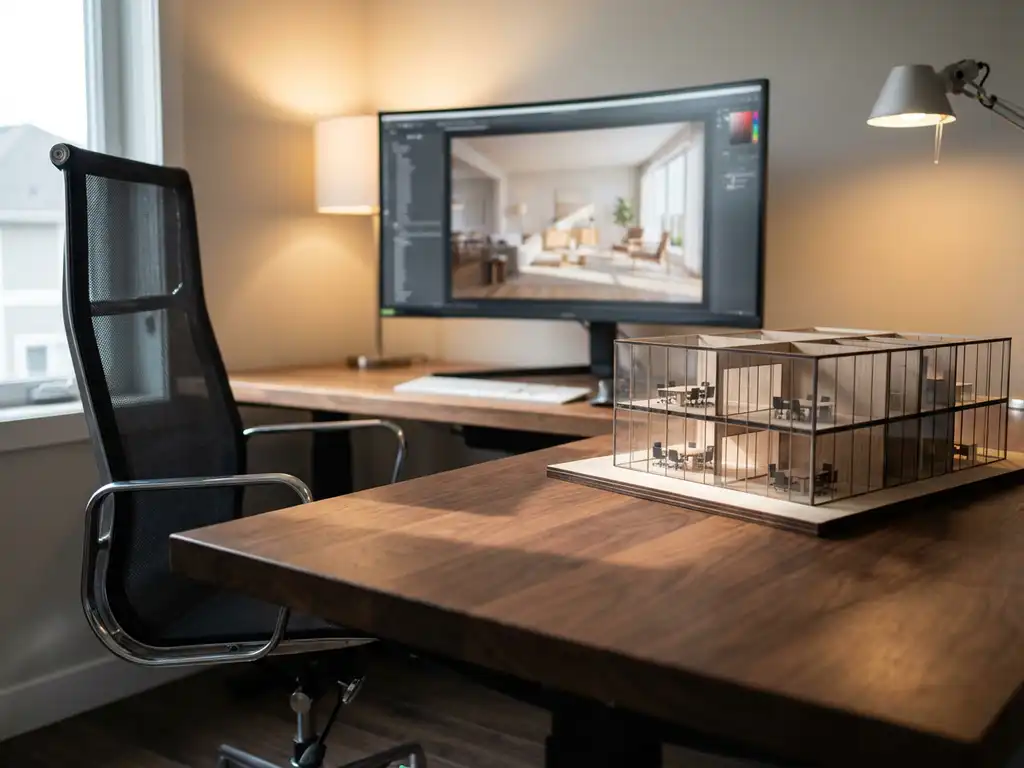
The main difference between 3D rendering and digital twins lies in their purpose and functionality. 3D rendering creates static, photorealistic images or animations from digital models, primarily for visual marketing and product presentation. Digital twins are dynamic, data-driven replicas of physical objects or systems that update in real time using sensor data and IoT connectivity. While 3D rendering focuses on stunning visual output, digital twins emphasise continuous monitoring, analysis, and optimisation of real-world performance.
What exactly is 3D rendering, and how does it work?
3D rendering is the process of converting three-dimensional digital models into two-dimensional images or animations using specialised software and algorithms. The technology creates photorealistic visuals by calculating how light interacts with surfaces, materials, and environments within the digital scene.
The rendering process begins with 3D modelling, where artists create digital representations of objects using geometric shapes, vertices, and polygons. These models receive detailed textures, materials, and surface properties that define how they reflect light and appear to the camera. Lighting setup follows, positioning virtual light sources to create realistic shadows, reflections, and atmospheric effects.
Modern 3D product rendering utilises advanced algorithms such as ray tracing and global illumination to simulate realistic light behaviour. The rendering engine calculates millions of light rays bouncing between surfaces, creating accurate reflections, refractions, and colour bleeding that mirror real-world physics.
Common applications include product visualisation for e-commerce, architectural presentations, film and television production, and marketing materials. The workflow typically involves concept development, 3D modelling, texturing, lighting setup, camera positioning, and final rendering output in various formats suitable for different platforms and use cases.
What are digital twins, and why are they revolutionising industries?
Digital twins are real-time digital replicas of physical objects, processes, or systems that mirror their real-world counterparts through continuous data exchange. These virtual models update constantly using sensor data, IoT devices, and machine learning algorithms to reflect current conditions and performance metrics.
The technology connects physical assets to their digital representations through networks of sensors that monitor temperature, pressure, vibration, location, and countless other parameters. This data streams continuously to cloud-based platforms, where advanced analytics process the information and update the digital twin in real time.
Digital twins revolutionise industries by enabling predictive maintenance, performance optimisation, and scenario testing without disrupting actual operations. Manufacturing companies use them to monitor production lines, predict equipment failures, and optimise processes before implementing changes in the physical world.
In retail and product development, digital twins track customer interactions, inventory levels, and supply chain performance. They enable businesses to test new configurations, predict demand patterns, and optimise operations based on real-world data rather than assumptions. The technology transforms decision-making from reactive to proactive, reducing costs while improving efficiency and customer satisfaction.
What’s the fundamental difference between 3D rendering and digital twins?
The core distinction lies in their relationship with real-world data and functionality. 3D rendering produces static visual content for presentation purposes, while digital twins create dynamic, data-integrated systems for monitoring and optimisation.
3D rendering focuses on visual excellence, creating stunning images and animations that showcase products or concepts. The output remains fixed once rendered, serving marketing, design communication, and customer engagement needs. Changes require manual updates to models, materials, or lighting setups.
Digital twins emphasise continuous data integration and real-time updates. They connect to physical sensors and systems, automatically reflecting current conditions and enabling predictive analysis. Their primary purpose is to monitor performance, optimise operations, and test scenarios rather than create marketing visuals.
Creation approaches differ significantly. 3D rendering projects typically follow a linear workflow from concept to final output. Digital twins require ongoing development, sensor integration, data processing capabilities, and continuous maintenance to remain accurate and useful.
Cost structures also vary considerably. 3D rendering involves upfront creation costs with minimal ongoing expenses. Digital twins require substantial initial investment, plus continuous operational costs for data processing, sensor maintenance, and system updates.
When should businesses choose 3D rendering versus digital twin technology?
Choose 3D rendering when your primary goal is visual marketing, product presentation, or customer engagement through stunning imagery. This technology suits businesses that need high-quality visuals for e-commerce, marketing campaigns, or design communication without requiring real-time data integration.
3D rendering works best for companies selling configurable products, luxury goods, or complex items that benefit from detailed visualisation. Budget considerations favour rendering when you need immediate visual impact without ongoing operational costs. The technology provides an excellent return on investment for businesses replacing expensive photography or physical prototyping.
Digital twins suit businesses that require continuous monitoring, predictive maintenance, or performance optimisation of physical assets. Manufacturing companies, logistics operations, and service providers benefit most from real-time data integration and predictive analytics capabilities.
Consider digital twins when your business model depends on operational efficiency, predictive maintenance, or data-driven decision-making. The technology justifies the investment when downtime costs are high, maintenance schedules are complex, or performance optimisation directly impacts profitability.
Budget requirements differ substantially. 3D rendering requires moderate upfront investment with minimal ongoing costs. Digital twins demand significant initial investment, plus continuous operational expenses, making them suitable for larger operations where efficiency gains justify the investment.
How can combining 3D rendering and digital twins enhance product experiences?
Combining both technologies creates comprehensive product experiences that deliver stunning visuals alongside real-time functionality and data integration. This hybrid approach enables businesses to showcase products beautifully while providing interactive, data-driven customer experiences.
The integration allows customers to visualise product configurations using high-quality 3D rendering while accessing real-time information about availability, pricing, and customisation options through digital twin data feeds. Interactive configurators can display photorealistic visuals instantly while connecting to inventory systems and production schedules.
Retail environments benefit from this combination through virtual showrooms that display products using stunning 3D visuals while providing real-time information about stock levels, delivery times, and personalisation options. Customers can explore products visually while making informed decisions based on current data.
The approach enables predictive customisation, where digital twins analyse customer preferences and usage patterns to suggest optimal configurations, while 3D rendering presents these recommendations through compelling visual presentations. This creates personalised experiences that combine emotional appeal with practical functionality.
Implementation involves connecting visual configuration tools with data management systems, ensuring seamless information flow between customer-facing interfaces and backend operations. The result delivers immediate visual satisfaction while providing accurate, up-to-date information that supports confident purchasing decisions.
How 3dimerce helps with 3D rendering and product visualisation
We specialise in creating sophisticated visual product experience platforms that combine advanced 3D rendering capabilities with interactive configuration technology. Our solution transforms how businesses present and sell configurable products through stunning, photorealistic visuals delivered at blazing speed.
Our comprehensive platform offers:
- High-quality 3D product rendering with photorealistic materials, lighting, and reflections
- Interactive product configurators for seamless customisation experiences
- Omnichannel integration supporting both online and retail environments
- Configure, Price, Quote (CPQ) functionality that streamlines sales processes
- Virtual showroom capabilities that reduce dependence on physical samples
- Scalable solutions that grow with your product range without proportional cost increases
With over 20 years of experience serving European manufacturers and retailers, we understand the unique challenges of presenting complex, configurable products across multiple channels. Our technology delivers visual quality that matches premium brand positioning while providing the flexibility and integration capabilities modern businesses require.
Ready to transform your product visualisation and customer experience? Contact us to discuss how our visual product experience platform can enhance your business operations and customer engagement.