
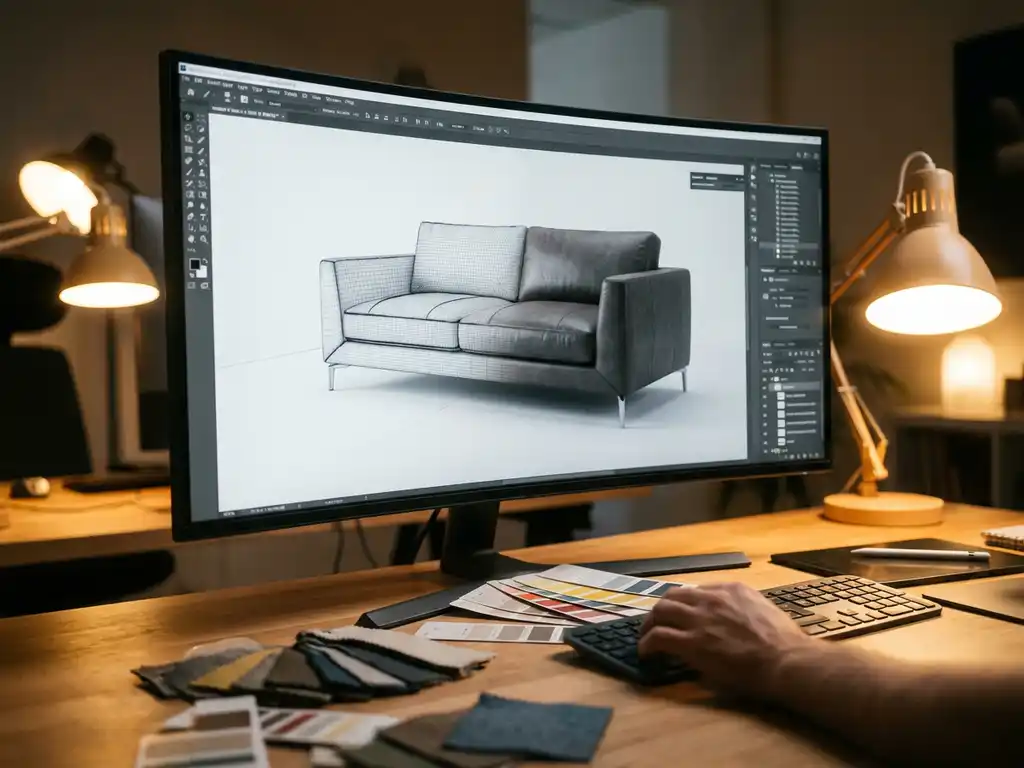
The future of 3D product rendering in 2026 will be defined by artificial intelligence, real-time visualisation, and widespread adoption across industries. Businesses will transition from traditional photography to intelligent rendering systems that create photorealistic product imagery instantly. This transformation will revolutionise e-commerce experiences, streamline manufacturing processes, and enable personalised customer interactions at an unprecedented scale.
What is 3D product rendering, and why will it dominate by 2026?
3D product rendering creates photorealistic digital images from three-dimensional models using computer graphics technology. By 2026, this technology will dominate because it eliminates photography costs, enables infinite product variations, and provides consistent quality across all marketing channels.
Traditional product photography requires physical samples, studio setups, and extensive post-production work. Each product variant needs a separate shoot, making customisation expensive and time-consuming. 3D rendering solves these challenges by generating unlimited variations from a single digital model.
The driving forces behind this transformation include rising e-commerce demand, increased expectations for product customisation, and the need for omnichannel consistency. Manufacturers struggle to photograph every possible configuration, whilst customers expect to see products exactly as they’ll receive them. Digital rendering bridges this gap perfectly.
Market adoption will accelerate as rendering quality reaches photographic standards whilst costs decrease dramatically. Companies that embrace this technology gain competitive advantages through faster time-to-market, reduced inventory requirements, and enhanced customer experiences.
How will AI and machine learning transform 3D rendering workflows?
AI and machine learning will automate texture generation, lighting optimisation, and scene composition by 2026. These technologies will reduce rendering time from hours to minutes whilst maintaining photorealistic quality through intelligent algorithms.
Automated texture generation represents the biggest breakthrough. AI systems will create realistic materials, fabrics, and surface details from simple parameters or reference images. This eliminates manual texture work that currently requires specialist skills and significant time investment.
Intelligent lighting systems will automatically adjust illumination based on product characteristics and intended use. Machine learning algorithms will analyse successful renders to optimise lighting setups, ensuring consistent quality without manual intervention.
Content creation workflows will become increasingly streamlined. AI will suggest optimal camera angles, automatically remove backgrounds, and generate multiple variations simultaneously. This democratises high-quality rendering, making it accessible to businesses without technical expertise.
Visual Commerce Solutions
Talk to our team about your project.
What new technologies will shape real-time 3D product visualisation?
Ray tracing, cloud rendering, and WebGL advancements will enable instant photorealistic visualisation across all devices by 2026. These technologies eliminate loading times whilst delivering cinema-quality graphics through web browsers without requiring software downloads.
Real-time ray tracing produces accurate reflections, shadows, and lighting instantly. Graphics processing units now support this technology at consumer level, making photorealistic rendering accessible for interactive applications. Users can rotate, customise, and examine products with immediate visual feedback.
Cloud rendering distributes processing power across remote servers, enabling complex visualisations on basic devices. Smartphones and tablets can display high-quality 3D content by streaming rendered frames rather than processing them locally.
WebGL improvements allow sophisticated 3D experiences within web browsers. Progressive loading techniques display basic models immediately whilst adding detail progressively. This approach ensures smooth performance regardless of internet connection speed or device capabilities.
How will 3D rendering impact e-commerce and retail experiences?
Advanced 3D rendering will create immersive shopping experiences that bridge digital and physical retail by 2026. Interactive product configurators will enable real-time customisation with instant visual feedback, reducing return rates and increasing customer satisfaction.
Virtual try-ons will extend beyond fashion to furniture, electronics, and industrial products. Customers will place items in their actual spaces using augmented reality, seeing exactly how products fit and look before purchasing. This capability transforms online shopping from imagination-based to experience-based.
Product configurators will handle complex customisation scenarios effortlessly. Customers can modify colours, materials, dimensions, and features whilst seeing immediate visual updates. This interactivity increases engagement and helps customers make confident purchasing decisions.
Retail environments will integrate digital and physical experiences seamlessly. In-store displays will offer unlimited product variations through interactive screens, whilst online platforms provide tactile, high-fidelity visualisation. This consistency strengthens brand perception and customer trust across all touchpoints.
What challenges will businesses face when adopting advanced 3D rendering?
Implementation barriers include technical complexity, upfront investment costs, and the skills required to create high-quality 3D models. However, cloud-based solutions and improved user interfaces will significantly reduce these obstacles by 2026.
Technical integration challenges arise when connecting rendering systems with existing e-commerce platforms, inventory management systems, and customer databases. Legacy systems may require updates or replacements to support real-time 3D functionality effectively.
Cost considerations extend beyond software licensing to include model creation, system integration, and staff training. However, long-term savings from eliminating photography costs and reducing return rates typically justify the initial investment within 12–18 months.
Skill requirements present temporary challenges as teams learn new workflows and technologies. Training programmes and intuitive interfaces will address these concerns. Many successful implementations demonstrate that non-technical staff can master modern rendering tools quickly.
How 3Dimerce helps with advanced 3D product visualisation
We provide a comprehensive SaaS platform that addresses all future 3D rendering needs through our advanced visual product experience technology. Our solution combines high-quality rendering, intelligent configurators, and seamless integration capabilities designed specifically for premium brands and manufacturers.
Our platform delivers:
- Photorealistic rendering that matches premium product quality expectations
- Real-time configuration with instant visual feedback across all devices
- Seamless integration with existing e-commerce and retail systems
- Scalable solutions that grow with your product range without additional costs per variant
- Complete implementation support, from 3D model creation to system deployment
With over 20 years of experience in virtual art and CGI, we understand both the technical requirements and the business challenges of advanced product visualisation. Our expertise and experience in the European market ensures we deliver solutions that meet local quality standards and customer expectations.
Ready to transform your product visualisation strategy for 2026? Contact us to discuss how our advanced 3D rendering platform can enhance your customer experience and streamline your sales processes.