
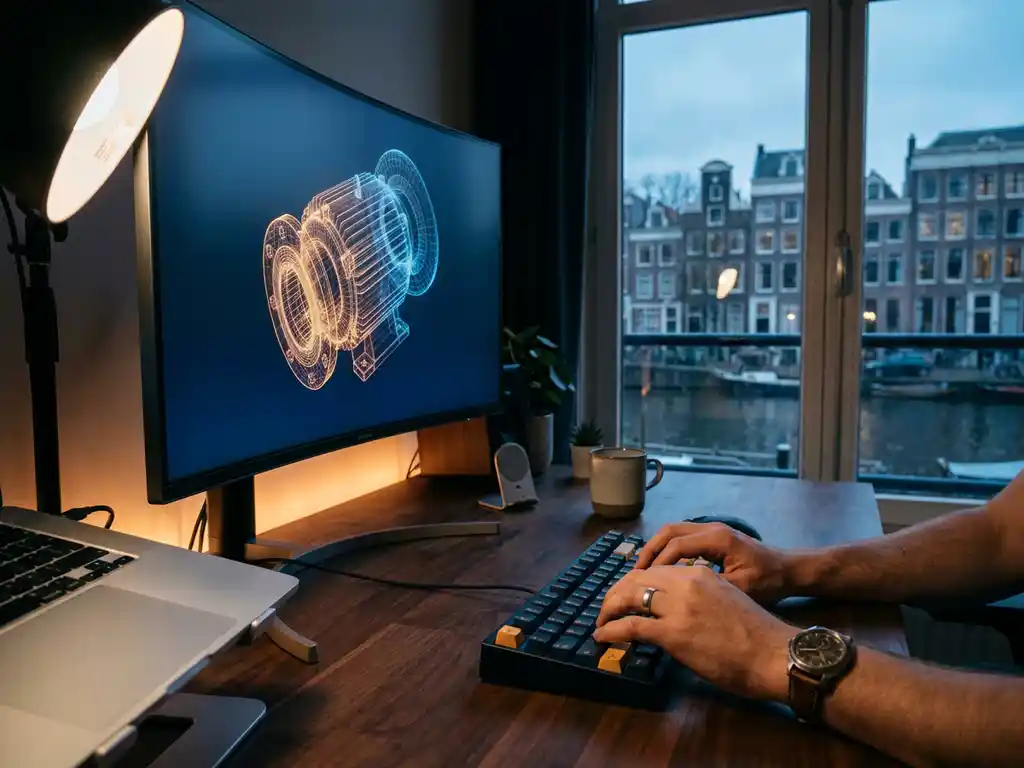
A computer engineer is essential for 3D product development because they handle the technical architecture that makes high-quality product visualization work in practice. While 3D artists create the visual content, engineers build the systems that deliver it, including rendering pipelines, real-time configuration logic, and performance optimization. Together, these roles form the foundation of any serious product configurator built for today’s market.
What does a computer engineer actually do in 3D product development?
A computer engineer in 3D product development is responsible for the technical infrastructure that makes interactive product experiences possible. They build the logic behind configuration systems, manage data pipelines, optimize rendering performance, and ensure the software runs reliably across devices and platforms. Without this engineering layer, even the most beautiful 3D assets cannot function as a usable product experience.
In practice, a computer engineer working on 3D product development will typically handle tasks such as:
- Building real-time rendering engines or integrating existing ones
- Developing configuration logic that links user choices to visual output
- Managing asset pipelines so 3D models load quickly and correctly
- Integrating the configurator with external systems such as pricing engines, inventory tools, and e-commerce platforms
- Ensuring performance across desktop, mobile, and in-store touchscreen environments
The engineer’s role is less about what the product looks like and more about how reliably and quickly it behaves. In high-end product categories, where customers expect both stunning visuals and instant responsiveness, this technical precision is not optional.
How does engineering expertise improve 3D product configurator performance?
Engineering expertise improves 3D product configurator performance by optimizing how assets are loaded, rendered, and updated in real time. A well-engineered configurator responds instantly to user input, handles complex product combinations without lag, and maintains visual quality across varying network conditions and device capabilities. Poor engineering produces slow, glitchy experiences that erode buyer confidence.
Visual Commerce Solutions
Talk to our team about your project.
Performance in a 3D configurator is not just about speed. It also includes visual fidelity under different lighting conditions, accurate material rendering, and the ability to handle a large number of configuration options without degrading the experience. Engineers achieve this through techniques such as level-of-detail management, texture compression, progressive loading, and GPU-accelerated rendering.
For luxury and design-led brands, where the visual experience directly reflects brand quality, performance gaps are especially damaging. A configurator that stutters or renders materials inaccurately sends the wrong signal at a critical moment in the buying journey.
What technical challenges arise when building a 3D product configurator?
Building a 3D product configurator involves significant technical challenges, including managing combinatorial complexity, maintaining visual consistency across configurations, optimizing file sizes for fast loading, and integrating with backend systems like pricing and inventory. Each of these challenges requires deliberate engineering decisions, not just design choices.
Some of the most common technical hurdles include:
- Combinatorial explosion: Products with many configurable options can generate thousands of possible combinations, each of which must render correctly and consistently
- Material and lighting accuracy: Realistic textures, shadows, and reflections need to behave correctly regardless of which configuration the user selects
- Cross-device compatibility: A configurator must perform well on a high-end desktop, a mid-range smartphone, and a retail touchscreen simultaneously
- Integration complexity: Connecting the visual layer to pricing logic, stock availability, and order management systems requires careful API design and data modeling
- Asset management at scale: As product ranges grow, managing, updating, and versioning 3D assets becomes a significant engineering challenge in itself
These are not problems that resolve themselves through better design. They require dedicated engineering effort from the earliest stages of development.
What’s the difference between a 3D artist and a computer engineer in product visualization?
A 3D artist creates the visual content, including models, textures, lighting setups, and renders, while a computer engineer builds the systems that deliver and interact with that content in real time. The artist defines how a product looks; the engineer determines how it behaves, performs, and integrates with other software. Both roles are necessary, and neither can replace the other.
In product visualization, the 3D artist’s work typically includes modeling product geometry, applying photorealistic materials, setting up lighting environments, and producing final renders or animations. This work demands a strong eye for detail, knowledge of rendering software, and an understanding of how light and material interact.
The computer engineer’s contribution is different in nature. They write the code that allows a user to select a configuration option and see the result instantly. They build the logic that prevents invalid combinations from being selected. They ensure the whole system runs without crashing under load. These are fundamentally different skill sets, and in serious product visualization projects, treating them as interchangeable leads to failure on one front or the other.
When should a brand bring a computer engineer into the 3D development process?
A brand should bring a computer engineer into the 3D development process as early as possible, ideally at the planning stage before any assets are created. Early engineering involvement ensures that 3D models are built to the correct technical specifications, that the configuration architecture is designed before it becomes expensive to change, and that integration requirements are scoped correctly from the start.
Bringing in engineering expertise late in the process is one of the most common and costly mistakes in 3D product development. Assets built without engineering input often need to be rebuilt or significantly optimized. Configuration logic added as an afterthought tends to be brittle and hard to scale. Integration work that was not planned early frequently causes delays and budget overruns.
For brands launching a new product line, entering a new sales channel, or upgrading an existing configurator, the right time to involve a computer engineer is before the first design decision is made, not after the first prototype is built.
How does a SaaS 3D configurator platform reduce the need for in-house engineering?
A SaaS 3D configurator platform reduces the need for in-house engineering by providing pre-built technical infrastructure, including rendering engines, configuration logic, asset management tools, and integration frameworks, as a managed service. Brands access this capability through a subscription rather than building and maintaining it themselves, which significantly lowers both the cost and the technical complexity of launching a high-quality product configurator.
Instead of hiring a team of engineers to build rendering pipelines, develop configuration systems, and maintain cross-device compatibility, a brand using a SaaS platform benefits from years of engineering work that has already been tested, optimized, and refined. Updates, performance improvements, and new features are delivered by the platform provider without requiring internal development resources.
This model is particularly valuable for design-led and luxury brands that want world-class visual experiences without building a software development capability in-house. The engineering complexity remains real; it simply shifts to a provider whose core competency is exactly that.
How 3Dimerce helps with 3D product development
We built our platform specifically for brands that need both stunning visual quality and serious technical performance, without assembling an in-house engineering team to get there. Our SaaS solution handles the full technical stack behind 3D product configuration, so brands can focus on the product experience rather than the infrastructure underneath it. Here is what we provide:
- Real-time 3D product configurators with photorealistic materials, accurate lighting, and instant response to user input
- CGI and virtual photo studio capabilities that eliminate the cost and logistics of traditional product photography
- Headless integration that connects cleanly with existing e-commerce platforms, CPQ tools, and point-of-sale systems
- Omnichannel performance across desktop, mobile, and in-store retail environments
- A managed platform that handles rendering optimization, asset management, and platform updates as part of the service
If you are a brand, manufacturer, or retailer in the design or luxury segment and want to explore what a professionally engineered 3D configurator can do for your product experience, get in touch with us to see the platform in action.