
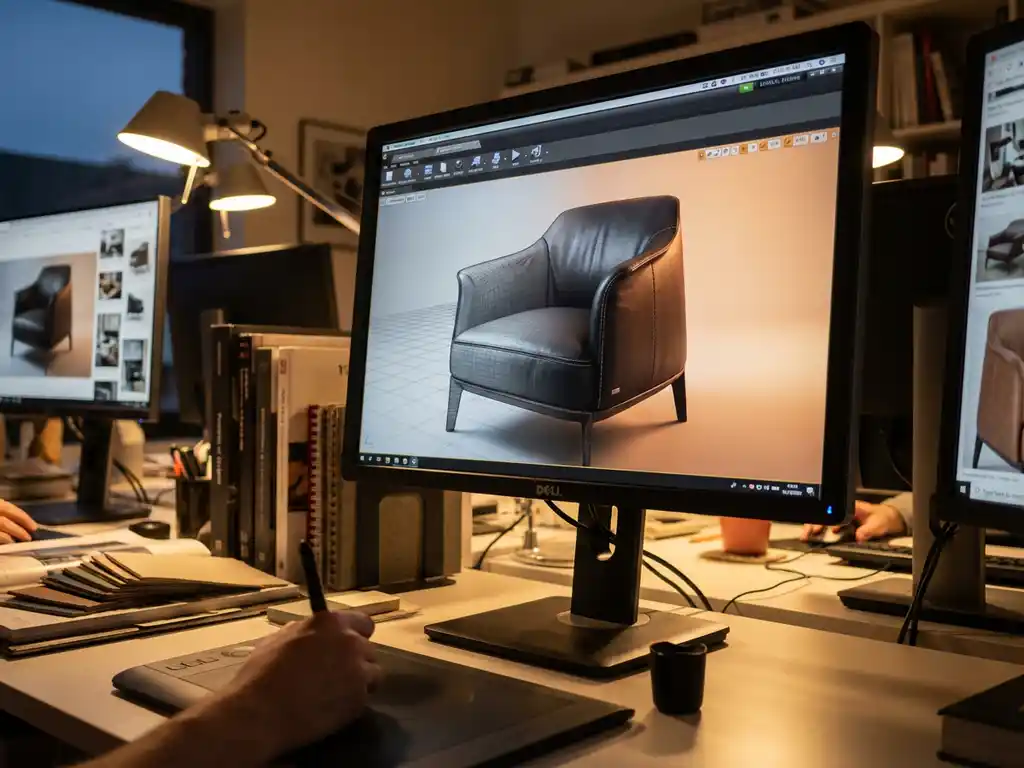
3D product rendering best practices combine technical excellence with strategic implementation to create photorealistic visuals that drive sales. Professional rendering requires specific quality standards, optimised workflows, and consistent execution across all platforms. These practices ensure your product visualisations enhance rather than hinder customer purchasing decisions while maintaining brand integrity throughout the customer journey.
What are the essential quality standards for professional 3D product rendering?
Professional 3D product rendering requires a minimum 4K resolution for print materials and 2K for web applications, with accurate colour profiles and precise material representation. Quality standards include proper lighting ratios, accurate shadows, and texture detail that matches real-world product characteristics.
Resolution requirements vary significantly based on intended use. Web displays typically require 1920×1080 pixels for desktop viewing and responsive scaling for mobile devices. Print materials demand much higher resolutions, often 300 DPI or greater, particularly for catalogues and marketing materials where customers examine fine details.
Colour accuracy is critical for maintaining brand consistency. Professional renders use calibrated colour spaces such as sRGB for web applications and CMYK for print materials. This ensures product colours appear consistent across different platforms and match physical products when customers receive them.
Texture detail levels must reflect actual product surfaces without exaggeration. Professional renders accurately capture material properties, including surface roughness, reflectivity, and transparency. This attention to detail prevents customer disappointment when physical products arrive, reducing return rates and maintaining trust.
How do you optimise 3D renders for different platforms and devices?
3D render optimisation requires format-specific compression and responsive sizing strategies. Web platforms need fast-loading JPEG or WebP formats, while AR applications require lightweight 3D models with optimised polygon counts and texture maps.
File format selection affects both quality and performance. Web applications benefit from progressive JPEG loading or WebP formats that maintain visual quality while reducing file sizes. Mobile applications require even more aggressive compression to ensure quick loading over cellular networks without sacrificing essential product details.
Loading optimisation involves creating multiple resolution versions of each render. This allows websites to serve appropriate image sizes based on device capabilities and connection speeds. Progressive enhancement ensures all users receive functional product images while providing enhanced experiences for those with better devices.
AR and VR applications present unique challenges that require specialised rendering approaches with real-time performance considerations. These platforms need simplified geometry and optimised textures that maintain visual appeal while running smoothly on mobile processors.
What lighting techniques create the most realistic product renders?
Realistic product rendering relies on three-point lighting setups with key, fill, and rim lights that simulate professional photography studios. Environmental lighting adds authenticity through subtle reflections and ambient illumination that grounds products in believable spaces.
Studio lighting simulation creates controlled environments that highlight product features effectively. Key lights provide primary illumination, fill lights soften harsh shadows, and rim lights separate products from backgrounds. This combination ensures products appear dimensional and appealing without harsh contrasts that obscure details.
Natural lighting effects add realism through environmental reflections and colour temperature variations. Products rendered in daylight conditions require different lighting approaches than those in interior settings. Matching lighting to intended use contexts helps customers visualise products in their own environments.
Material-specific lighting considerations ensure different surfaces respond appropriately to illumination. Metallic materials require precise reflection mapping, while fabric textures benefit from subsurface scattering. Glass and transparent materials demand careful refraction and transparency calculations to appear convincing.
How do you maintain visual consistency across product variants and configurations?
Visual consistency requires standardised rendering templates with predetermined lighting setups, camera angles, and environmental settings. Automated rendering workflows ensure all product variants maintain identical presentation standards while accommodating individual product characteristics.
Template systems establish consistent camera positions, lighting configurations, and background treatments across entire product ranges. This standardisation ensures customers experience cohesive brand presentation regardless of which products they view or configure. Consistent presentation builds trust and professionalism.
Colour management systems maintain accurate representation across all product variants. This includes establishing standard material libraries with consistent reflectance values and colour profiles. Automated colour matching ensures variants appear correctly relative to each other and to physical products.
Quality control processes verify that automated renders meet established standards before publication. This includes checking for lighting inconsistencies, material errors, and geometric problems that could undermine professional presentation. Regular audits ensure standards remain consistent as product ranges expand.
What are the most common 3D rendering mistakes that hurt sales conversions?
Common rendering mistakes include unrealistic lighting, oversaturated colours, and insufficient detail levels that create customer expectations that do not match the actual products. These errors reduce trust and increase return rates while damaging brand perception.
Poor lighting is the most frequent issue, often appearing as harsh shadows, unrealistic reflections, or inconsistent illumination across product surfaces. Customers rely on visual cues from lighting to understand product dimensions, materials, and quality. Incorrect lighting undermines these essential purchase-decision factors.
Colour accuracy problems create significant conversion barriers when rendered products appear different from physical items. Oversaturated colours or incorrect colour temperature settings lead to customer disappointment and returns. Professional implementation prevents these costly mistakes through proper colour management.
Inadequate detail levels fail to provide sufficient product information for confident purchasing decisions. Customers need to see texture details, surface finishes, and construction quality in renders. Insufficient detail creates uncertainty that often results in abandoned purchases rather than conversions.
How does 3dimerce help businesses implement professional 3D product rendering?
We provide a comprehensive visual product experience platform that automates professional 3D rendering while maintaining consistently high quality standards. Our team of experts ensures seamless integration with existing e-commerce systems and supports both online and in-store product configuration experiences.
Our platform delivers several key advantages for professional 3D product rendering:
- Automated quality assurance ensuring consistent lighting, colour accuracy, and detail levels across all renders
- Multi-platform optimisation with automatic format conversion and compression for web, mobile, and AR applications
- Brand consistency tools maintaining visual standards across entire product catalogues and configurations
- Real-time rendering capabilities enabling instant visualisation of product customisations and variants
- Seamless integration with existing e-commerce platforms and point-of-sale systems
Our solution eliminates common rendering mistakes through built-in quality controls and professional-grade lighting systems. This ensures your product visualisations enhance rather than hinder sales conversions while reducing the technical complexity of maintaining high-quality 3D content.
Ready to transform your product visualisation with professional 3D rendering? Contact our team to discuss how our platform can elevate your product presentation and drive sales growth through stunning, consistent visuals.