
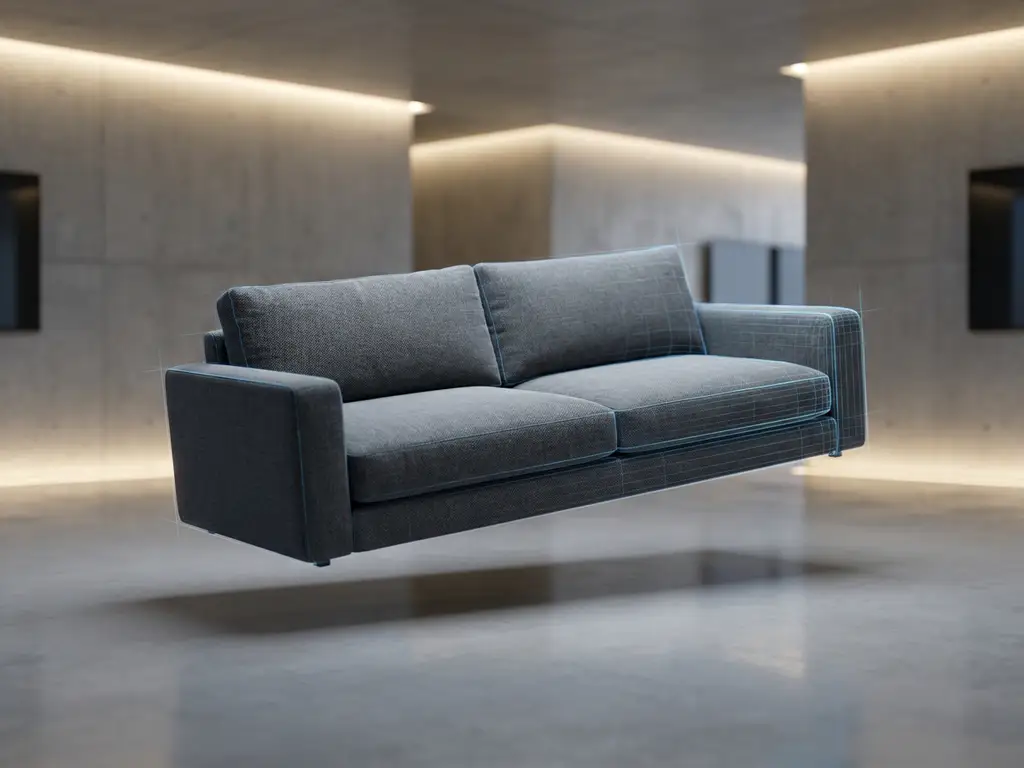
Virtual showrooms and 3D product rendering work together to create immersive digital shopping experiences that go beyond traditional online stores. Virtual showrooms provide interactive 3D environments where customers can explore products, while 3D product rendering creates photorealistic visuals that make these digital spaces feel authentic. This powerful combination transforms how businesses showcase products and how customers experience them online.
What exactly is a virtual showroom, and how does it differ from traditional online stores?
A virtual showroom is an interactive 3D environment that mimics a physical retail space, allowing customers to browse and explore products in a realistic digital setting. Unlike traditional online stores that display static product images on flat web pages, virtual showrooms create immersive experiences where visitors can walk through spaces, examine products from every angle, and interact with items in real time.
The key differences lie in user engagement and product presentation. Traditional e-commerce sites rely on photographs and product descriptions, limiting customers to predetermined views and information. Virtual showrooms offer 360-degree product exploration, realistic lighting conditions, and the ability to see how products look in context with other items or environments.
These digital spaces also provide spatial awareness that flat websites cannot match. Customers can understand product scale, see how furniture fits in room settings, or observe how different materials and finishes work together. This contextual understanding significantly reduces uncertainty and helps customers make more confident purchasing decisions.
How does 3D product rendering create realistic virtual showroom experiences?
3D product rendering generates photorealistic digital representations of products using advanced computer graphics technology. The process involves creating detailed 3D models with accurate geometry, applying realistic materials and textures, and simulating natural lighting conditions to produce images that are virtually indistinguishable from photographs.
The technology captures intricate details such as fabric weaves, wood-grain patterns, metal reflections, and surface imperfections that give products their authentic appearance. Advanced rendering engines calculate how light interacts with different materials, creating natural shadows, reflections, and highlights that make virtual products appear tangible and real.
Environmental integration plays a crucial role in creating believable virtual showrooms. Rendered products must seamlessly blend with their digital surroundings, matching ambient lighting, perspective, and atmospheric conditions. This technical precision ensures that customers perceive the virtual environment as a credible representation of how products would appear in real life.
What are the main benefits of combining virtual showrooms with 3D product rendering?
The combination delivers significant cost savings by eliminating the need for physical photography, sample production, and the maintenance of extensive inventory for display purposes. Businesses can showcase unlimited product variations, colours, and configurations without the logistical complexity and expense of traditional product presentation methods.
Enhanced customer engagement results from interactive experiences that keep visitors exploring longer and provide a more comprehensive understanding of the products. Customers can customise products in real time, seeing immediate visual feedback on their choices, which leads to higher conversion rates and reduced return rates due to better-informed purchasing decisions.
The technology also enables businesses to showcase products before they physically exist, supporting pre-orders and market testing. Use cases span everything from furniture retailers demonstrating how pieces look in different room settings to manufacturers allowing customers to configure complex products with thousands of possible combinations.
Scalability becomes effortless, as digital assets can be reused across multiple channels—from websites to mobile apps to in-store displays—ensuring consistent brand presentation wherever customers encounter your products.
Which industries benefit most from virtual showroom and 3D rendering integration?
Furniture and interior design industries lead adoption because customers need to visualise how products fit their spaces and complement existing décor. Virtual showrooms allow exploration of complete room settings with different furniture combinations, fabric options, and colour schemes without requiring vast physical showroom spaces.
Automotive manufacturers use the technology for vehicle configuration, enabling customers to explore different models, colours, interior options, and accessories in realistic environments. This approach proves particularly valuable for luxury vehicles, where physical inventory is limited and customisation options are extensive.
Fashion and jewellery brands benefit from detailed material representation and the ability to show products on different models or in various settings. The technology captures subtle details such as fabric drape, gemstone brilliance, and metal finishes that are crucial to purchasing decisions in these industries.
Home improvement and building materials sectors use virtual showrooms to demonstrate how products perform in different applications, showing tiles in various room layouts or kitchen appliances in different cabinet configurations. This contextual presentation helps customers understand practical applications and aesthetic possibilities.
How do customers interact with products in a 3D-rendered virtual showroom?
Customer interaction begins with intuitive navigation controls that allow movement through the virtual space using mouse, touch, or keyboard inputs. Visitors can walk around products, zoom in for detailed examination, and rotate items to view them from any angle, providing comprehensive visual access that exceeds what is possible in physical stores.
Real-time customisation features enable immediate product modification, from changing colours and materials to adjusting sizes and configurations. These changes appear instantly in the virtual environment, allowing customers to experiment with different options and see exactly how their choices affect the final product’s appearance.
Interactive hotspots provide additional product information, specifications, and related suggestions without cluttering the visual experience. Customers can access detailed technical data, care instructions, or complementary product recommendations by clicking on specific areas of interest.
The experience often includes measurement tools, comparison features, and the ability to save favourite configurations for later consideration. Some advanced implementations offer integrated solutions that connect directly to purchasing systems, enabling seamless transitions from exploration to transaction.
How 3Dimerce helps with virtual showrooms and 3D product rendering
We specialise in creating sophisticated virtual showroom experiences powered by advanced 3D product rendering technology that delivers stunning visual quality at blazing-fast speeds. Our platform and expertise combines immersive virtual environments with photorealistic product visualisation, enabling businesses to showcase their products with unprecedented detail and interactivity.
Our comprehensive approach includes:
- High-quality 3D product configurators that integrate seamlessly into existing e-commerce platforms
- Virtual showroom environments tailored to your brand aesthetic and customer needs
- Real-time rendering technology that provides instant visual feedback for product customisation
- Omnichannel compatibility, ensuring consistent experiences across web, mobile, and in-store applications
- Scalable SaaS solutions that grow with your product range without additional per-variant costs
Our expertise in luxury and design-focused markets ensures that your virtual showroom maintains the premium quality your customers expect while delivering the technical performance that drives conversions. Ready to transform your product presentation with cutting-edge virtual showroom technology? Contact us to discuss how we can create a bespoke virtual showroom solution that showcases your products at their absolute best.
Related Articles
- What is the difference between PBR and non-PBR material?
- Can B2B manufacturers use 3D product rendering effectively?
- What is the best time to start using 3D product rendering?
- How does 3D product rendering help brands present configurable products online?
- How does 3D product rendering compare to CGI imagery?