
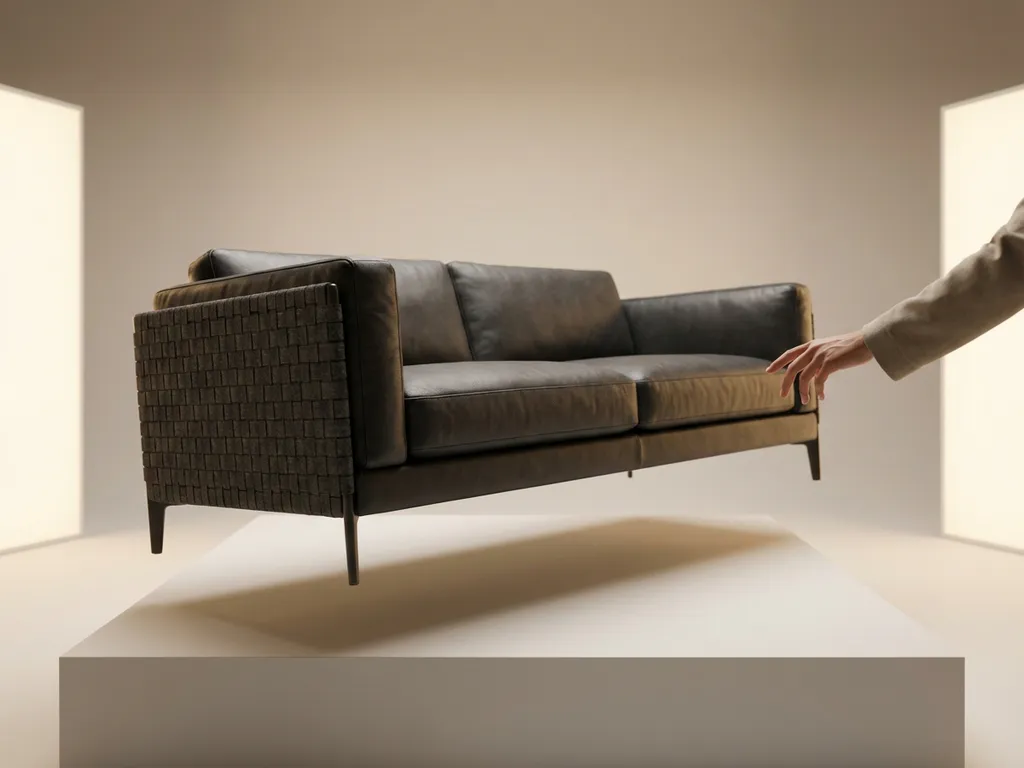
Yes, 3D product rendering significantly increases customer engagement by providing interactive, immersive visual experiences that traditional photography cannot match. Studies consistently show that 3D visuals boost time on page, conversion rates, and product customisation interactions. This technology transforms how customers explore and connect with products across online and retail environments.
What is 3D product rendering, and how does it work?
3D product rendering creates photorealistic digital images from computer models using specialised software and mathematical algorithms. The process begins with CAD models or 3D designs, which are then enhanced with materials, textures, lighting, and environmental settings to produce images that rival traditional photography.
The workflow typically starts with importing product specifications into 3D modelling software. Artists apply realistic materials such as wood grain, fabric textures, or metal finishes to match the actual product. Advanced lighting systems simulate natural and artificial light sources, creating authentic shadows and reflections. The rendering engine then calculates how light interacts with every surface to generate the final image.
Unlike traditional photography, 3D rendering offers unlimited flexibility. You can modify colours, materials, configurations, and environments instantly without physical products or costly photoshoots. This technology enables businesses to create thousands of product variations from a single 3D model, making it particularly valuable for customisable products such as furniture, vehicles, or consumer electronics.
Why do customers engage more with 3D product visuals?
Customers engage more with 3D visuals because they satisfy psychological needs for control, exploration, and confidence in purchasing decisions. Interactive 3D experiences allow customers to examine products from every angle, customise features, and visualise items in their own space, creating emotional connections that static images cannot achieve.
The human brain processes visual information 60,000 times faster than text, and 3D rendering leverages this by presenting products in ways that feel tangible and real. When customers can rotate, zoom, and configure products themselves, they experience a sense of ownership before purchasing. This interaction reduces uncertainty and builds confidence in their choice.
Personalisation plays a crucial role in engagement. 3D product configurators enable customers to see their exact specifications in real time, whether choosing sofa fabrics, car colours, or kitchen layouts. This immediate visual feedback creates an engaging, game-like experience that keeps customers exploring options longer than traditional product pages.
The immersive nature of 3D visuals also addresses common online shopping pain points. Customers can better understand product scale, proportions, and how items fit together, reducing the gap between online browsing and in-store experiences.
Visual Commerce Solutions
Talk to our team about your project.
What types of customer engagement can 3D rendering improve?
3D rendering improves multiple engagement metrics including time on page, click-through rates, conversion rates, product customisation interactions, and social sharing. Different industries see varying benefits, with the furniture, automotive, and fashion sectors typically experiencing the most dramatic improvements.
Time on page increases substantially when customers can interact with 3D models. Instead of quickly scanning static images, visitors spend minutes exploring different angles, configurations, and features. This extended engagement signals to search engines that your content is valuable, potentially improving organic rankings.
Conversion rates benefit from reduced purchase uncertainty. When customers can thoroughly examine products through 3D visuals, they feel more confident about their decisions. Product returns often decrease because customers have clearer expectations of what they’re purchasing.
Social sharing receives a boost because 3D visuals are inherently more interesting than standard product photos. Customers enjoy sharing customised configurations or unique product views on social media, extending your marketing reach organically.
Product customisation interactions represent perhaps the most significant engagement improvement. Interactive configurators transform passive browsing into active product creation, with customers often spending 10 to 20 minutes perfecting their ideal product specification.
How do you measure the impact of 3D rendering on customer engagement?
Measuring the impact of 3D rendering requires tracking specific engagement metrics through analytics tools, A/B testing, and conversion funnel analysis. Key performance indicators include session duration, interaction depth, conversion rates, and customer satisfaction scores compared with traditional product presentations.
Start with basic engagement metrics in Google Analytics or similar platforms. Monitor average session duration, pages per session, and bounce rates for product pages with 3D rendering versus those without. Look for increases in time spent and decreases in immediate exits.
Interaction tracking requires more sophisticated measurement. Heat-mapping tools can show how customers engage with 3D controls, while event tracking measures specific actions such as rotations, zoom usage, and configuration changes. These metrics reveal which features provide the most value.
A/B testing provides the clearest measurement of impact. Run controlled experiments comparing identical products presented with traditional photography versus 3D rendering. Test different user groups simultaneously to isolate the technology’s effect on conversion rates and engagement.
Conversion funnel analysis shows where 3D rendering affects the customer journey. Track progression from initial product view through customisation, cart addition, and final purchase. Many businesses find that while 3D rendering may slightly slow initial browsing, it significantly improves conversion rates and reduces cart abandonment.
What challenges might businesses face when implementing 3D product rendering?
Common implementation challenges include technical complexity, upfront investment costs, content creation workflows, and integration requirements with existing systems. However, understanding these obstacles helps businesses plan realistic timelines and budgets for successful deployment.
Technical requirements can seem daunting initially. 3D rendering demands robust hosting infrastructure to deliver smooth experiences across devices. Mobile optimisation presents particular challenges, as 3D content must load quickly while maintaining visual quality on smaller screens with varying processing power.
Content creation workflows require restructuring for many businesses. Instead of scheduling photoshoots, teams must coordinate 3D model creation, material specification, and rendering processes. This shift demands new skills or external partnerships, though the long-term efficiency gains typically justify the transition.
Integration complexity varies depending on existing e-commerce platforms and internal systems. Some businesses need custom development to connect 3D configurators with inventory management, pricing engines, and order processing systems. Planning these integrations early helps prevent deployment delays.
Change management shouldn’t be underestimated. Sales teams, customer service representatives, and marketing staff need training on new capabilities. Customers may also require guidance on using interactive features effectively, though most adapt quickly to intuitive 3D interfaces.
How 3Dimerce helps increase customer engagement
Our visual product experience platform addresses customer engagement challenges through comprehensive 3D configurators, photorealistic CGI imagery, and seamlessly integrated solutions that work across online and retail environments. We transform how customers interact with your products while streamlining your content creation processes.
Our approach delivers measurable engagement improvements through:
- Interactive 3D configurators that let customers personalise products in real time
- Photorealistic rendering that matches or exceeds traditional photography quality
- Omnichannel integration ensuring consistent experiences across all touchpoints
- Scalable content generation from single 3D models to unlimited product variations
- Mobile-optimised delivery providing smooth experiences on any device
With over 20 years of experience in 3D visualisation and product configuration, we understand the unique challenges facing design-led manufacturers and premium retailers. Our SaaS platform eliminates the complexity while delivering stunning visual quality that reflects your brand’s premium positioning.
Ready to transform your customer engagement through 3D product rendering? Contact our team to discuss how our visual product experience platform can elevate your brand’s digital presence and drive measurable improvements in customer engagement and conversions.